
Black History
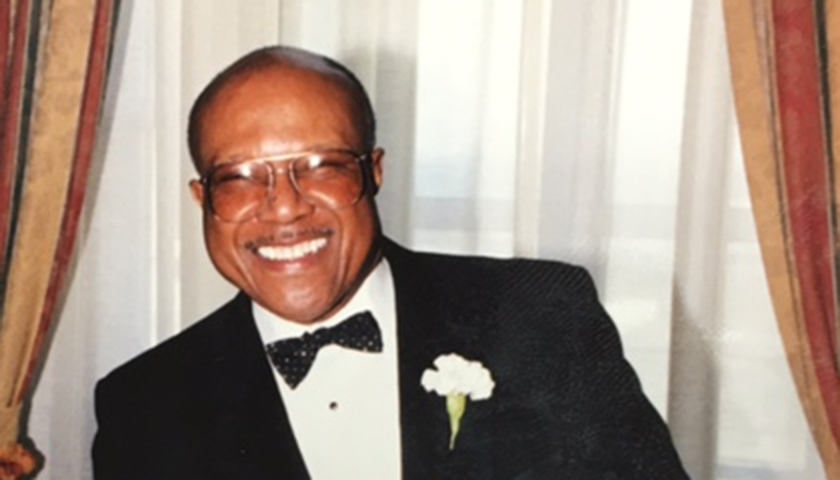
Citizen Newspaper Publisher William Garth, Sr. Dies at 79

By Lisette Gushiniere (Chicago Citizen Newspaper Group, NNPA Member)
William Garth, Sr., the CEO of the Chicago Citizen Newspaper Group Inc., (CCNG) and Chairman of the Chatham Business Association (CBA), died on Friday, September 23, 2016. He was 79.
A pillar in the community, Garth led the Citizen with a steady hand and worked hard to make the news operation the largest Black-owned ABC audited newspaper in the Midwest. Starting out as an advertising salesman for the Citizen, Garth lived the American Dream. After gaining recognition as a master salesman at the Citizen, he ended up owning the newspaper chain in 1980 when he purchased the business from Gus Savage, a six-term Democratic congressman, who represented Chicago’s South Side. The sale to Garth included the “Chatham Citizen,” “Southend Citizen” and the “Chicago Weekend” newspapers. Under Garth’s leadership, the Citizen flourished. Between 1984-1987, Garth grew the newspaper chain when he added the “South Suburban” and “Hyde Park Citizen” newspapers.
The Citizen was a business Garth nurtured and loved. He once said, “I’ve been good to the Citizen, because the Citizen has been good to me.” He was right. With a current circulation of 112,000 newspapers and a following of 400,000 readers weekly, the Citizen established itself as an important source for community news focused on the African-American market.
During the early years, while the Citizen prospered, Garth remained close to his roots. For years, the Citizen operated from a storefront on 87th Street near King Drive, but as the business expanded, Garth moved on, but not too far away. Instead of opting for a lofty downtown office outside of the Black community, Garth stayed on Chicago’s South Side where he purchased a 12,000 square foot building on 806 East 78th Street.
From the Citizen’s new home, Garth established a not-for-profit foundation in memory of his late son, Quentis B. Garth, where he served as chairman. Through the QBG Foundation, the organization helped over 49 students and disbursed over $1 million in scholarship awards to disenfranchised, inner city youth in the Chicagoland area.
During his lifetime, Garth instinctively understood the importance of passing on the torch to the next generation of leaders. In essence, this was the purpose of the foundation. It’s no wonder that one of the numerous awards Garth received was the opportunity to carry the torch in Chicago during the 2002 Olympic Torch Relay. It was one of many local and national awards and honors he received during his lifetime.
Garth’s son, Darrell Garth, president and publisher of CCNG, was thankful for the support he and his family received from members of the community.
“The family would like to express our deepest gratitude and thanks for your prayers, cards, flowers, kind gestures, sympathy and show of support as we mourn the loss of my father,” said Garth. “The overwhelming response from members of the community who expressed love, care and concern during this difficult time is greatly appreciated.”
Garth was just as passionate about Black entrepreneurship as he was about helping young people. Through the Chatham Business Association (CBA), a business resource center offering an array of customized services and programs designed to assist businesses, he worked tirelessly to lead and guide the developments of the CBA. A dedicated activist in the community, it was important to him that Blacks had a seat at the table and were represented on all levels in business.
Garth deeply understood the power of the Black press and was an active member in the National Newspaper Publishers Association (NNPA), an organization whose mission he vigorously supported. As the former President of Midwest Region III of the NNPA, he was also Region III Advertising Representative with the association. In addition to the NNPA, Garth was active throughout the publishing industry. He became the first Black person to be elected president of the Illinois Press Association (IPA). The IPA is the state’s largest newspaper association and is the office trade organization for Illinois weekly and daily newspapers.
By holding this title at the IPA, Garth became the second Black person in the nation elected president of a statewide press association. He also sat on the Board of the Government Affairs Committee, of the Illinois Press Association and served as a board member for more than 15 years. In addition, he was elected a stockholder in the Cook County South Suburban Publishers Association and in 2009, was elected Chairman of the Cook County Publishers Association for 2010. His business acumen and knowledge in the publishing industry allowed him to also serve as a board member of the Midwest Black Publishers Association.
Garth left a lasting impression on the people he met. “Bill Garth was my hero, my friend and my business partner,” commented Al McFarlane, Founder of Insight News and Chairman of the National Newspaper Publishers Association, Foundation. “He was part of the Pantheon of legendary newspaper owners and civic leaders,” he said. “Garth was a master salesman, consummate strategist, and visionary philanthropist. He traveled the world…challenged and afforded American business leaders the opportunity to renegotiate the marketing relationship between product producers and our consumer marketplace. He highlighted the burgeoning purchasing power of Black consumers and unwaveringly marched into often bare knuckle negotiations demanding and achieving movement toward equity and parity. Fearless, he commanded the attention and respect of presidents and heads of state, governors and congressional leaders, captains of industry and the everyday citizen as well.
“Garth and I met with His Excellency John Atta Mills, the Vice President of Ghana in his offices at Osu Castle, Accra, Ghana. We were on a mission on behalf of our company, Midwest Black Publishers Coalition, to connect African Americans with Ghana and Africa through the 1999 P 4th Pan-African Historical Theatre Festival (PANAFEST ’99).
I saw first-hand his confidence and competence, quickened by the power of his personality, resulting in his ability to slice through layers of formality with laser sharp focus on issues at hand. In travelling with him, and at dinner time reminiscing with colleagues and clients, I learned that what I perceived was in fact the genuine article, “True Blue Bill”, the rule, and not the exception.
“So it made sense that at any given time some 40 students from the Greater Chicagoland area were attending colleges and universities thanks to millions of dollars he raised on behalf of the Citizen Newspaper and the QBG Foundation. It made sense that he was a leader in the Illinois Press Association and the Cook County Publishers Association. It made sense that Chicago named a street after him. It made sense that he enriched every life he touched.
Long-time friend and colleague Patricia O’Flynn Pattillo and publisher of The Milwaukee Community Journal had this to say about Garth. “Mr. Garth was a Renaissance man. Born in the Jim Crow south and re-birthed in Chicago’s windy city, he was passionate about justice, equality and upward mobility. He had a gift for analyzing, strategizing and seeking collaborations to build, community, locally and nationally. His work with political giants like Mayor Harold Washington, Operation PUSH and the Reverend Jesse Jackson, the election of Congressman Gus Savage and even our first African American President Barack Obama, all attest to his unique call on identifying and supporting talented candidates for electoral office.
“His work with the National Newspaper Publishers Association was unparalleled and he was campaign manager of many including my ascendancy, as the first female President of the NNPA, the Black Press of America. He also guided the National Advertising Committee of NNPA and culled data and statistics that brought millions of dollars, through advertising, to members of this auspicious organization. He worked most often in the background such as with the Chatham Business Association and the committee to bring major businesses to his neighborhood bringing convenience, removing urban deserts and making employment opportunities a major part of this initiative. Yet he was a conscientious president and major contributor in the success of the Illinois Press Association, a diverse amalgamate of publishers throughout the state of Illinois.
“William Garth was a friend, a listener, a do-er, a colleague always seeking to make life better for his family, his neighbors, his friends. “Bill,” as we affectionately called him, was a brother to me. In my role as publisher of the Milwaukee Community Journal, having founded it in 1976, Bill was a mentor, a respected peer, a professional associate, a friend. He is sorely missed and shall be forever remembered.” May God bless his soul and comfort his magnanimous family. Peace be with you!”
In December 1998, Garth received the honor of being appointed to Governor-elect George Ryan’s Transition Team and was later appointed to the Board of Directors for the Illinois Inauguration 1998, Inc. He also maintained memberships and positions with several business organizations, served as a member of the transition team for the IDOT Dan Ryan Project, was a board member of the Rainbow/PUSH Coalition, a life-time member of the NAACP and a member of the Chatham Lions Club.
In 2010, an honorary street was named after the Citizen Publisher. During the ceremony, family, friends, members of the business community as well as numerous dignitaries and other officials shared in the celebration with Garth.
HOME GOING SERVICES FOR MR. WILLIAM “BILL” GARTH, SR. ARE AS FOLLOWS:
VISITATION: FRIDAY, SEPTEMBER 30, 2016
AA RAYNER FUNERAL HOME
318 EAST 71ST STREET
CHICAGO, ILLINOIS
HORSE LED PROCESSION: SATURDAY, OCTOBER 1, 2016
10:00A.M. – 11:00 A.M.
(ROUTE: FUNERAL HOME TO CHURCH LINEUP AT AA RAYNER FUNERAL HOME)
318 EAST 71ST STREET
CHICAGO, ILLINOIS
WAKE: SATURDAY, OCTOBER 1, 2016
11:15 A.M. – 12:15 P.M.
FUNERAL SERVICES: 12:15 P.M. – 2:15 P.M.
NEW CONVENANT MISSIONARY BAPTIST CHURCH
754 EAST 77TH STREET (COTTAGE GROVE)
CHICAGO, ILLINOIS 60619
INTERMENT: OAKWOOD CEMETARY 1035 E. 67TH STREET
Repast Immediately Following:
NEW CONVENANT MISSIONARY BAPTIST CHURCH
754 EAST 77TH STREET (COTTAGE GROVE)
CHICAGO, ILLINOIS 60619
In lieu of flowers please make checks payable to:
THE BILL GARTH SCHOLARSHIP FUND
Checks can be mailed to
BMO Harris Bank located on
1400 W. 18th Street
Chicago, IL 60608
or by walking into any BMO Branch.








Black History
Passing for White, Fighting for Black America: The Courage of Walter White
White personally investigated 41 lynchings and eight race riots. On several occasions, his identity was discovered, forcing him to flee for his life. The evidence he collected helped the NAACP expose the brutality of lynching to Americans and strengthen its campaign for federal anti-lynching legislation. His experiences also influenced his 1929 book, “Rope and Faggot: A Biography of Judge Lynch.”

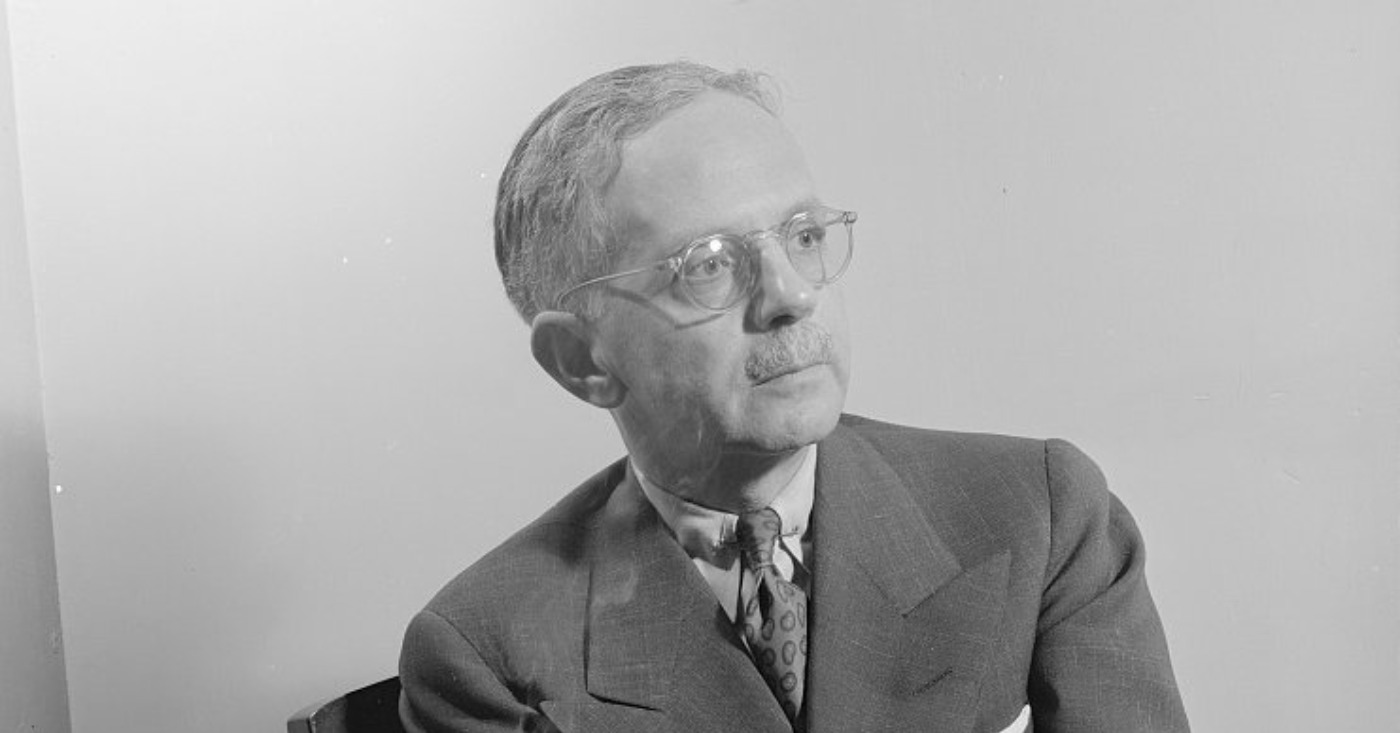
Walter Francis White was one of the most important civil rights leaders of the first half of the 20th century. For more than three decades, he helped transform the National Association for the Advancement of Colored People (NAACP) into one of the nation’s most powerful organizations fighting racial discrimination, segregation, and violence against African Americans.
Walter White was born in Atlanta, Georgia, in 1893 and grew up in a middle-class African American family. His parents, George and Madeline White, had been born into slavery. Although Walter had blond hair, blue eyes, very light skin and could easily have passed as white, he firmly identified as Black. As a teenager, he witnessed the Atlanta Race Massacre of 1906, when white mobs attacked African Americans throughout the city. The experience strengthened his determination to fight racial hatred and injustice.
After graduating from Atlanta University in 1916, White worked in insurance and became active in the Atlanta branch of the NAACP. His abilities caught the attention of NAACP leader James Weldon Johnson, who recruited him to the organization’s national staff in 1918.
He soon became known for his extraordinarily dangerous investigations of lynchings. Because many white Southerners assumed he was white, he was able to enter communities where Black investigators would have faced immediate danger. He spoke with witnesses, law enforcement officials, and even members of lynch mobs, often pretending to share their racial attitudes so they would reveal information.
White personally investigated 41 lynchings and eight race riots. On several occasions, his identity was discovered, forcing him to flee for his life. The evidence he collected helped the NAACP expose the brutality of lynching to Americans and strengthen its campaign for federal anti-lynching legislation. His experiences also influenced his 1929 book, “Rope and Faggot: A Biography of Judge Lynch.”
By the early 1930s, Walter had risen to the NAACP’s top administrative position. As executive secretary, he helped build the organization into a major national political and legal force. Under his leadership, the NAACP challenged discrimination in voting, employment, education, transportation, the military, and other areas of American life.
White also recruited attorney Charles Hamilton Houston to lead the NAACP’s legal strategy. Houston and his protégé, Thurgood Marshall, developed the courtroom campaign that eventually helped produce the Supreme Court’s historic 1954 decision in Brown v. Board of Education, declaring racial segregation in public schools unconstitutional.
White used his relationships with national political leaders as another weapon against discrimination. He worked with First Lady Eleanor Roosevelt, President Franklin D. Roosevelt, and President Harry S. Truman. He supported efforts to end employment discrimination and encouraged Truman to establish the President’s Committee on Civil Rights.
Walter White remained an NAACP leader until his death in 1955. His courage, political skill, investigative work, and relentless commitment to equality helped establish the foundation upon which the modern Civil Rights Movement would build.
Black History
Tradition Comes to the Streets in 11th Annual Black-Eyed Pea Festival at the Freedom Farmers Market
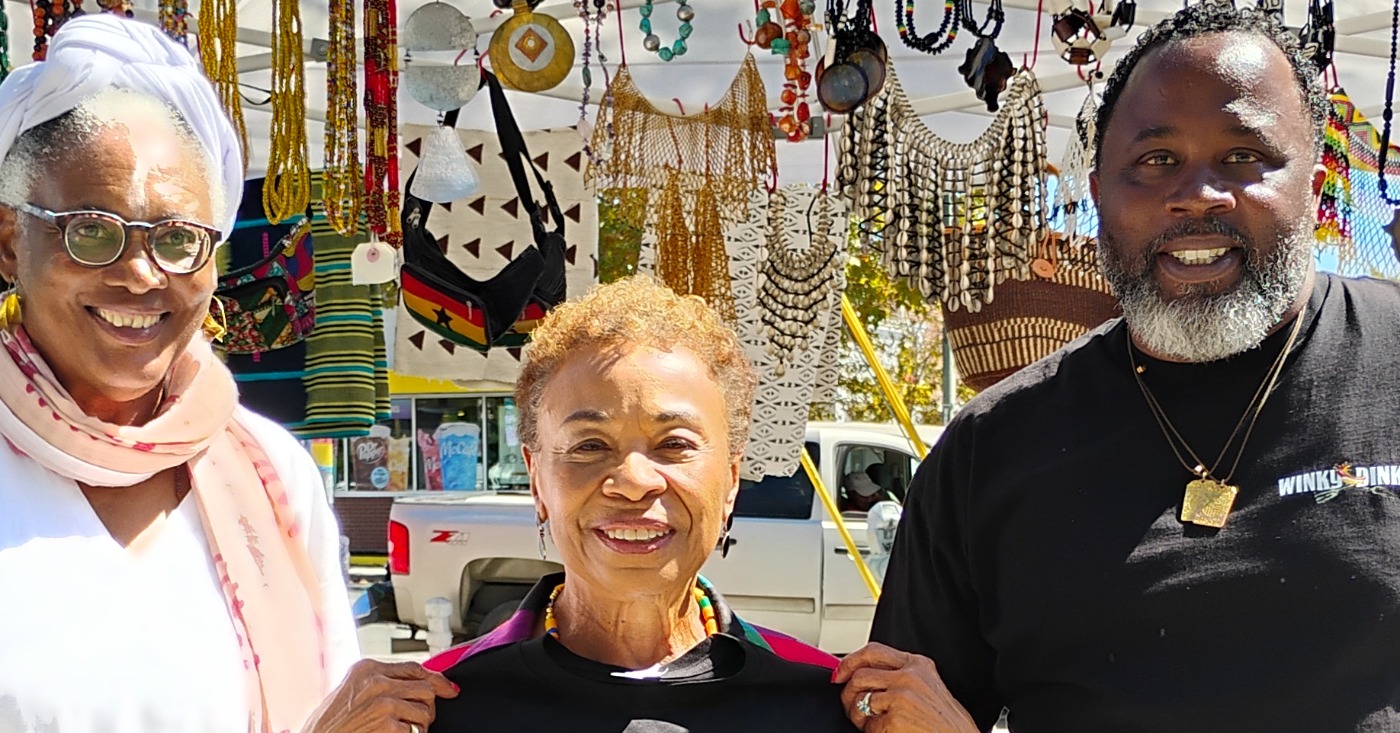
Mayor Barbara Lee stops by to support vendors, Winky Dinky Dogs owner Tyranny Allen
A streamlined Oakland Black-Eyed Pea Festival took place on Sat. Sept. 12 in the lower Temescal neighborhood on the blocked off street that connect Shattuck and Telegraph avenues.
An early start brought together vendor regulars from festival partner, the Freedom Farmers’ Market, and vendors who have supported the festival at its previous location at Marston Campbell Park.
Wanda Ravernell, the festival producer/director was on the verge of cancelling the festival because of funding limitations in May before reaching out to Elaine Smith, president of Farms to grow, Inc., which supervisors the market.
From its start in 2014, the festival has focused on the traditions of African American culture through music, food and art. That emphasis included fresh food vendors, particularly growers of African American legacy crops like black-eyed peas, yams, watermelon, collard greens and okra, which all originate in Africa.
To Fresno farmer Will Scott of Scott Family Farms, the Freedom Farmers’ Market allows him to bring those crops to the inner city – and support the nutrition of African Americans.
Shortly after the festival opened Saturday morning with prayers and salutes to the ancestors by Wakan Wiya Two-Spirit Drum and Awon Ohun Omnira, led M. Zamora and Otobaji Stewart respectively, 86-year-old Scott, the son of a sharecropper, announced that he will put other endeavors aside to dedicate the rest of his life to raise those foods.
Smith shared that Farms to Grow assists Black farmers in helping them overcome one of their main impediments to success – distribution – while creating alliances to help Black people maintain farmland and make it prosperous for younger generations to keep farming and farmland in the family.
As the morning progressed to afternoon, a steady stream of visitors drifted from booth to booth, chatting with vendors and each other.
Scott noted that a market day like this was what he was accustomed to in his youth, where the market was not just about buying things but also a place for valuable social exchange.
The social aspect became even pronounced shortly after midday when Oakland Mayor Barbara Lee stopped by to shop and visit with some of the vendors, including Ellen Bimpeh of Sankofa, and Ravernell who was selling T-shirts designed by Stewart.
Lee is also a fan of Winky Dinky Dogs, an eatery owned by Tyranny Allen whose second brick-and-mortar venture further anchors a hub of businesses at that corner.
As he has in previous years, Andre Thierry of Accordion Soul, closed the festival with a 90-minute set that brought young and the young-at-heart on their feet to dance in a line or as impromptu couples.
And, surprisingly, the man Allen refers to as the mayor of 45th Street, came out on cane and chair to sit by the curb in the sun and listen to music reminiscent of his Louisiana roots. His appearance seemed to echo Scott’s observance about the market: to bring people together.
The Freedom Farmers’ Market is located at 4521 Telegraph Avenue in Oakland and is open on the second and fourth Saturdays of each month until Nov. 14. For more information and to apply to be a vendor, go to https://www.farmstogrow.org/freedomfarmersmarket
Black History
Nuna Phillips-McKee Celebrates 100 Years: ‘A Century of Faith, Family and God’s Amazing Grace!’
OAKLAND POST — Nuna’s life has been one of Christian service. A longtime member of Wings of Love Maranatha Ministries, now Incredible Church, she serves as director of Community Services and is actively involved in the church’s Food Ministries.

Nuna Phillips-McKee will reach an extraordinary milestone on Sept. 24 —her 100th
birthday, marking a century filled with faith, family, service, laughter and the amazing grace of God.
Born Sept. 14, 1926, in Oakland, Nuna has witnessed a world of change during her lifetime, yet the values that have guided her remain constant: a deep faith in God, devotion to family, a strong work ethic and a heart for serving others.
She enjoyed a distinguished career as a civil servant for more than 40 years, demonstrating the dedication, dependability and strength that have characterized so much of her life.
Nuna’s life has been one of Christian service. A longtime member of Wings of Love Maranatha Ministries, now Incredible Church, she serves as director of Community Services and is actively involved in the church’s Food Ministries.
Through the years, she has continued to help meet the needs of others—not merely with food, but with kindness, compassion and a genuine desire to serve. Her ministry reflects a simple principle by which she lives: when God blesses you, you bless others.
Nuna is the proud mother of one son, whose memory she carries in her heart, and the beloved grandmother of three grandchildren, as well as six great-grandchildren and one great-great-grandchild.
At 100, she has the rare blessing of seeing several generations of her family carrying forward a legacy that began long ago.
She remains the loving, intelligent, witty, and, when the occasion calls for it, delightfully sassy Nuna that her family and friends know so well. Her contagious laugh, quick wit and youthful spirit have endeared her to generations of relatives, church members and friends.
Nuna was born into the large and loving Phillips family of seven sisters and one brother, with bonds that formed in childhood and have remained precious throughout the decades. Their shared love, faith, and family traditions have continued to be a source of joy, strength and countless treasured memories.
As family and friends gather for this special occasion, they will celebrate far more than a number. They will celebrate 100 years of prayers prayed and answered; 100 years of lessons learned and wisdom shared; 100 years of family, faith, laughter and love; 100 years of serving God and serving others.
Most of all, they will celebrate a life that stands as a testimony to God’s faithfulness through every season.
Nuna’s century-long journey can be summed up in the words chosen to commemorate this remarkable occasion: “100 years of God’s amazing grace.”
Black History
BOOK REVIEW — Curved Air: A Biography of Sickle Cell Anemia and the Quest to Cure the First Molecular Disease
OAKLAND POST — Over decades, researchers worked haphazardly. Papers were written, treatments were tried, used, or discarded. Doctors discovered that genetic testing could prevent new cases, a heartbreak for would-be parents. Researchers discovered that “a perfect storm” of confluence spread SCD: malaria, human population, and mosquitoes.

Copyright: c.2026, Publisher: The Belknap Press of Harvard University Press, SRP: $29.95, Page Count: 338 pages
Four weeks of testing, and you’re exhausted.
Two gallons of blood, maybe three, have been removed. No lie. You’ve laid on tables, slid through machines, been scanned so much you lost count and finally, your doctors have a diagnosis. As in the new book “Curved Air” by Kevin Davies, you have hope there’s a what next?
Though the disease was known in parts of Africa and likely existed here in the United States for hundreds of years, sickle cell disease (SCD) is a relative newcomer in disease research.
Says Davies, “Sickle cell was first identified more than 120 years ago” and it was considered as a “Black disease.” Because of that, discrimination followed “sickle cell warriors” and research was scant, though white people can and do get SCD.
With “agonizing” pain as a major symptom, “SCD is one of roughly seven thousand genetic diseases” currently known to science. When someone has SCD, a genetic mutation causes their red blood cells to curve and get stuck in blood vessels, rather than flowing freely as they should. This diminishes the oxygen supply “to various parts of the body… which causes inflammation and pain,” jaundice, stroke, and damaged organs. Anemia, Davies says, can leave a patient fatigued and short of breath. Anticipating pain crises causes anxiety and PTSD.
Says Davies, “More than forty million people carry” one copy of the genetic mutation that causes SCD, and “five hundred thousand affected” babies are born with the disease per year, worldwide.
Over decades, research was done haphazardly. Papers were written; treatments were tried, used, or discarded. Doctors discovered that genetic testing could prevent new cases, a heartbreak for would-be parents. Researchers discovered that “a perfect storm” of confluence spread SCD: malaria, human population, and mosquitoes.
There was always hope that someday, sickle cell disease might be cured.
Then, Clustered Regularly Interspaced Short Palindromic Repeats (CRISPR) gene-editing therapy was approved by the FDA, and a brave volunteer named Victoria Gray stepped forward…
So, you want to – need to – learn more about sickle cell disease? Is it imperative for you? Then, this is your book. But there are things you’ll want to know before you dive into “Curved Air.”
Because author Kevin Davies is the editor of The CRISPR Journal, you can expect up-to-date, cutting-edge information; but that’s a two-sided coin: the information is heavy-duty, not always easy to grasp, and it’s burdened by acronyms that can be overwhelming. Yes, that’ll inform you, but it may also send you elsewhere for further understanding, which really should’ve come from this book.
And yet, if you or someone you love has SCD, this is your book. It explains where the disease came from, why it hasn’t been completely cured yet, and what kind of hope you can hold. It’s a good start on a path to comprehension.
Also, be aware that the narrative here is sometimes padded with journalistic fluff that might annoy you if you’re eager to get to the science. Indeed, “Curved Air” will teach you. Then again, it also might test you.
Black History
OP-ED: If AI Is the New Language of Power, Then NAN Wants Black Communities Fluent
BLACKPRESSUSA NEWSWIRE — If Black and Brown communities are going to compete at the highest levels of industry, then practical AI training cannot be reserved for Silicon Valley boardrooms, elite universities, or people who already have a seat at the table. It has to reach our residents, our clergy, our organizers, our entrepreneurs, our young people, and our families.

Through a new National Action Network initiative, artificial intelligence is framed as a practical tool for industry preparedness.
We are at the forefront of a fundamental shift of access and opportunity. When new technology emerges, marginalized communities are often told to catch up to systems we did not design, and adjust to landscapes that would sooner leave us behind than include us in their architecture. Often during these shifts, our communities become the least resourced, and must navigate industries whose rate of change outpaces their rate of exposure. To combat this, these communities must develop emerging systems of knowledge through internal networks of education, skill-exchange, and entrepreneurship. This is a civil rights issue.
Now, at the dawn of the artificial intelligence era, the same systems our communities have always built for ourselves must rise again. We have had to teach one another how to navigate every new language of power, often because nobody was coming to teach us. AI cannot be different.
If Black and Brown communities are going to compete at the highest levels of industry, then practical AI training cannot be reserved for Silicon Valley boardrooms, elite universities, or people who already have a seat at the table. It has to reach our residents, our clergy, our organizers, our entrepreneurs, our young people, and our families.
For this reason, National Action Network is putting AI education directly in the hands of the community with a new initiative led by AI fluency strategist Susan Hearn. The AI Fluency Initiative’s premise combines the doctrines of racial equity with technology and culture, elevating how access makes AI such a consequential force in determining who gets to shape the next era of American life.
Too often, our communities are spoken for as populations that technology is happening to, rather than working for. We hear about the jobs AI might eliminate, the algorithms that discriminate, and the industries being disrupted. Those concerns are real, but that cannot be where the conversation ends.
We must proactively shift this narrative. We are not just workers to be displaced and demographics to be reached after AI has already disrupted the landscape. We are purveyors and engineers of this technology and should be considered active participants in its use.
Our initiative seeks to interrupt that sequence, refusing to let us become passive figures in a shift that should be empowering us.
For over three-decades, NAN has understood that civil rights advocacy must be practiced wherever inequality shows up. Technology education is included in this conversation because of what it bestows on the communities it reaches. It is one component of a broader commitment, ensuring that communities historically excluded from emerging industries have the tools to participate fully in the economic and cultural shifts of our future. Economic self-determination is just as much a pillar of equity as it is a part of voting rights and equal legal protections.
For us, access is not meaningful if it arrives after everyone else has already learned the rules. So, we start with the fundamentals. The AI Fluency Initiative is designed as a repeated working session to meet people where they are. Students are introduced to the technology across various use cases, then sent home with usable skills based on the work produced during the session.
NAN has always fought to ensure that no community is locked out of the economy. From the fight for fair employment and access to capital to the push for equity in education and homeownership, we have consistently been at the forefront of keeping the doors of opportunity open to all. This fight is no different.
AI is the next gate through which the mechanisms of opportunity will pass through. It is quickly becoming part of how people apply for jobs, build businesses, and articulate themselves. The use cases are vast and the adoption has been swift. If these tools are becoming part of everyday life, then access to understanding them must become an element of everyday empowerment. It is paramount to us that Black communities are not only exposed, but at the helm.
We know that progress does not always distribute evenly. Communities have to demand access and request inclusion in the infrastructure of change. This self-advocacy is often the only way to ensure that hegemony does not continue to inflict exclusion and disenfranchisement on those who could most benefit from seismic shifts in industry. We must refuse to be told to wait our turn, and instead harness the tools of self-education and empowerment.
To be serious about the wealth gap means confronting the technologies reshaping work culture. Amending the academic achievement gap requires us to refuse a literacy discrepancy from arising in the first place. Equity requires preparation, and we are in the unique position to harness these emerging tools so that it is our voices that are heard, our perspectives that are amplified, and our communities that are enfranchised.
The AI Fluency Initiative is an access measure addressing an economic gap.
Black History
Henry O. Flipper: A Trailblazer at West Point and Beyond
OAKLAND POST — Flipper’s promising military career ended abruptly in 1881 when he was accused of embezzling commissary funds. A court-martial acquitted him of embezzlement, but convicted him of conduct unbecoming of an officer. The Army dismissed him in 1882. The circumstances surrounding his punishment would later be widely regarded as unjust and influenced by the racial discrimination of the period.
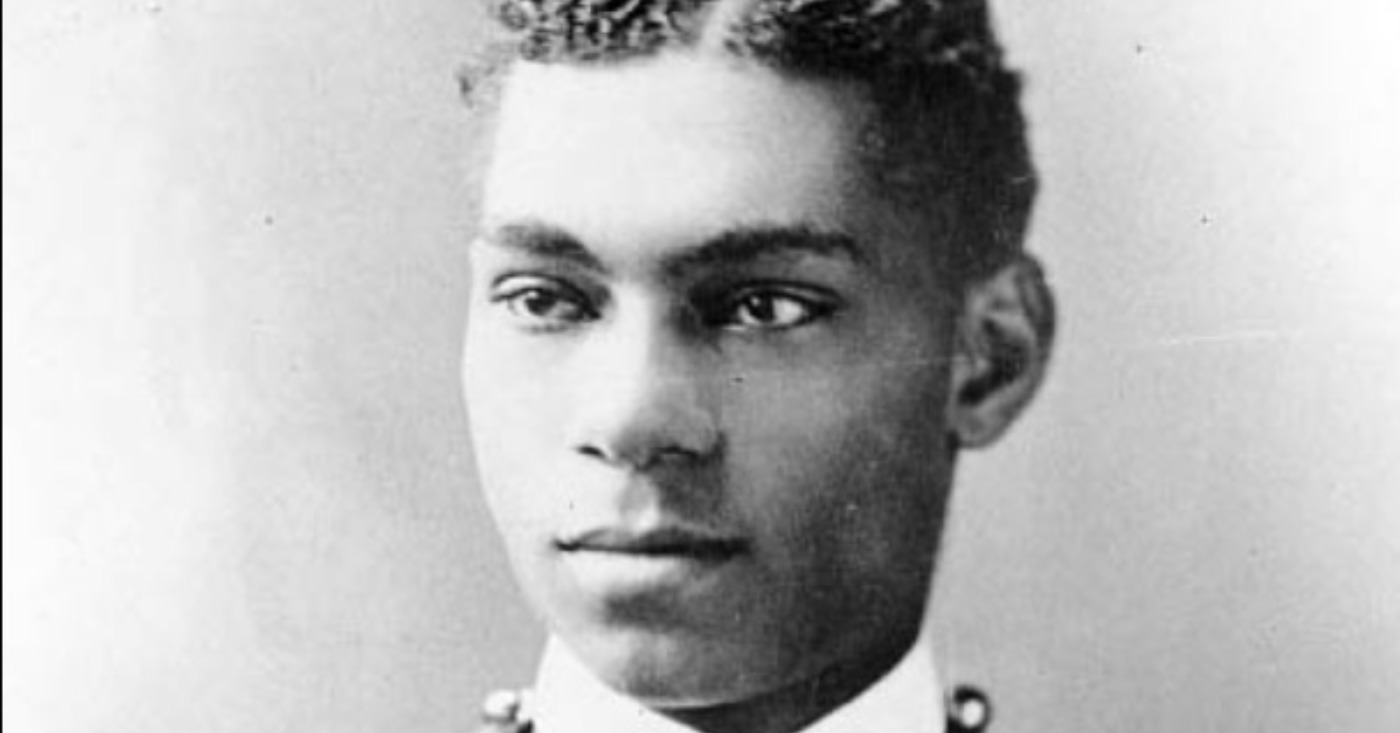
Henry Ossian Flipper’s life is a remarkable story of insistence, achievement, injustice, and ultimately vindication. Born enslaved on March 21, 1856, in Thomasville, Georgia, Flipper rose from the restrictions of slavery to become the first African American to graduate from the United States Military Academy at West Point. His accomplishments extended far beyond military service; he later became a respected engineer, surveyor, author, translator, and government official.
After the Civil War, Flipper’s family settled in Atlanta, where education became central to his future. He attended schools established for African American children by the American Missionary Association and later studied at Atlanta University. In 1873, Congressman James C. Freeman of Georgia nominated Flipper for admission to West Point. He entered the academy that July.
Flipper’s four years at West Point were extremely difficult. Because of racism, he experienced harassment and almost complete social isolation from many of his fellow cadets. Nevertheless, he succeeded academically and graduated on June 14, 1877, ranking 50th in a class of 76. His graduation represented a historic breakthrough for African Americans in the United States military.
Commissioned as a second lieutenant, Flipper was assigned to the 10th U.S. Cavalry, one of the famed African American regiments known as the Buffalo Soldiers. At Fort Sill in Indian Territory, now Oklahoma, Flipper served as an engineer, surveyor, construction supervisor, quartermaster, and commissary officer. One of his most lasting engineering accomplishments was a drainage system that eliminated pools of stagnant water around the fort and helped reduce mosquito-breeding areas. The system became known as “Flipper’s Ditch,” and portions of it remain associated with Fort Sill today.
Flipper’s promising military career ended abruptly in 1881 when he was accused of embezzling commissary funds. A court-martial acquitted him of embezzlement, but convicted him of conduct unbecoming of an officer. The Army dismissed him in 1882. The circumstances surrounding his punishment would later be widely regarded as unjust and influenced by the racial discrimination of the period.
Rather than allowing his dismissal to define his life, Flipper built an extraordinary civilian career. He became a civil and mining engineer and surveyor, working extensively throughout the American Southwest and Mexico. He established an engineering office in Nogales, Arizona, became knowledgeable about Spanish and Mexican land law, and later worked for the federal government, including service connected with the Department of Justice and the Department of the Interior.
Flipper died in Atlanta in 1940, but efforts to restore his reputation continued for decades. In 1976, the Army changed his dismissal to an honorable discharge. Then, on February 19, 1999, President Bill Clinton granted Flipper a posthumous presidential pardon.
Today, Henry Ossian Flipper is remembered because his life helped open doors for generations of African American military officers, engineers, and public servants who followed him.


On Your November Ballot: Prop 38 Would Allocate $8.4 Billion to Immunology and Immunotherapy Funding

Ask California: Golden State Releases New AI Chatbot

Asm. Isaac Bryan’s Bill Banning California Police From ICE Side Jobs Reaches Newsom’s Desk

OP-ED: How Head Start Also Helps Parents

Assemblymember LaShae Sharp-Collins’s Bill Would Pause Law Enforcement’s Use of Shock Gloves Pending Study

LIVE! — ASK ALMA! — TUS. 9.22.26 7PM EST

BOOK REVIEW: ‘Laws of Solomon’ Reveals Tender Heart of Former Child Soldier

OPINION: The New American Fear – From 9-11 to AI

Passing for White, Fighting for Black America: The Courage of Walter White

Oakland People’s Arms Embargo Coalition Demands End to Military Shipments Thru Oakland

You Had Me at Hello: the Love and Legacy of Grace Nail and James Weldon Johnson

Arnold Perkins: At 85, a Life of Service, Faith and Giving Back

Young Black Men Suffering in Silence A curse that can be Broken

Young Black Men Suffering in Silence A curse that can be Broken

🎷 Jazz is taking over D.C.!

BSPNTX Announces 2026-27 Scholarships Recipients

Women Learned Their Jail Strip Searches Were Recorded. Their Outrage Changed the Law

Black Americans Have Doubts About the U.S. Food System

Barbados – Julius Garvey, Son of Marcus Garvey, Joins PM Mottley in the Rededication of the Garvey Amphitheater

IN MEMORIAM: Dolly Parton Dead at 80 — How She Built a Legacy of Love and Earned Her Place in Black Culture
LIVE! — ASK ALMA! — TUS. 9.22.26 7PM EST

The People’s Revival National Campaign Launch

Interior 2026 GMC Acadia Denali Ultimate AWD 360 Video

Mazda CX-90 Tech: Huge Displays, Bose Audio & Wireless CarPlay #shorts

NAACP Sues to Block Federal Agents at the Polls

NAACP Sues to Block Federal Agents at the Polls 📱

2024 Audi Q3 S line Quattro: Base MSRP & Features #shorts

Subaru Outback Turbo: Real Power Unleashed! #shorts

DON’T Buy the 2027 Seltos X Line SX Until You Watch This

Headlines and Hotlines
-
 Black History1 week ago
Latest Massacre in Haiti Reveals Cruelty U.S. Deportations
-
 Black History1 week ago
Henry O. Flipper: A Trailblazer at West Point and Beyond
-
 Black History1 week ago
OP-ED: If AI Is the New Language of Power, Then NAN Wants Black Communities Fluent
-
 Black Press1 week ago
Asm. Smallwood-Cuevas’s Bill Repealing ‘Racist’ CalWORKs ‘Man-in-the-House’ Rule Clears Legislature
-
 Black Press1 week ago
California Legislature Sends Historic Native American Apology Bill to Gov. Newsom’s Desk
-

 Black Press6 days ago
OP-ED: How Does Your State Rank for Pre-K?
