
Featured
CBC Members Met with FBI Director Christopher Wray about the FBI’s Controversial “Black Identity Extremists” Report. This Is What They Learned.


By Stacy M. Brown (NNPA Newswire Contributor)
FBI Director Christopher A. Wray failed to explain why the agency he leads changed the name of a domestic terrorism designation from “Black Separatist Extremists” to “Black Identity Extremist,” during a recent meeting with a group of Congressional Black Caucus members about a leaked FBI document.
Wray also refused to acknowledge that Black activists, including Black Lives Matter organizers, are being monitored by the FBI, according to CBC members present at the meeting.
The leaked FBI document, titled “Black Identity Extremists Likely Motivated to Target Law Enforcement Officers,” sparked a wave of controversy and sharp criticism of the FBI.
At least one CBC member called the leaked document “COINTELPRO 2.0,” while another said that the report “calls for open season on Black activists.” The document was shared widely with local law enforcement agencies across the country.
According to Newsweek, following the “fatal attacks on police officers in Dallas and Baton Rouge, Louisiana in 2016, the bureau expressed concerns about ‘the threat of copycat attacks against law enforcement’ at the Republican and Democratic national conventions.”
Newsweek reported that other documents showed that “the FBI has monitored Black Lives Matter protesters.”
Those documents were released, because of a lawsuit to expose the surveillance filed by the Center for Constitutional Rights and the civil rights group Color of Change.
On Wednesday, November 29, Congressional Black Caucus Chair Cedric Richmond (D-La.) and 2nd Vice Chair Karen Bass (D-Calif.), provided an overview of their meeting with Wray in a teleconference with National Newspaper Publishers Association (NNPA) President Dr. Benjamin F. Chavis; NNPA National Chairman Dorothy Leavell; and a group of Black publishers, editors and reporters.
CBC members, who are also members of the House Committee on Homeland Security, the House Permanent Select Committee on Intelligence, and the House Committee on the Judiciary were present at the meeting.
“Listening to [Wray], especially considering meetings and discussions we’ve had with Attorney General [Jeff] Sessions, he appeared to be a breath of fresh air,” Bass said.
According to Bass, Wray said the “Black Identity Extremists” report was completed prior to his taking the post, but he acknowledged that he “owns the document” now.
Wray also said that no one would be investigated or targeted, unless they met three points of criteria: there had to be credible evidence of federal crimes; a credible threat of force or violence; and both of those points had to exist in furtherance of a social or political goal.
Bass said the FBI uses that criteria to categorize people as domestic terrorists and, according to the leaked document, “Black Identity Extremists” fall into the category of domestic terrorism.
Wray also admitted that the policy wasn’t new, the name simply changed, Bass said.

FBI Director Christopher Wray denied that his agency is investigating the Black Lives Matter movement. In this photo, Wray speaks at the Intelligence and National Security Alliance Summit in Washington, D.C on September 7, 2017. (FBI/Wikimedia Commons)
“They used to call it ‘Black Separatist Extremists’ and they changed it to ‘Black Identity Extremists,’” said Bass. “[Wray] didn’t have a lot of rationale for why that change took place, except for the fact that the people that fall under the category ‘Black Identity Extremist’ don’t seem to be separatists in today’s world.”
CBC members raised major concerns about the report, one of which was how FBI even crafted the methodology to come up with the category of “Black Identity Extremists.”
“[Wray] essentially said that they used ‘open source’ documents, which means news reports,” said Bass. “Lord knows what that means.”
Bass said that, based on what she heard from Wray, the methodology seemed “flimsy.”
“When we raised our concerns that a new generation of Black activists were being targeted [including the Black Lives Matter movement] for surveillance and harassment, [Wray] said repeatedly that there was no investigation of the Black Lives Matter movement,” said Bass.
Bass and the other CBC members let Wray know that they were “completely aware” that some activists in their communities were experiencing surveillance and harassment, even though they didn’t meet the requirements that Wray described that would lead to an investigation.
The CBC members asked the FBI to retract the document and issue a new message to local law enforcement agencies.
“One of the problems with this document is that it has been widely distributed to law enforcement agencies around the country,” said Bass. “Many of us referenced either our own personal experiences or experiences we were aware of during the ‘COINTELPRO’ years when, if you send a document like this out to local law enforcement, in many of our opinions, you can declare open season on Black activists, because then local law enforcement agencies can use the document as justification for doing whatever they want to do.”
COINTELPRO, or the “Counter Intelligence Program” of the FBI, was designed in part to “expose, disrupt, misdirect, discredit, or otherwise neutralize the activities of the Black nationalists,” during the 1950s and 1970s.
Writing for the Huffington Post, G. Flint Taylor, a founding partner of the People’s Law Office in Chicago, said that hundreds of documents were uncovered during a court case in 1976 that revealed that the FBI also plotted to destroy a children’s breakfast program run by the Black Panther Party and “disrupt distribution of the BPP newspaper.”
The documents exposed in the 1976 court case also revealed, “massive wiretap overhears, including conversations between BPP members and their attorneys,” Taylor wrote.
“The FBI denies they are surveilling (sic) our groups like the Black Lives Matter movement, but we told them that we don’t believe it and our information tells us that” those groups are under surveillance, said Richmond.
Richmond said that the CBC members plan to present information to the FBI detailing surveillance and harassment of Black organizers.
The FBI director expressed interests in meeting with CBC members regularly because, “We are the eyes and ears on the ground,” and the CBC offers diversity that the agency lacks, said Richmond.
Bass asked the Black Press to put the call out to their readers to let lawmakers know if they have experienced harassment or surveillance, a request that Richmond echoed.
Chavis, the president and CEO of the NNPA, committed to working with Richmond and other CBC members to uncover stories of unwarranted government surveillance and harassment in the Black community.
“People may be more considerate in doing things, if they know that the Black Press will be on their case,” said Leavell, the chairman of the NNPA. “In addition, it certainly shows our strength, if we can have a great impact.”











Featured
Mayor Paul Young Press Briefing
Mayor Paul Young shares essential updates on city initiatives and policy priorities. Watch the full briefing for a direct look at the administration’s latest goals.


Memphis Mayor Paul Young holds a formal press briefing to provide the public with essential updates regarding city administration and current municipal initiatives. During this session, the mayor addresses ongoing developments within the region, offering insights into his office’s policy priorities and responses to recent community concerns. This briefing serves as a direct line of communication between local government leadership and Memphis residents, ensuring transparency and clarity on key issues impacting the city.
Viewers can watch the full video above for a complete look at the mayor’s remarks, including his responses to questions from the media. This footage captures the official stance of the administration on various local matters and highlights the current focus of the Mayor’s office. Stay informed on the latest developments in Memphis governance by following these regular updates.
Featured
Mayor Paul Young How tax dollars from data centers is being used
Memphis Mayor Paul Young breaks down how tax revenue from local data centers is being reinvested into community projects and essential public services.
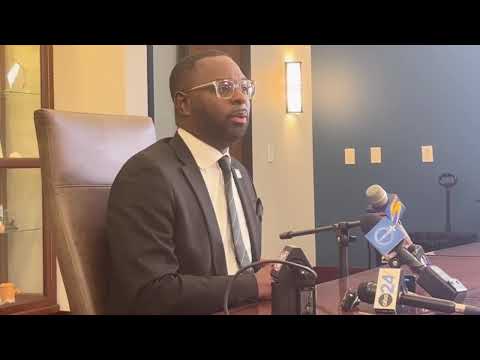
In this video from the Tri-State Defender, Memphis Mayor Paul Young discusses the economic impact of data centers and explains how the resulting tax revenue is being utilized to benefit the community. Mayor Young outlines the city’s strategic approach to managing these investments, detailing how the influx of funds is being integrated into broader municipal projects and public services.
The discussion highlights the fiscal importance of attracting large-scale technology infrastructure to the region. By breaking down the allocation of these tax dollars, Mayor Young provides clarity on how the city balances industrial growth with the need for improved public infrastructure and taxpayer value. Viewers can gain a better understanding of the local government’s vision for long-term financial sustainability and community development through these specific revenue streams.
Featured
Mayor Paul Young Participatory Budgeting finds home repairs most needed
Memphis residents have spoken: home repairs are the city’s top priority. Mayor Paul Young explains how participatory budgeting is putting tax dollars where they count.
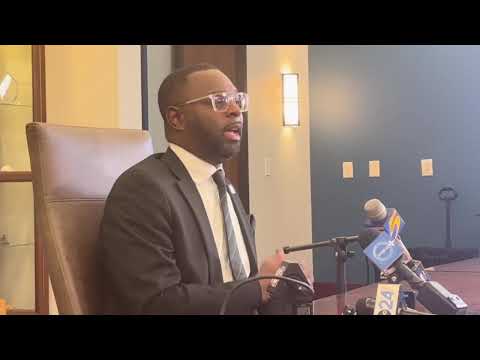
Memphis Mayor Paul Young recently highlighted the outcomes of the city’s participatory budgeting initiative, which gathered direct input from residents to determine local funding priorities. During the announcement, city officials revealed that home repairs emerged as the most critical need identified by the community. This collaborative approach aims to bridge the gap between municipal government and its citizens by ensuring that public resources are directed toward the projects that residents feel will have the greatest impact on their neighborhoods.
The video features insights from Mayor Young regarding the importance of transparency and civic engagement in urban development. By allowing community members to vote on how specific funds are allocated, the administration hopes to foster a more inclusive and effective governing process. Watch the full segment to learn more about how these results will shape upcoming home improvement programs across the city.
Black Press
Alameda County Supervisor Miley to Propose Illegal Dumping Ordinance
POST NEWS GROUP — The proposed ordinance would add Chapter 6.121 to the County’s General Ordinance Code, establishing an administrative enforcement process that would allow the County to hold more parties accountable without relying solely on criminal prosecution.

Proposal expands accountability, establishes administrative penalties, and ties fines to cleanup costs
On Tuesday, Nov. 17, the Alameda County Board of Supervisors is scheduled to consider the first reading of an ordinance proposed by Supervisor Nate Miley to strengthen enforcement against illegal dumping in unincorporated Alameda County, including Ashland, Cherryland, Castro Valley, San Lorenzo and Fairview.
Illegal dumping places a significant financial burden on residents and taxpayers. In 2024, Alameda County spent $3.8 million addressing 1,483 illegal dumping incidents, an average of approximately $2,562 per incident. Yet no illegal dumping cases from the unincorporated county were charged that year.
The proposed ordinance would add Chapter 6.121 to the County’s General Ordinance Code, establishing an administrative enforcement process that would allow the County to hold more parties accountable without relying solely on criminal prosecution.
Key provisions include:
- Expanded accountability: Penalties could apply to individuals who dump waste, those who provide waste to unlicensed haulers who illegally dispose of it, and vehicle owners who knowingly consent to their vehicles being used for illegal dumping.
- Administrative enforcement: Authorized County personnel could issue penalties and abatement orders, with opportunities for administrative hearings and judicial review.
- Penalties tied to cleanup costs: Fines would start at $2,500 for a first violation, increase to $5,000 for a second and $10,000 for a third. Enhanced penalties of up to $10,000 per violation could apply to large-scale dumping, hazardous waste, or dumping near sensitive locations such as creeks, schools and storm drains.
The ordinance includes safeguards for people acting in good faith. Residents and businesses using licensed haulers would be exempt from waste-generator liability, while vehicle owners whose vehicles were used without their consent and property owners unaware of dumping on their land would also be protected.
Cited individuals could request community service in lieu of penalties, with ability to pay among the factors considered. The proposal would also allow property owners, business improvement districts and community groups to pursue recovery of cleanup costs and authorize the Board to establish a reward fund for tips identifying illegal dumpers.
“Every mattress and every truckload of construction debris dumped in Ashland, Cherryland and Castro Valley gets paid for by the people who live there, and right now the people responsible almost never face a consequence,” Miley said. “This ordinance closes the loopholes that let people hand off their waste and walk away. It gives the County a fair and swift way to hold dumpers accountable, protects people who do the right thing, and makes the penalty match what it costs us to clean up after them.”
Modeled on Santa Cruz County’s illegal dumping ordinance, which took effect in July 2025, the proposal was recommended for approval by the Board’s Unincorporated Services Committee.
Miley is also urging cities and counties throughout the region to adopt similar standards. His office has released a Model Illegal Dumping Enforcement Ordinance developed through the Alameda County Illegal Dumping (ACID) Task Force to support coordinated regional enforcement.
If the Board conducts the first reading on Nov. 17, the ordinance will return for adoption at a subsequent meeting and take effect 30 days after adoption.
Paul Sanftner is the director of communications and special projects for the office of Alameda County Supervisor Nate Miley.
Black Press
Oakland City Council Extends AI Data Center Moratorium for 10 Months.
POST NEWS GROUP — The city must ensure that it has adequate guardrails and that the community is actively involved in decision-making, she said. “It’s important that our staff have the ability to do the appropriate study, and … to do the appropriate outreach to the community, so the community has a voice in anything that we do that will impact their lives.”
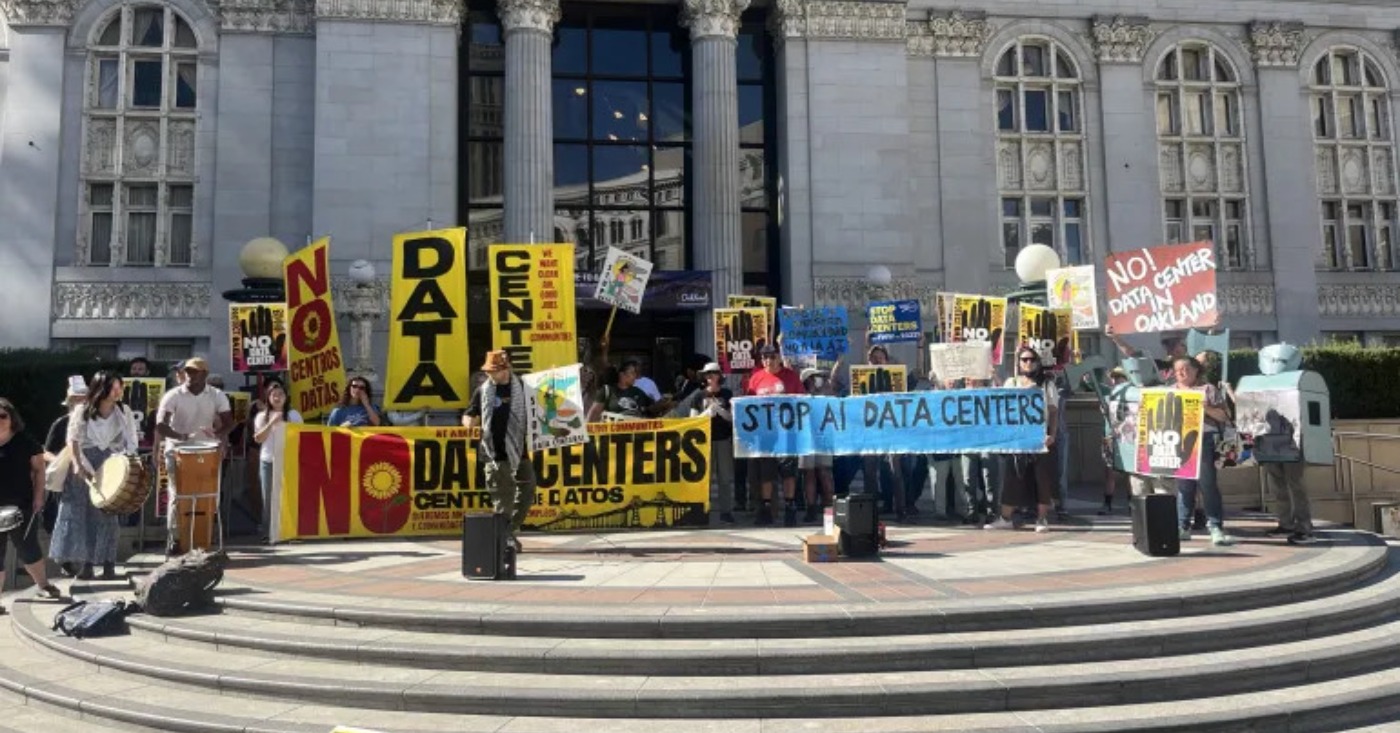
The Oakland City Council voted unanimously this week to extend the city’s moratorium on AI data centers for 10 months – giving the city time to produce a policy that protects residents from the public health and safety dangers that are posed by the proliferation of data centers.
The moratorium extension, which passed at Tuesday’s council meeting, will keep the existing 45-day moratorium in place until Oct. 5, 2027.
“We’re seeing basically an uprising across the country when it comes to how data centers are operating in regard to land use, impacts to the environment, excessive water use and pollution, air pollution, noise pollution, a host of things that are really negatively impacting communities,” said Councilmember Carroll Fife, who is leading the City Council’s efforts to pass the moratorium.
“I represent a district that many of these potential entities are interested in, and two of the giants in the tech industry have leased space in West Oakland, and there’s been another showing interest in a downtown location,” she said.
“I felt it was imperative that I take immediate action to protect Oakland residents from what we’ve seen happen in other parts of the country,” Fife continued. “This is not a rejection of technology. This is not a rejection of economic growth. It’s guardrails against an industry that we’ve seen steamroll individuals throughout the entire globe.”
The city must ensure that it has adequate guardrails and that the community is actively involved in decision-making, she said. “It’s important that our staff have the ability to do the appropriate study, and … to do the appropriate outreach to the community, so the community has a voice in anything that we do that will impact their lives.”
In her recent State of the City address, Mayor Barbara Lee backed the original 45-day moratorium, which passed on Oct. 6 and is set to expire on Nov. 20.
Lee supported the moratorium to give residents more time to consider before any projects move forward, saying, “Residents need to weigh in on any industry that’s trying to come to Oakland.”
Other California cities that already have passed data center moratoriums include San Francisco, Hayward, Oakley, Richmond, Monterey Park, Gilroy, South El Monte, Montebello, and Calexico.
Speaking at the meeting, Bill Gilchrist director of the city’s Planning and Building Department, said that during the moratorium, the city is committed to “looking at areas that might be most severely impacted by land use and residential proximity, and making sure we engage members of the community who may historically have not been able to participate or be invited to participated (in this kind of discussion).”
“The idea for us is to ‘do no harm,’” he said.
Thirty-five public speakers signed up to talk about on the moratorium extension. Almost of them supported the extension, some praising Fife for her leadership on the issue.
Some of the speakers urged the council to consider a permanent ban on data center development in the city.
Supporting the moratorium extension, Laney College professor Peter Brown said, “Don’t cast your vote today based on the illusion we’re operating in the old economy, where corporate investment in Oakland meant thousands of lasting, good-paying jobs, as well as property, business, and income taxes flowing into city coffers,” he said.
“Those days are long gone in this new economy, where every investment is just another asset to be exploited and used as collateral for more investment,” Brown continued. “Every corporate move is to extract from our communities.”
Nyah Tisdell, an East Oakland community organizer with Communities for a Better Environment (CBE), said, “We have community meeting every month…Community members say no (to data centers),” that will go straight to East Oakland, which already has so much industry, so much pollution, and we are trying to better our communities.”
A speaker for Care for Community Action (C4C) said her organization has surveyed more than 400 residents and found that 73% favor a permanent ban on all data centers being built in Oakland.
According to Rev. Leslie Bowling-Dyer, “Data centers are a part of the necessary infrastructure for the rise of an economically and politically untouchable class, and people are not just being lunatics displaying an irrational fear of technology. Technological innovation is not equivalent to social progress. Technological advance is not the problem in itself, but it’s the people who control it.”
Black Press
On Veterans Day, U.S. Rep. Simon Demands Answers on Status of Veterans Affairs Clinic, Columbarium Project
POST NEWS GROUP — “Our veterans have served our nation with dignity and sacrificed so much for our nation – they deserve the best care and benefits possible, close to home. That’s why it is abhorrent that the Trump Administration has canceled the planned construction of a new clinic and columbarium at Alameda Point, despite years of planning and more than $395 million in federal funding already invested in the project.

On Veterans Day, Congresswoman Lateefah Simon (D-CA-12) once again called on the Trump administration to provide answers on the status of the Alameda Point Veterans Affairs Clinic and Columbarium Project. Her statement is provided below.
“Our veterans have served our nation with dignity and sacrificed so much for our nation – they deserve the best care and benefits possible, close to home. That’s why it is abhorrent that the Trump Administration has canceled the planned construction of a new clinic and columbarium at Alameda Point, despite years of planning and more than $395 million in federal funding already invested in the project.
“Last year, I demanded answers from the Secretary of Veterans Affairs, Douglas Collins, about the decision and received no response.
That’s why, earlier this year, I worked with my colleagues Speaker Emerita Nancy Pelosi and Rep. Kevin Mullin to successfully fight for and secure report language in the Fiscal Year 2027 Military Construction, Veterans Affairs, and Related Agencies Appropriations bill that would require the Trump administration to provide answers on the status of the project.
“As the Senate considers the Fiscal Year 2027 Military Construction, Veterans Affairs (MilCon-VA), and Related Agencies Appropriations bill, the report language we secured in the House must be included in any final MilCon-VA appropriations bill, so that the 27,000 veterans in my district get the answers they deserve.
“I will not stand idly by as this administration unfairly reels back healthcare services and access for our veterans, and I will continue to hold this administration’s feet to the fire and fight for our district’s previously allocated resources.”
U.S. Rep. Lateefah Simon’s media relations office is the source of this report.


Nissan Frontier Review: Is This Mid-Size Truck Right for You? #shorts

Mayor Paul Young Press Briefing

Mayor Paul Young How tax dollars from data centers is being used

Mayor Paul Young Participatory Budgeting finds home repairs most needed

NFL Round-Up: Deshaun Watson and Cleveland Browns impress in comeback victory

Alameda County Supervisor Miley to Propose Illegal Dumping Ordinance

Oakland City Council Extends AI Data Center Moratorium for 10 Months.

On Veterans Day, U.S. Rep. Simon Demands Answers on Status of Veterans Affairs Clinic, Columbarium Project

OPINION: Mario Juarez’s Courtroom Admissions Raise Questions About Allegations That Fueled Recall of Pamela Price

African American Heroes: Susie King Taylor & Buffalo Soldiers

Practitioners of African Traditional Spirituality Offer Ancestral Reverence Ritual Oct. 31

Tamiko Armstead | 2026 Lifetime Achiever in Education

HISTORY MADE: Keisha Lance Bottoms Becomes First Black Woman Elected Governor in American History

OP-ED: The Black Church Writes AI’s Next Chapter

Kickstarter CEO Everette Taylor Shares Tips on Creating and Growing a Business

BLACK MEN VOTE: Mobilizing 100,000 Black Men Ahead of the Midterms 📱

NFN live presents 🎙️ THE ROAD TO BEYOND IWDM 50: WE CANNOT STOP NOW! 8-Week Podcast

Black Household Wealth Plummeted 25% in Three Years, New Data Shows

Secretary of State Shirley Weber Pushes Back Against DOJ Demands Over California Voter Rolls

Columbus’s Oldest Businesses Still Open: 10 That Have Lasted 75+ Years
Nissan Frontier Review: Is This Mid-Size Truck Right for You? #shorts
Mayor Paul Young Press Briefing
Mayor Paul Young How tax dollars from data centers is being used
Mayor Paul Young Participatory Budgeting finds home repairs most needed
African American Heroes: Susie King Taylor & Buffalo Soldiers

Chevy Bolt RS: The Real Cost and Charging Question #shorts

NFN presents Pioneer Lunch & Learn

Frontier 3.8L V6 SUV: Quiet Cabin, Strong Acceleration #shorts

Sterling vs. North Forest (9-12-26) | Houston High School Football

Westbury vs. Dulles (9-4-26) | Houston High School Football
-
 Black History1 week ago
Keisha Lance Bottoms to Govern State Where Her Great-Great-Grandfather Was Enslaved
-

 Black History1 week ago
IN MEMORIAM: Marcia Ann Gillespie, Editor of Essence and Ms. Magazines, Dies at 82
-

 Black History6 days ago
Don’t Pass the Torch. Expand the Circle.
-

 Black History7 days ago
Meet Scott Colom, the Mississippi Democrat Leading Tight Mississippi Senate Race
-

 Black Press1 week ago
Eight Black Women Win Georgia Statewide Offices
-

 Featured6 days ago
Democratic Leadership Under Fire, Maxine Waters Challenged & Tyler Perry’s New Political Role 📱
