
Politics
Support Grows for Taking Down Confederate Flag


Cornell William Brooks renews call for taking down Confederate flag in South Carolina. (Courtesy Photo)
By George E. Curry
NNPA Editor-in-Chief
WASHINGTON (NNPA) – In what is quickly and unexpectedly gaining ground as a fitting memorial to the nine African Americans killed by a White supremacist at Emanuel A.M.E. Church in Charleston, S.C., some of the most ardent defendants of the confederate flag are reversing course and saying for the first time that the flag should no longer fly over the Capitol in South Carolina.
The most shocking news came Monday when two-term Gov. Nikki Haley said, “Fifteen years ago, after much contentious debate, South Carolina came together in a bipartisan way to move the flag from atop the Capitol dome. Today, we are here in a moment of unity in our state without ill will, to say it’s time to move the flag from the Capitol grounds. A hundred and fifty years after the end of the Civil War, the time has come.”
Both pro- and anti-flag advocates reached a compromise in 2000, hoping to defuse a growing public debate over the Confederate flag. Under the agreement, state lawmakers voted to allow the U.S. and state flags to fly on the Statehouse dome in Columbia and move the Confederate battle flag to the top a nearby memorial to Confederate soldiers.
They agreed that any future changes to the positioning of the flag, which is the first thing a visitor sees when approaching the Statehouse from the north on Main Street, would require a two-thirds vote of the legislature, a decision that is expected to be challenged in coming weeks.
In South Carolina, the Confederate flag has had a divisive history, especially for Republican politicians interested in growing their share of the Black vote while holding on to their staunchly conservative base.
Former Gov. David Beasley learned that the hard way. In 1996, he called for removing the Confederate battle flag from the Capitol to a Statehouse monument. But seeking re-election two years later, he vowed to never try to do that again. By then, it was too late and he lost to Jim Hodges, the Democratic challenger who embraced the support of the Sons of Confederate Veterans.
On July 15, the NAACP launched a boycott of the state over the Confederate flag issue. Five days later, the Southern Christian Leadership Conference (SCLC) voted to withdraw its 2000 national convention from Charleston.
Though unpopular in many quarters, some White politicians in the state have taken a bold stand against the flag.
Joseph P. Riley, the mayor of Charleston, told the New York Times: “When it is so often used as a symbol of hate, of defiance to civil rights, to equal rights, equality among the races, a symbol used by the Klan, a symbol you saw at every protest during the times of integration and racial progress, then in front of the state Capitol, for those who harbor any of those kind of feelings – and I hope they are few – it nonetheless sends the wrong kind of message.”
Haley, an Indian-American frequently touted as a possible GOP vice presidential candidate, reversed the stand she had taken throughout her political career in reaching that same conclusion. When she first ran for governor in 2010, she declared the Confederate flag issue had been “resolved to the best of its ability” with the compromise on the placement of the flag on Capitol grounds.
In seeking re-election in 2014, she said the flag was a non-issue for businesses considering whether to locate to South Carolina.
But the killing of nine Blacks in Emanuel A.M.E. Church changed all of that. Dylann Roof, an avowed White supremacist, has admitted crashing Bible study at the church and killing victims, ages 26 to 87, in hopes of starting a race war. In an online site, Roof, 21, is seen in numerous poses holding the Confederate flag.
At a news conference following the shooting, Gov. Haley fought back tears and she tried to unite a shattered community.
On Monday, she acknowledged that her new position would not please all voters.
“There will be some in our state who see this as a sad moment. I respect that. But know this: For good and for bad, whether it is on the statehouse grounds or in a museum, the flag will always be a part of the soil of South Carolina,” she said.
“But this is a moment in which we can say that that flag, while an integral part of our past, does not represent the future of our great state. The murderer now locked up in Charleston said he hoped his actions would start a race war. We have an opportunity to show that not only was he wrong, but that just the opposite is happening.”
She added, “My hope is that by removing a symbol that divides us, we can move forward as a state in harmony and we can honor the nine blessed souls who are now in heaven.”
Within hours of the governor’s announcement, Walmart, the nation’s largest retailer, disclosed that it is removing all Confederate flag-related items from its shelves.
“We have taken steps to remove all items promoting the confederate flag from our assortment – whether in our stores or on our website,” Brian Nick, a spokesman, said in a statement.
Sears, which operates stores under its own brand as well Kmart, announced Monday that although it does not sell Confederate battle flags in its stores, it is moving to remove sale of such merchandise online by third parties.
Target, another large retailer, said it does not sell such items. A check of Target’s website earlier this week did not show any Confederate merchandise being sold. It was not immediately clear whether Amazon will follow Walmart’s lead.
As of early this week, Confederate flags and other Civil War memorabilia designed by independent merchants were being shipped by Amazon, the online giant.
Leland Summers, the South Carolina division commander of the Sons of Confederate Veterans, issued a strongly worded statement seeking to distance supporters of the flag from the murderer.
“Not knowing your heritage is ignorance,” he said. “It is shameful and disgraceful that other organizations chose to use this heinous act to promote their political agenda. Do not associate the cowardly actions of a racist to our Confederate Banner; for it is a Banner of honorable men, both Black and White. There is absolutely no link between The Charleston Massacre and The Confederate Memorial Banner. Don’t try to create one.
NAACP President Cornell William Brooks disagrees.
“We cannot have the Confederate flag waving in the state capital,” he said at a press conference in Charleston. “Some will assert that the Confederate flag is merely a symbol of years gone by, a symbol of heritage and not hate. But when we see that symbol lifted up as an emblem of hate, as a tool of hate, as an inspiration for hate, as an inspiration for violence, that symbol has to come down.”
Gov. Haley and the state’s two Republican Senators – Lindsey Graham, who is White, and Tim Scott, who is Black – have concluded that it is time for the flag to come down.
“We know that bringing down the Confederate flag will not bring back the nine kind souls that were taken from us, nor rid us of the hate and bigotry that drove a monster through the doors of Mother Emanuel that night,” Haley said. “Some divisions are bigger than a flag. The evil we saw last Wednesday comes from a place much deeper, much darker. But we are not going to allow this symbol to divide us any longer. The fact that people are choosing to use it as a sign of hate is something we cannot stand. The fact that it causes pain to so many is enough to move it from the Capitol grounds. It is, after all, a Capitol that belongs to all of us.”
###








Black History
HISTORY MADE: Keisha Lance Bottoms Becomes First Black Woman Elected Governor in American History
ATLANTA DAILY WORLD — History has been made in Georgia. Keisha Lance Bottoms, the former mayor of Atlanta, has been elected governor of Georgia, becoming the first Black woman in American history to win the highest executive office in any state.
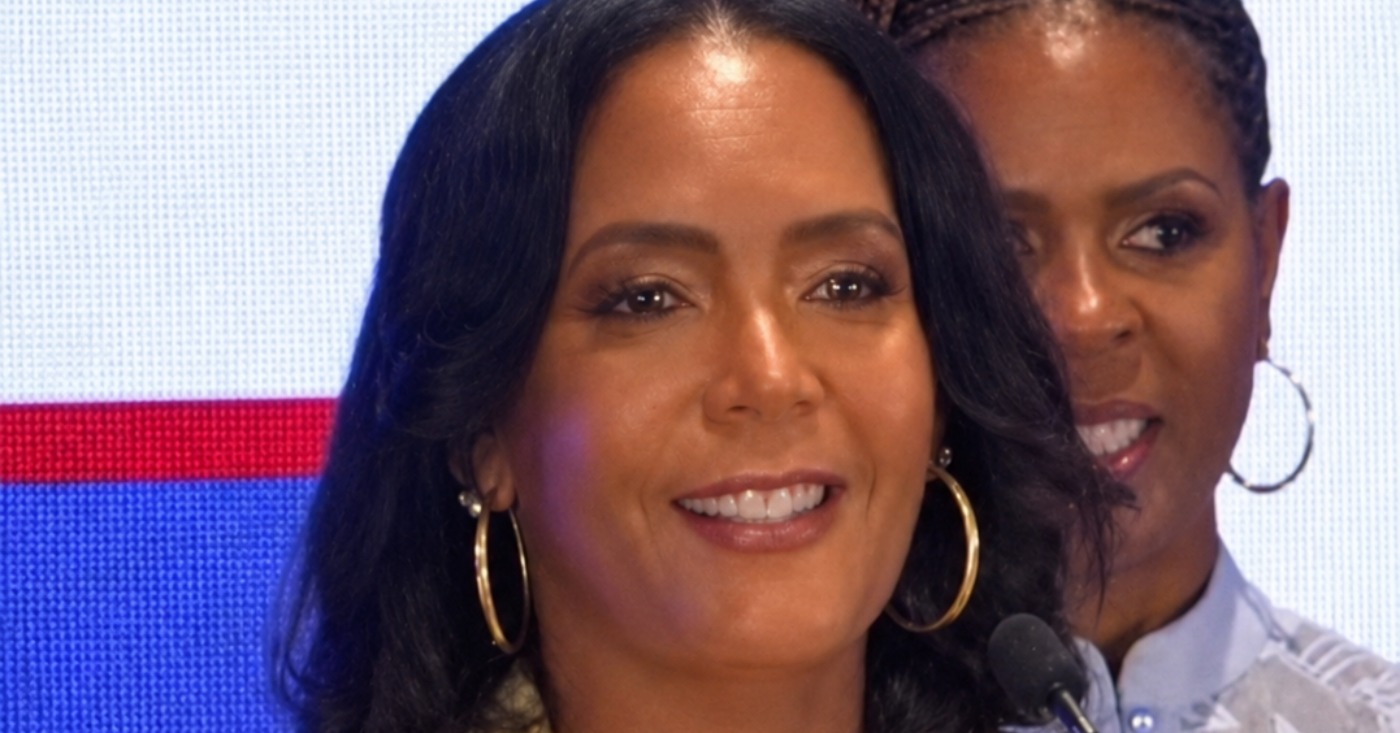
History has been made in Georgia. Keisha Lance Bottoms, the former mayor of Atlanta, has been elected governor of Georgia, becoming the first Black woman in American history to win the highest executive office in any state.
Bottoms’ victory over Republican businessman Rick Jackson represents a defining moment in American politics, breaking a barrier that has stood since the nation’s founding and placing Georgia at the center of a historic political transformation.
For generations, Black women have played a critical role in American democracy, organizing communities, leading movements, mobilizing voters and shaping public policy. Yet despite their contributions, no Black woman had ever been elected governor of a U.S. state.
Until now.
Bottoms’ election also makes her the first woman and first Black person elected governor of Georgia, a state whose political history has been deeply shaped by slavery, segregation, the civil rights movement and the long struggle for equal representation.
Her victory carries particular significance in a state where Black women have been among the most influential forces in voter registration, political organizing and Democratic electoral success.
A fifth-generation Georgian, Bottoms previously served as Atlanta’s 60th mayor from 2018 to 2022. During her administration, she led the city through the COVID-19 pandemic, nationwide protests over racial injustice and a period of significant economic and population growth.
Following her time as mayor, Bottoms served as a senior adviser in President Joe Biden’s administration before returning to Georgia politics to pursue the governorship.
Her campaign focused on expanding access to health care, strengthening public education, increasing wages and addressing the rising cost of living. She also advocated for expanding Medicaid, raising Georgia’s minimum wage to $15 an hour and increasing compensation for teachers and other public employees.
Bottoms faced Jackson, a wealthy health care executive who invested heavily in his campaign and positioned himself as a political outsider. The contest drew national attention as Democrats sought to reclaim the Georgia governor’s office after more than two decades of Republican control.
The historic nature of Bottoms’ victory extends well beyond party politics.
Georgia, once at the center of some of America’s most consequential civil rights battles, has now elected a Black woman to lead its state government. It is a milestone that reflects generations of political participation, organizing and leadership by Black Georgians.
For Atlanta, the moment is especially significant. A former mayor of the city that helped shape the modern civil rights movement will now lead the entire state.
Bottoms’ election opens a new chapter in Georgia’s political history and establishes a milestone that will be remembered far beyond the 2026 election.
For continuing election coverage and results, visit AtlantaDailyWorld.com/election26.
Black History
Hundreds of Black Christian Leaders Arriving in Israel for Martin Luther King-Inspired Mission
Hundreds of African American and African Christian leaders are visiting Israel for the ‘Unfinished Business Pilgrimage,’ inspired by Dr. Martin Luther King’s plans for a pilgrimage in 1967 that was canceled due to the Six Day War. The event aims to promote pro-Israel sentiments amidst rising antisemitism and will expand to thousands of participants in 2027. Pastor Dumisani Washington emphasizes the importance of Black Americans recognizing their role in supporting Israel. Pilgrimage leaders are also delivering gifts to victims of recent violence, reiterating the historical bond between Jewish and Black communities in advocating for justice. Pastor Michael A. Stevens highlights the need for education against antisemitism while suggesting that Israel should be more attuned to issues affecting Black lives.
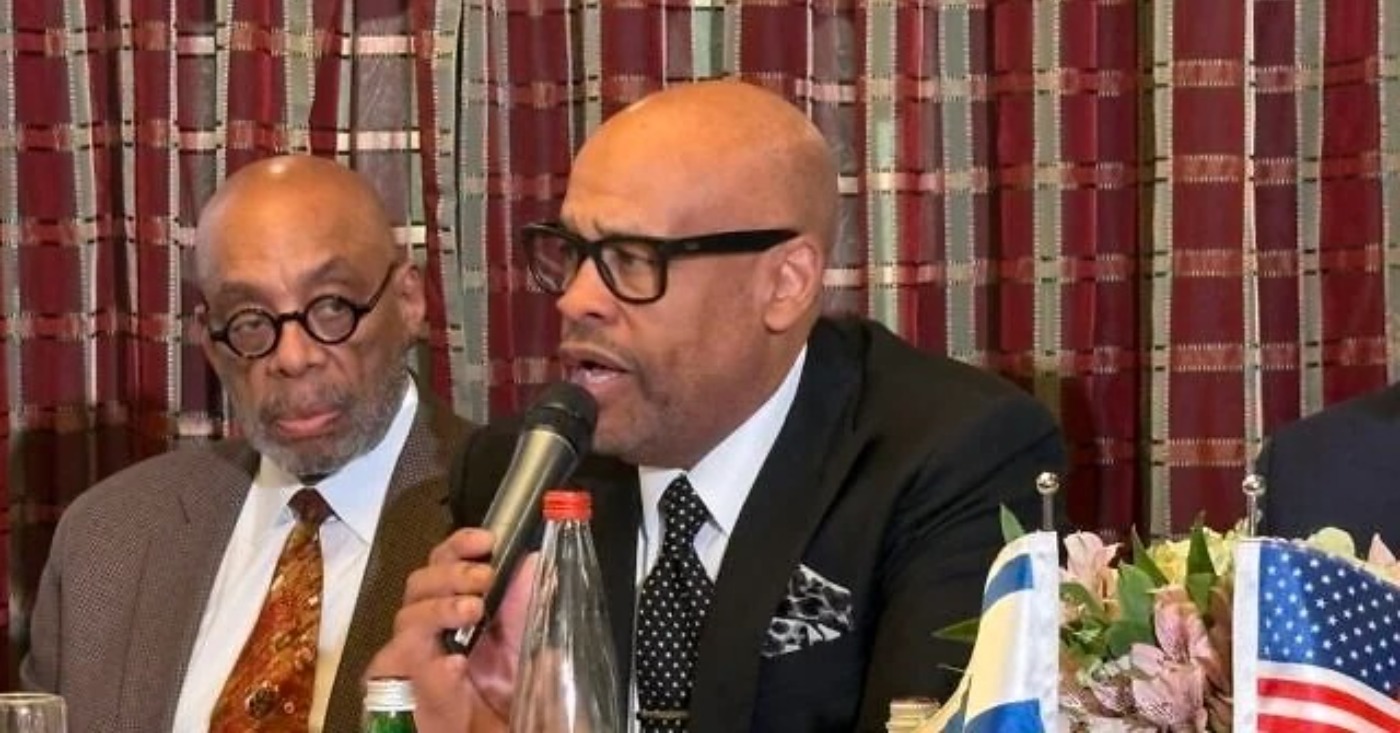
As support for Israel declines precipitously in the US, hundreds of African-American and African pastors and Christian leaders are arriving in Israel this week for a mission inspired by the slain US civil rights leader Rev. Dr. Martin Luther King.
King planned to bring thousands of pilgrims to Israel and Jordan in 1967, but that trip was postponed because of the Six Day War and the political implications of such a trip. He said he would look into coming the next year, but was assassinated in April 1968.
“There were no mass pilgrimages” back then, says Pastor Dumisani Washington, a pro-Israel activist, at a press conference in Jerusalem. “We as Black Americans recognize that Black Americans were about to start something that no one else was doing.”
The “Unfinished Business Pilgrimage” will expand to thousands of participants next year, say organizers, to mark 60 years since King’s planned visit.
“We felt a burden in our heart,” Washington continues. “We see the rising antisemitism on the right and on the left.”
There is a “mountain of support rising from the Black church,” says Pastor Michael A. Stevens, Sr.
The leaders of the pilgrimage present gifts to victims of the Hamas-led October 7, 2023, massacre, including freed hostage Elkana Bohbot; Hila Abir, whose brother Lotan was murdered at the Nova music festival; and Daniel Lischinsky, whose son Yaron was murdered alongside his fiancée Sarah Milgrim at an Israeli embassy event in Washington, DC.
Ther rest of the participants arrive tomorrow, and will visit biblical sites across the country, as well as the site of the Nova massacre.
Steven says that Jewish and Black Americans had a tradition of coming together to “establish what was right, and to set the tone for the nation and for the world.”
“If anyone should stand with our Jewish brothers and sisters, it ought to be African-Americans, it ought to be Africans,” he continues.
Though rates of antisemitism have risen among people of color, Stevens tells The Times of Israel, “I still think we are the lowest-hanging fruit to educate and to learn.” He says, “The African-American Church is still the most influential institution in all of America, in fact, at least in the Black community.”
Stevens says one of the objectives of the mission is to spread awareness that “we cannot have antisemitism in our culture, period.”
At the same time, he says that Israel could improve its approach to Black America: “I believe Israel could be more attentive to the fact that a lot of the loss of lives that we see looks like us. Whether it’s in Gaza, whether it’s Ethiopians and racism.”
Reverend Dr. Benjamin F. Chavis. Jr. is on this delegation representing the Black Press of America and Spill the Honey as a present-day fulfillment of the dream and prior plan of Reverend Dr. Martin Luther King, Jr in 1967 to lead a 5000 Black Clergy Pilgrimage to Israel.
Black Press
DOJ Fights to Keep Rep. Ilhan Omar’s Search Warrant Sealed: Report
GARLAND JOURNAL — Federal prosecutors are petitioning a U.S. District Court to maintain the seal on a search warrant and related records following an FBI search of Rep. Ilhan Omar’s Washington, D.C., home.
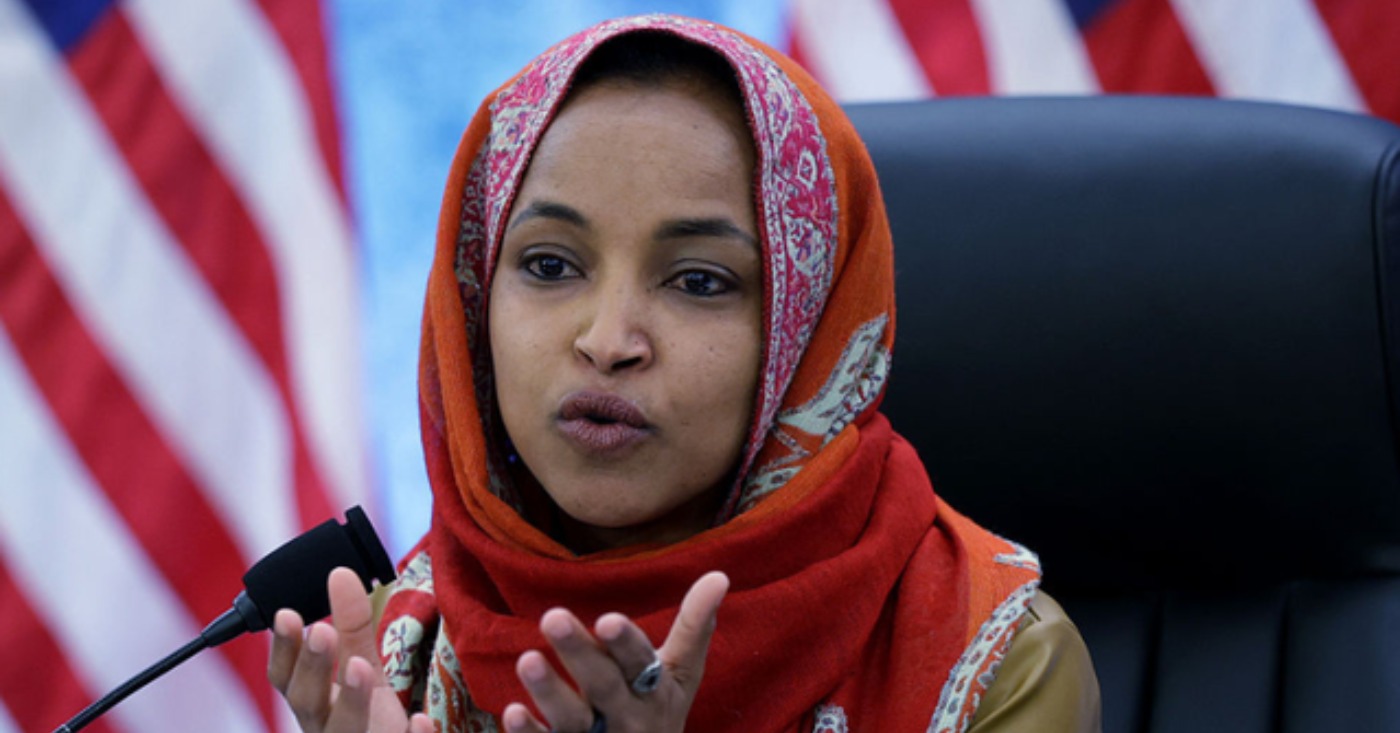
Federal prosecutors are trying to keep sealed the search warrant and related records from and FBI search of Rep. Ilhan Omar’s Washington, D.C., home earlier this month.
According to The Washington Post, a coalition of more than a dozen media organizations, including the Post, is seeking access to the warrant and related records. U.S. District Judge James Boasberg, an appointee of former President Barack Obama, is overseeing the dispute.
In a Tuesday (October 27) court filing, U.S. Attorney Jeanine Pirro argued that the request was premature because investigators are still reviewing evidence seized during the October 12 search and have not decided whether to file charges or whom to charge.
“This request sounds rash because it is rash,” Pirro wrote, according to The Hill. She argued that releasing the records could expose investigative sources and compromise the probe.
“Unsealing everything now imperils the investigation,” the Justice Department wrote, according to the Post.
The media organizations argue that the warrant application and supporting affidavit could reveal the investigation’s targets, the evidence investigators have gathered, and how the probe began, according to the Post.
The October 12 search was part of a federal investigation into allegations that Omar or members of her family misrepresented information on immigration paperwork. The congresswoman has denied wrongdoing and accused the Trump administration of politically targeting her.
As BIN previously reported, the Trump administration has also explored whether Omar could be stripped of her U.S. citizenship.
During an MS NOW interview on Wednesday (October 21), Omar announced plans to move out of her Washington residence, citing safety concerns after the search made her address public.
According to The Washington Post, prosecutors said in the filing that they may not oppose releasing some warrant records, with appropriate redactions, once the warrant has been fully executed and a public charging decision has been announced.
The Black Information Network is your source for Black News! Get the latest news 24/7 on The Black Information Network. Listen now on theiHeartRadio appor clickHEREto tune in live. In this article:DOJ Fights To Keep Rep. Ilhan Omar’s Search Warrant Sealed, U.S. District Judge James Boasberg
Based on reporting by Garland Journal.
Black Press
Oakland NAACP, BWOPA Speak Out Against Alleged Harassment of Black Women Political Leaders
The Oakland NAACP and the Oakland/Berkeley chapter of Black Women Organized for Political Action have issued a joint statement condemning a pattern of harassment, intimidation, and discrimination directed at Black women in politics. Leadership from both organizations noted that these concerns reflect a rise in online hostility and political attacks against public servants. The allegations emerged amid a contentious race for the Oakland Unified School District Board of Education, prompting a public debate over accountability and political conduct. Read more to learn how the involved parties have responded.

The Oakland branch of the NAACP and the Oakland/Berkeley chapter of Black Women Organized for Political Action (BWOPA) have issued a joint statement condemning what they describe as harassment, intimidation and discrimination targeting Black women in politics.
Founded in 1968, BWOPA is a California-based nonprofit advocacy and membership organization that is focused on increasing Black women’s participation and influence in the political process.
Danielle Motley-Lewis, president of BWOPA’s Oakland/Berkeley chapter, told California Black Media (CBM) that the statement reflects growing concerns about online hostility and political attacks directed at Black women candidates, elected officials and public servants.
“These allegations deserve serious attention and should not be dismissed as ordinary political disagreements,” the organizations said in their statement.
The concerns have surfaced amid a contentious race for the Oakland Unified School District (OUSD) Board of Education’s District 6 seat, where candidate LeAna Powell has reported experiencing harassment during her campaign.
Powell is running against Alexandra Williams and incumbent Valarie Bachelor, the school board’s vice president. All three candidates are Black women.
Motley-Lewis said the organizations’ statement addresses concerns extending beyond the school board contest, although Powell’s experiences helped bring the issue into focus.
“I could only speak to what I witnessed on social media. There were various types of harassment online,” Motley-Lewis said of the back-and-forth about the candidates online.
“It was unnerving.”
Powell, a former aide to former Oakland Mayor Sheng Thao, previously filed an informal complaint with the Oakland Public Ethics Commission alleging that Thao, then a City Council member, pressured city employees to work on her mayoral campaign.
Thao was recalled in November 2024 and left office Dec. 17 of that year. She subsequently faced federal charges related to an alleged bribery scheme. The criminal proceedings are separate from the dispute involving Powell’s school board campaign.
Powell also filed a complaint with the NAACP concerning what she described as harassment during her campaign.
Among those publicly criticizing Powell is Brandon Harami, a former Oakland mayoral staffer and LGBTQ+ advocate who said he previously worked with Powell in Thao’s office.
In a Sept. 27 Facebook post, Harami questioned Powell’s qualifications, judgment and political associations.
“District 6 candidate for School Board LeAna Powell does not have the maturity nor spine required to be on the school board,” Harami wrote.
Motley-Lewis said the organizations had documented or witnessed conduct they considered troubling, although she emphasized that their concerns were not limited to Harami or Powell.
Harami has denied the allegations and accused the organizations of misrepresenting his conduct.
In an Oct. 11 Instagram post, he called the joint statement a political smear and demanded that BWOPA and the Oakland NAACP retract it.
He argued that the organizations’ characterization of his actions unfairly portrayed him as having a history of harassment and discrimination. He also contended that the allegations were being used to silence LGBTQ+ voices.
Motley-Lewis said she declined Harami’s request for a retraction because the statement addressed a broader pattern of conduct affecting Black women in politics.
“I was open to brokering that conversation. However, (Harami) was unwilling,” Motley-Lewis said. “He did reach out to BWOP to retract our statement, and I advised him that I would not be doing that. The statement that he was included in (addressed) a broader problem that is experienced by various women.”
Black Press
SEIU Local 1000 and State of California Will Continue to Negotiate New Labor Contract
Thousands of California state employees represented by SEIU Local 1000 recently staged a one-day walkout to protest stalled contract negotiations with Governor Gavin Newsom’s administration. The union, which represents approximately 100,000 public workers, is demanding a 20% wage increase over three years and an end to mandatory four-day in-person work requirements. While the initial strike has concluded, union leadership warns that further demonstrations are likely if the state continues to reject their demands for better pay and telework flexibility. Negotiations are expected to continue as both sides seek a resolution. Read more.
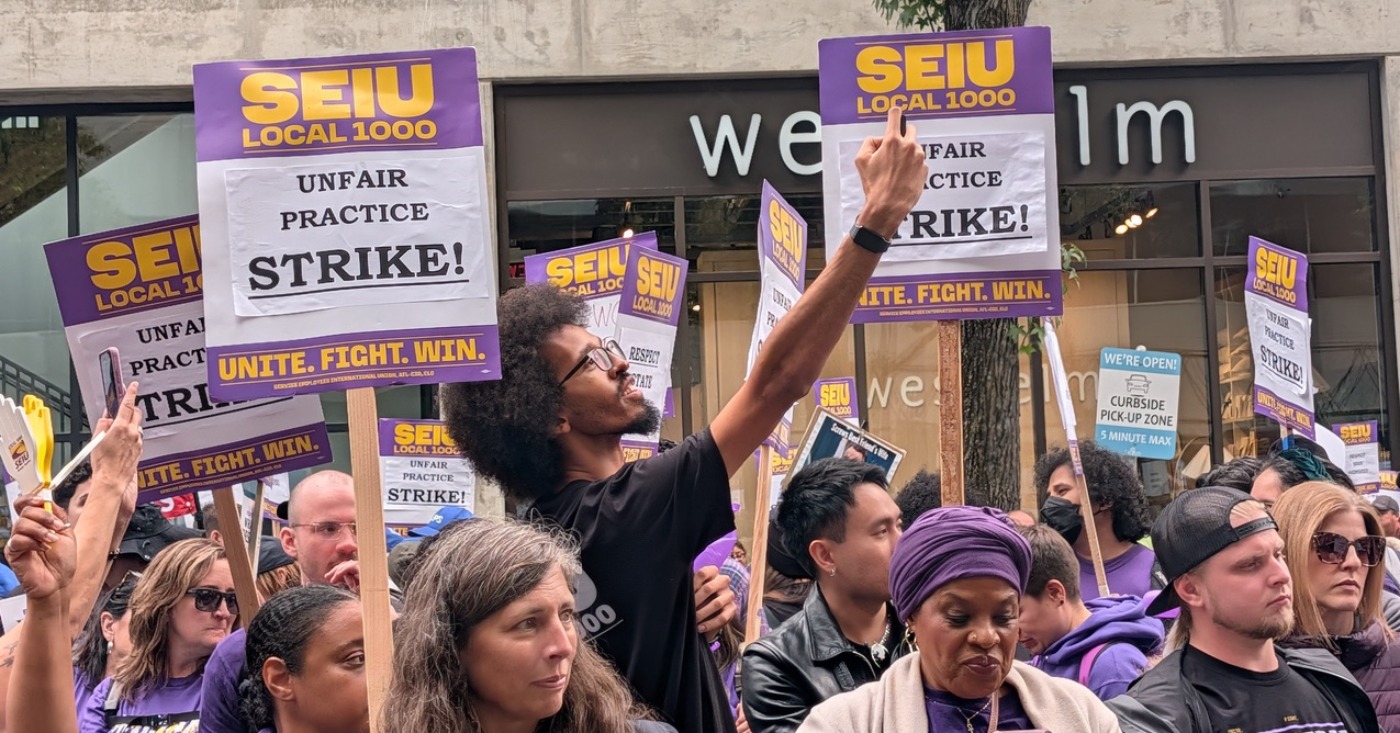
After the Service Employees International Union (SEIU) Local 1000 labor contract expired June 30 and talks with Gov. Gavin Newsom’s administration stalled, the union stepped up its efforts to secure a new agreement, saying its demands had gone unheeded.
On Oct. 21, thousands of state employees represented by SEIU Local 1000 staged a one-day walkout to protest alleged unfair labor practices during negotiations with Gov. Gavin Newsom’s administration.
Although the strike has ended, SEIU Local 1000 President Anica Walls said further demonstrations or an expanded strike are highly likely if contract negotiations remain stalled. The union represents approximately 100,000 public employees statewide.
“We are out here because our jobs matter,” Wells said. “If they continue to refuse to bargain with us in good faith, we are prepared to escalate.”
Sen. Lola Smallwood-Cuevas (D-Los Angeles) expressed support for SEIU Local 1000’s labor action in an Instagram post, emphasizing the importance of fair treatment for workers.
“I stand in complete solidarity with SEIU Local 1000,” Smallwood-Cuevas stated. “More than 100,000 state workers they represent are on strike today fighting for good-faith bargaining, fair treatment, and a contract that reflects the value of the essential public services they provide every day—all things that should be a given for the workers our state relies on the most.”
Smallwood-Cuevas, a member of the California Legislative Black Caucus (CLBC) added, “When California’s workers hold the line, the whole nation pays attention.”
According to union representatives, SEIU Local 1000 is seeking a contract that addresses rising living costs and provides greater workplace flexibility. The union is demanding a 20% wage increase over three years and an end to Gov. Gavin Newsom’s requirement that state employees work in person four days a week.
The union is also seeking increased state contributions toward employee health care benefits to reduce workers’ out-of-pocket costs.
On Sept. 18, Newsom vetoed Assembly Bill 1729, authored by Assemblymember Alex Lee (D-San Jose), which sought to expand telework opportunities for state employees.
The bill would have required state agencies to offer telework options or provide written justifications for requiring employees to work in person. Supporters argued that telework could save taxpayers approximately $225 million annually by reducing office space and parking costs while lowering vehicle emissions and improving employee retention.
Newsom said the legislation would limit state departments’ flexibility to manage their workforces and evaluate telework exemptions individually. He has also emphasized the benefits of in-person collaboration.
“I want people to come back to work, reengage, rediscover, collaborate, coordinate, develop relationships, friendships, and fall in love,” Newsom said in July. “You get three-day weekends. Four years ago, that would’ve been a triumph. Now it’s a burden.”
Union organizers described the Oct. 21 walkout as a one-day unfair labor practice strike, rather than an indefinite work stoppage. The action was intended to demonstrate solidarity and increase pressure on the state during negotiations.
SEIU Local 1000 has been without a contract since its previous three-year agreement expired June 30. Negotiations are expected to resume.
Responding to the statewide walkout, the California Department of Human Resources (CalHR) said it “remains focused on achieving a fair and responsible agreement with SEIU Local 1000 and continues to be available at the bargaining table.”
Black Press
OPINION: We Can Restore Checks and Balances on Trump
With the presidential administration facing criticism over its handling of healthcare, inflation, and government spending, political observers are shifting their focus toward the upcoming congressional elections to restore institutional checks and balances. Recent data suggests Democrats are within reach of the 218 seats needed for a House majority, while specific Senate races in states like Texas and Michigan remain pivotal. The outcome of these contests will determine the legislative branch’s ability to challenge executive policies on tariffs, taxes, and military engagement. Click to read more.
Rapper Nikki Minaj is the latest high profile political tool of Donald Trump. The president recently remarked on the Afro-Trinidadian singer’s backside, praising her “beautiful ass.”
Is this what passes as an appeal for the Black vote? But Trump is an equal opportunity offender.
At recent rallies, Trump made homo-erotic comments about Republican men and their butts, like when he referred to Ohio Senator John Husted’s as a “pile of muscle.” But shouldn’t Trump be talking about the real issues?
Gas prices are now higher than they were under former President Joe Biden. Inflation is higher than when Trump took office, while he has redecorated the White House and already spent over $200 million on gold filigree. At least 3 million people have been kicked off of Medicaid or Obamacare because of Trump-backed legislation in Congress.
The country needs a change in how Trump does business. We need a strong independent Congress in both the House and Senate that will be our voice to stand up to ideas like a ‘forever war.’ Or tariffs against friend and foe.
This is the important math of the day: Democrats need 218 seats for a majority. Four more needed than their current 214. The latest Cook Report shows Democrats could gain 12-22 House seats.
But you still need the Senate, where Republicans have 53 members and the Dems have 47.
To have control, Dems would need to beat the tie breaker vote cast by VP J.D. Vance. Democrats need to get to 51 and that means four Senate victories on Nov. 3.
Of the key states politicos are watching, North Carolina and Georgia look blue. Can they get two more from toss-up states like Alaska (Mary Peltola?), Maine (Troy Jackson?), or Ohio (Sherrod Brown)? Observers are talking about two races in particular: Texas and Michigan.
In Texas the Talarico/Paxton race is fascinating. State legislator James Talarico is a choir boy compared to Texas Attorney General Ken Paxton—whose rhetoric and record suggest he would be more amoral than Trump.
Then there’s Michigan, where Abdul El-Sayed is running against Mike Rogers.
The Black vote has wavered there, with some high-level Black pols coming out against El-Sayed on Fox News. Trump has also called El-Sayed a “jihadist and a terrorist.”
Born in the U.S., El-Sayed is a highly educated Rhodes Scholar, and a physician. The “model minority” is a terrorist? But like all people of color, he gets othered. Assumptions get made. His skin color and his religion make him a terrorist.
What about local issues like the billionaire tax in California. Prop. 40? I hate direct legislation by propositions because the proposals are usually flawed and can’t be worked out easily—like if legislators actually did their job in the state house.
But taxing billionaires more has to happen on the state and federal level. Prop 40 is a start. Even if it’s one time and goes mostly to health care. It’s a start toward fairness.
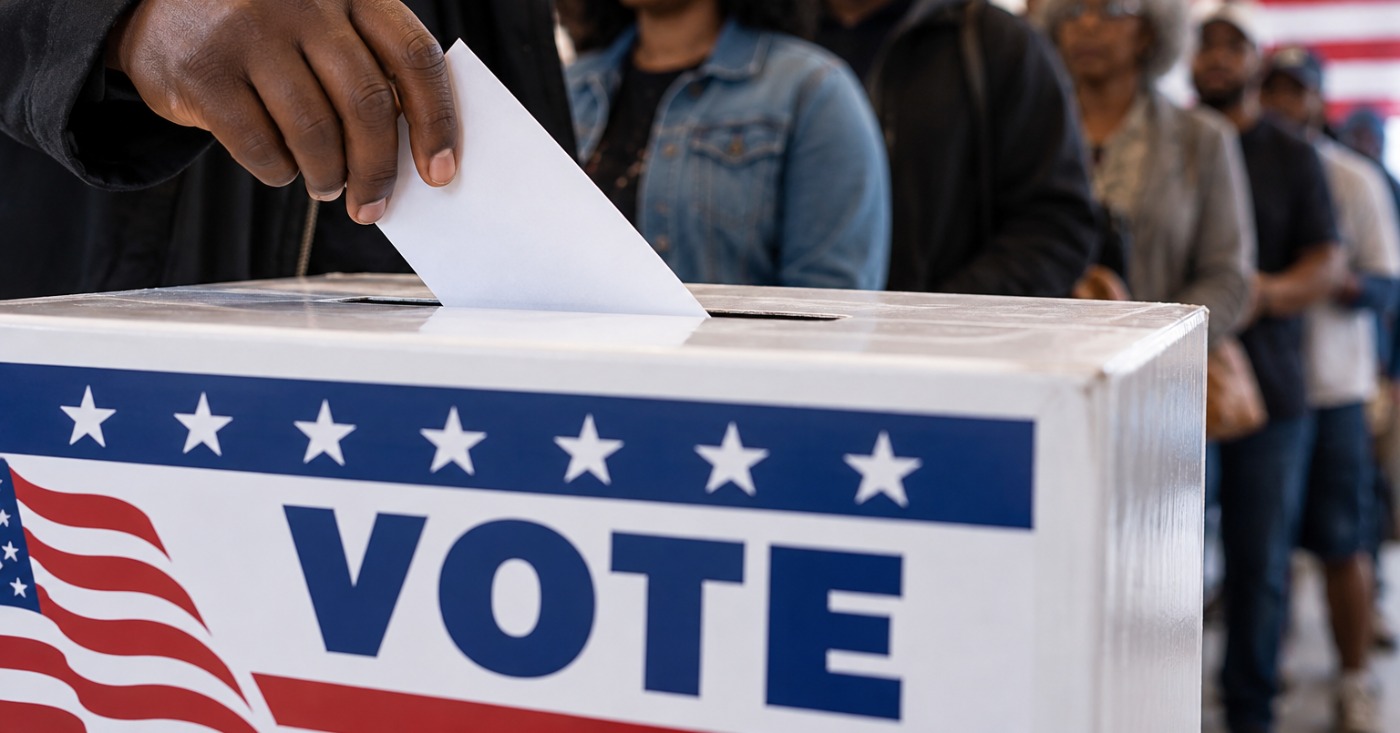
Whatever you say. Just vote. Now. Early. Don’t wait.
About the Author
Emil Amok Guillermo is a journalist, commentator and comic monologist. See him on his micro talk show: YouTube.com/@emilamok1


Ole Smoky Moonshine and Music ft. Pynk Beard

Ask About These Car Insurance Discounts to Save More #shorts

“The Right People on the Bus”: Coach Tremaine Jackson on Prairie View’s Turnaround

Willie D on Houston legacy, turning 60

Washington vs. Worthing (10-2-26) | Houston High School Football

Texas turns blue: Black Houstonians say the work starts now

Elkins vs. Clements (10-29-26) | Houston High School Football

Fort Bend Marshall vs. Terry (10-8-26) | Houston High School Football

Furr vs. North Forest (10-13-26) | Houston High School Volleyball

Heights vs. Hastings (10-17-26) | Houston High School Football

All Skinfolk Ain’t Kinfolk

Practitioners of African Traditional Spirituality Offer Ancestral Reverence Ritual Oct. 31

Latinas Deserve Equal Pay. Unions Help Make It Happen.

Tamiko Armstead | 2026 Lifetime Achiever in Education

Oakland Awarded More than $14 Million in State Funding

OP-ED: The Black Church Writes AI’s Next Chapter

2026 Voting Guide: Every Candidate and Proposition Explained!

Jendayi Arrest Raises Community Concerns Regarding Sheriff’s Chain of Command

Inside 820 S. Michigan: New Book Captures the Lost World of Ebony and Jet

OP-ED: If the ‘Cornell 7’ Were Black Men at an HBCU — America Wouldn’t Be This Sympathetic
Ole Smoky Moonshine and Music ft. Pynk Beard
Ask About These Car Insurance Discounts to Save More #shorts
“The Right People on the Bus”: Coach Tremaine Jackson on Prairie View’s Turnaround
Willie D on Houston legacy, turning 60
Washington vs. Worthing (10-2-26) | Houston High School Football
Texas turns blue: Black Houstonians say the work starts now
Elkins vs. Clements (10-29-26) | Houston High School Football
Fort Bend Marshall vs. Terry (10-8-26) | Houston High School Football
Furr vs. North Forest (10-13-26) | Houston High School Volleyball
Heights vs. Hastings (10-17-26) | Houston High School Football
-

 Black History1 day ago
HISTORY MADE: Keisha Lance Bottoms Becomes First Black Woman Elected Governor in American History
-

 Black History1 week ago
Retirement Triggers Doctor to Pen Book for Young Audience
-
 Featured4 days ago
Multi-Faith Leaders Representing 10 Million People Launch National Anti-Authoritarian Initiative
-

 Art1 week ago
Capturing Black Life’s Beauty
-

 Black Press1 week ago
Fatigue, Bloating, and Inflammation: Spotting the Subtle Signs of MASLD
-

 Black Press1 week ago
When Your Faith Is Put to the Test

