
National
Some Faith Leaders Victimize Rape Survivors Again



By Jazelle Hunt
NNPA Washington Correspondent
THIRD IN A SERIES
WASHINGTON (NNPA) – Simone Oliver had always been called, as they say in the religious community. She was active in the Baptist church throughout her youth, playing piano for the youth choir and even ghostwriting sermons for several pastors as a teen. She loved Scripture, loved preaching, and loved God. For her, church was heaven-on-earth.
But it was also hell. At 15 years old, Oliver’s then-pastor called her into his church office, grabbed her, put his tongue in her mouth, and fondled her until she broke away. It was the third time in her life she had been sexually assaulted, already a rape survivor at 12 years old at the hands of her sister’s first husband, and again at 13 by a family friend staying in her home.
Still, her faith did not waver. In fact, it grew stronger as Oliver transitioned from being a public school teacher to a minister.
In the mid-2000s, she took on an associate pastor’s role at a non-denominational church in New Jersey. The founding pastor tried to court her for years until she finally acquiesced and the two began a secret relationship. However, a year later, he decided to marry someone else. Still, the affair continued.
“I couldn’t get out. It was almost like sinking into an abyss,” she remembered. “I had gone to someone in the church to let them know this was going on. And they pretty much turned on me.”
And no group leans on the church more than Blacks.
“While the U.S. is generally considered a highly religious nation, African-Americans are markedly more religious on a variety of measures than the U.S. population as a whole, including level of affiliation with religion, attendance at religious services, frequency of prayer and religion’s importance in life,” according to a report titled, “A Religious Portrait of African-Americans” by the Pew Forum on Religion & Public Life.
Black Women are the Most Religious
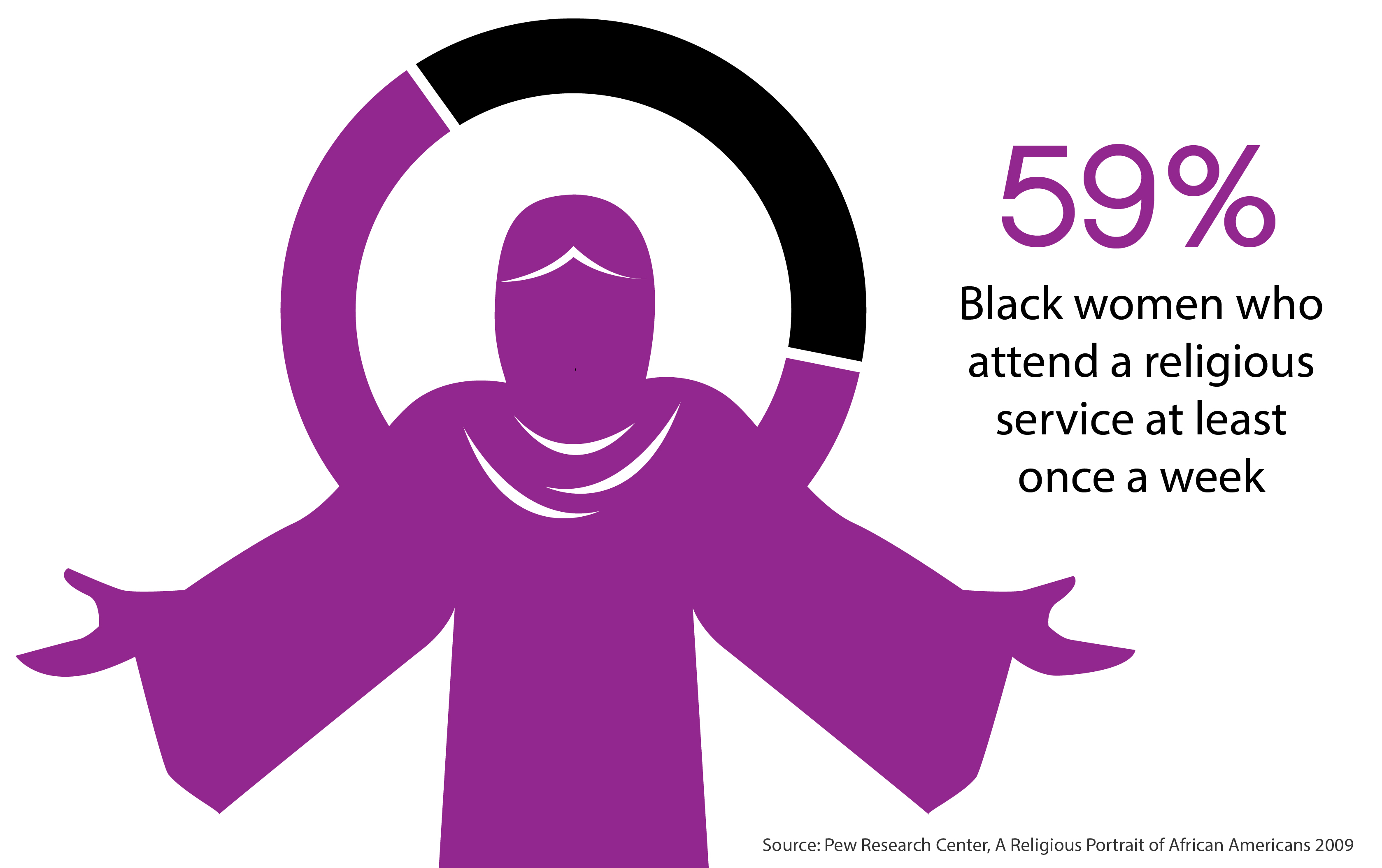
And among the most religiously committed, no segment is more committed than African-American women. The report found that 84 percent of Black women say religion is very important to them and 59 percent say they attend religious services at least once a week.
As committed as she was, Oliver eventually left that church, broke off the affair with the pastor, began dating the man who would become her husband, and was accepted into Princeton Theological Seminary. As her life got better, her former co-pastor’s behavior grew worse. He sent threats to her regularly, and began stalking her and her then-fiancé.
She recalled, “He said to me – not of himself – but he said, ‘A man can commit murder, do his time, put on a suit, and still be a man. But when a woman’s reputation is ruined, she is ruined.’ Those were his threats to me.”
In 2011, five days before her wedding, the pastor’s behavior moved beyond idle threats.
“It’s a miracle story I’m here and alive, because this man stabbed me 30 times. I was paralyzed from the waist down,” Oliver recounted. Years later, she still remembers his final threat, prior to the day of the attack: “‘When I’m finished with you, you will not get married, you will not have a ministry, and Princeton will never have you.’ That was the last thing he said to me.”
Oliver was stabbed mostly in her abdomen and back, damaging her spinal cord and liver. Her former co-pastor was arrested walking down the street covered in her blood, still holding his hunting knife.
Survivors Need More than Prayer
Sharon Ellis Davis, a former criminalist in the Chicago Police Department and retired pastor, knows a bit about crime from more than one perspective.
She said, “I was married to a police officer, and there was a domestic abuse issue and sexual abuse. It was dismissed all the time. It was a matter of, ‘You all stop,’ or ‘Don’t be so bad,’ or ‘It’ll be okay.’ But never ‘I hear you, I understand you, I believe you.’ Even if [the department] knew the abuser was guilty, there was that code where you don’t rat on other police officers.”
So Davis channeled her frustration into something useful. She successfully lobbied for an internal domestic violence advocate, a civilian who would support and speak for domestic violence victims in police officers’ homes and became a full-time police chaplain.
But in Davis’ own church experience – first in the Pentecostal church as a child, then in the United Church of Christ as an adult – she saw parallels to the way she was treated by the police department.
“The church was nice to me, but they didn’t know what to do with me,” she said. “I need more than prayer, I need more than a hug. In fact, sometimes [survivors] don’t even want to be touched. I need more than a deliverance service, I need more than a Band-Aid on what forgiveness might look like.
“The two very important institutions that I was involved with – the church and the criminal justice system – both in the time that I needed them, failed me. Now they didn’t know they did, because they were not conscious of it.”
Davis feels that lack of consciousness grew from the problematic messages about women coming from the pulpit. For example she points out the Biblical stories that are emphasized, such as the false rape accusation of Joseph, and the ones that are largely ignored, such as the actual rapes of Dinah and Tamar as well as David’s coercion of Bathsheba.
To her, they all sent the message that the burden of sexual trauma is not welcome in the sanctuary.
“The church has not become the safe place it needs to be that would give some women in church permission to disclose,” Davis said. “The consequences of not having church as a safe place…you can kill the souls of the people that are there. People can lose their faith.”
Sex and sexuality remain taboo in many faith communities.
“How is it that the church is going to really be advocates for victims of rape in the Black church when even having normal conversations of sexuality can’t happen? How can we talk about patho-sexuality if we haven’t talked about normal sexuality?” she asked. “We’re still stuck in many way on the thou-shalt-nots. We spend more time judging the behavior than helping someone understand this was not their fault.”
Even worse than a lack of knowledge among leadership is that perpetrators often exist within the church, their violence and damage unchecked and even covered up.
Oliver said, “I had a woman call me – I thought she was calling to check on me and see how I was – but she called to tell me her own story, about a pastor. Someone [else] told me a story. She was invited out to another church to preach, and was raped by the pastor who had invited her. When the third person, and fourth person, and the fifth time you hear these stories…. I’m like okay. Something is going on here.”
After more than three months of physical rehab, Oliver overcame her paralysis and learned to walk again. She testified in court against her attacker, who was sentenced to 21 years in prison.
For all their silences and inadequacies, many Black faith centers are adept at serving their communities and fostering communal solutions and cooperation. Both Davis and Oliver assert that Black faith centers have also made great strides toward addressing domestic violence, with permanent ministries and pastor trainings becoming more common.
“We’re better in the Black church at caring for people,” Davis explained. “But we’re not as good at having a model of pastoral care for people who have been sexually abused. We’re not having clergy exposed to the education that they need to understand these dynamics.”
Some outside the faith community recognize this as well, including Sherelle Hessell-Gordon, executive director of the D.C. Rape Crisis Center.
“The Word says faith without works is dead,” she says. “There has to be fruit, there has to be action, there has to be community…there has to be active justice,” she said. “The rhetoric of ‘It’ll get better by and by’ – nah. That’s just spirituals to move our souls. When you leave that room, you’re still carrying that cross.”
Oliver, now a full-time seminary student, said, “I’m a rape survivor, but I’m also a gender-based violence survivor, and it took the violence for me to really reckon with the rape,” she acknowledged. “In telling my story…I started to realize how many horror stories are in church.”
NEXT WEEK: Breaking the silence
Part I: Rape and the Myth of ‘The Strong Black Woman’
Part II: Rape’s Other Victims
(The project was made possible by a grant from the National Health Journalism Fellowship, a program of the University of Southern California Annenberg School for Communication and Journalism.)
###









Black History
Doulas Are Helping Black California Moms Navigate Pregnancy–Even as High Mortality Rates Persist
In California, Black women experience the highest pregnancy-related mortality rate — about four times greater than other women, according to statistics. From 2021 to 2023, the leading causes of pregnancy-related deaths included cardiovascular disease, COVID-19, hemorrhage, sepsis, amniotic fluid embolism, and pulmonary embolism.
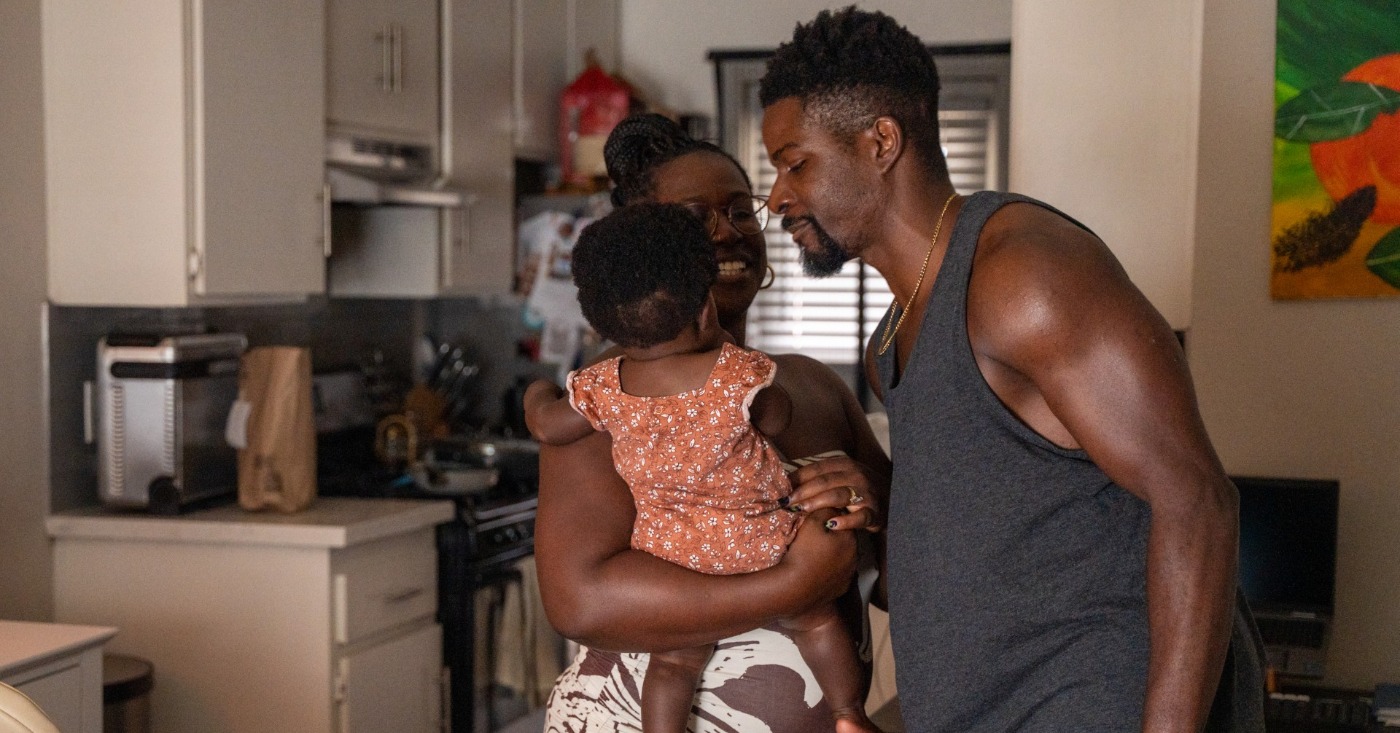
After losing twins, Long Beach resident Cassandra Carter approached the birth of her daughter, Nyomi, last November with anxiety. She wanted support for herself and her husband, Adewole, that extended beyond routine medical care.
“Getting pregnant as a Black woman, I wanted a team around me that made me feel safe,” she said. “I know all about the mishaps that Black women experience.”
Carter, a therapist and self-described hippie, hired Yvette Perry, a doula and co-founder of Divine Birthing Services LLC in Lancaster. Perry helped Cassandra craft a detailed birth plan.
“I was worried about postpartum depression. Mrs. Yvette knows a lot about how postpartum affects men as well,” Carter explained.
Perry was present the day Nyomi was born. She held the baby when Carter or her husband needed a moment and even set up candles in the birthing suite.
“Whatever I needed for my comfort, she was there,” Carter said of Perry. “She was there as an advocate and voice. I had a really serene birthing experience because I had someone extra who wasn’t tied to me as my family.”
Perry, a doula for nearly six years, said preexisting conditions, poor communication and dismissive hospital care heighten health risks for Black mothers.
“Sometimes, Black mommies are not being heard. They don’t know they have rights. They don’t know they can say, ‘no,’” Perry explained. “Doulas empower them. We are there to educate them.”
Perry’s concerns reflect a broader public health crisis. According to the Centers for Disease Control and Prevention’s 2024 maternal mortality report, non-Hispanic Black women in the U.S. died from pregnancy-related causes at a rate of 44.8 deaths per 100,000 live births.
In California, Black women experience the highest pregnancy-related mortality rate — about four times greater than other women, according to statistics. From 2021 to 2023, the leading causes of pregnancy-related deaths included cardiovascular disease, COVID-19, hemorrhage, sepsis, amniotic fluid embolism, and pulmonary embolism.
The Centering Black Mothers in California report found that structural racism — including barriers to high-quality health care, and chronic stress— disproportionately harms Black women.
In a statement to California Black Media (CBM), the California Department of Public Health (CDPH) said maternal mortality disparities stem from multiple factors. The department said addressing structural racism, listening to Black women’s experiences and reducing provider bias are key to closing the gap.
California began covering doula care as a Medi-Cal benefit in 2023, providing eligible patients with support during pregnancy, childbirth and the postpartum period, according to CDPH.
Whitney Dotson of Inglewood wanted an expert on pregnancy, labor, and delivery to guide her and her husband, Anthony, through the birth of their son, Anthony III. So, she hired Perry for doula support.
“It’s always more comfortable when you can have a second opinion,” she said. “Knowing she was better versed in what the options were, made me more comfortable.”
Dotson, 39, had a healthy pregnancy but faced recommendations common for expectant mothers over 35. Her doctor advised inducing labor at 39 weeks, but she hoped to carry to full term.
“I wasn’t comfortable with that,” she admitted.
Perry provided Dotson with information about induction guidelines and alternatives, helping her understand her options and communicate her preferences.
Then, Dotson returned to her doctor.
“I said, ‘I don’t want to — and this is why,’” she recalled. “He agreed and pushed the induction date back a week.”
Perry also advised Anthony on how he could support his wife during and after the pregnancy and during Anthony III’s birth. She also reminded Dotson to change birthing positions — from her back to her hands and knees.
Before Saveneh Martinez became a doula with Fierce Advocates in Contra Costa County, she was a new mom, uneducated on aspects of birth, which led to her first child, Colton, being placed in a Neonatal Intensive Care Unit.
“I didn’t know my choices,” she said.
Martinez called it “lifesaving” for expecting moms to have a doula.
“It should be a medical right,” she said.
California Perinatal Quality Care Collaborative (CPQCC) Senior Associate Medical Director Kimberly D. Gregory said research suggests that doulas decrease the pre-term birth rate and the likelihood of a C-section.
“Having a doula is a proactive thing to do,” she said.
Efforts are being made across the state to reduce maternal deaths.
CDPH’s Title V Action Plan aims to reduce pregnancy-related deaths among Black birthing mothers from 49.7 to 42.3 per 100,000 live births by 2030 through improvements in patient-centered care, expanding community-based perinatal teams, and addressing the social factors that contribute to poor maternal health outcomes.
CDPH’s Black Infant Health (BIH) Program and Perinatal Equity Initiative (PEI) have already begun to make headway.
“BIH’s prenatal group model improves key intermediate outcomes for participants, including increased social support and empowerment, better stress management, reduced depressive symptoms and gains in health knowledge and behaviors such as safe sleep practices and reduced smoking,” the CDPH told CBM.
“PEI’s early implementation results show progress across several participant-reported areas, such as improved birth experiences, breastfeeding initiation, and coparenting skills among fathers and partners,” the CDPH statement continued.
Gregory said the California Pregnancy Associated Review Committee examines maternal deaths and develops guidelines to help hospitals improve care. One of its main recommendations focuses on how hospitals respond to hemorrhaging, a leading cause of pregnancy-related deaths.
Gregory said CMQCC also created standard clinic care practices for cardiovascular disease and sepsis, two more drivers of maternal mortality, but widespread implementation across the state is pending.
She noted that although there are 800 maternal deaths a year in the U.S., there are also 3.6 million births.
“Most people will do well,” she said. “But you should know about complications like preterm birth. You should know about complications like diabetes, preeclampsia and postpartum depression.”
Martinez said doulas help to make birthing the transformative experience that it is, instead of a routine clinical transaction.
“Being able to feel heard, seen, safe, respected, and just being able to create spaces for them to be held as well,” she said.
Supported by the California Health Care Foundation (CHCF), which works to ensure that people have access to the care they need, when they need it, at a price they can afford. Visit www.chcf.org to learn more.
Black Press
Statement from the President of the National Association of Black Journalists on Press Ban
TEXAS METRO NEWS — The National Association of Black Journalists (NABJ) condemned President Donald Trump’s decision to deny access to MS NOW journalists and his threats against CNN and Politico due to unfavorable coverage. The NABJ stated that journalists hold power accountable for the American people, and government officials cannot grant or withhold access based on reporting they like or dislike.
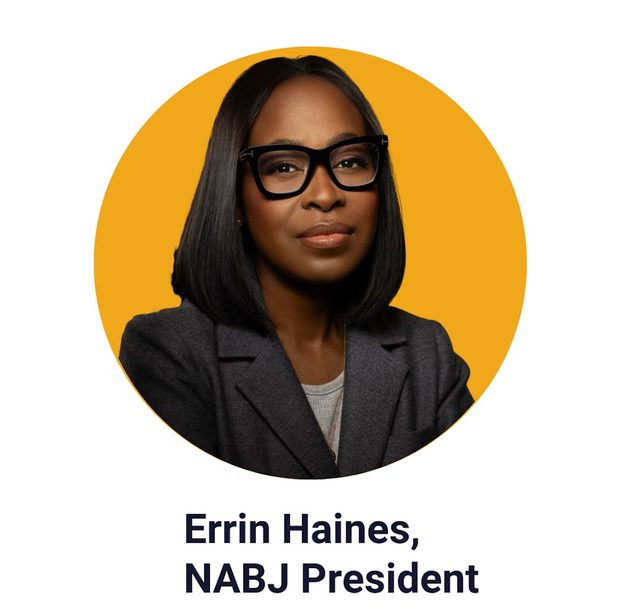
NABJ condemns President Donald Trump’s decision to deny access to MS NOW journalists and his threat to exclude CNN and Politico because of coverage he dislikes. The role of journalists is to hold power accountable on behalf of the American people. Government officials cannot reward reporting they find favorable with access, or withhold access as punishment for journalists who have scrutinized or criticized them. This retaliation is a threat not only to the news organizations being targeted, but to every journalist working to report independently and without fear of government reprisal. The White House belongs to the American people, and they have a right to know what their government is doing. Journalists must be free to ask difficult questions and report the answers. A free and independent press is not a privilege granted at the discretion of any president. It is a cornerstone to a healthy and functioning democracy. The First Amendment can never be optional.
Based on reporting by Texas Metro News.
Black Press
America’s Reading Crisis Demands More Than Concern. It Demands Action.
JACKSON ADVOCATE — A national literacy crisis is emerging as reading achievement continues to decline across the United States. Nearly 40% of fourth graders read below the basic level, and roughly one-third of eighth graders are below basic, marking the highest share ever recorded.

By Marc H. Morial
National Urban League President & CEO
New York City’s troubling decline in reading scores, despite one of the most ambitious literacy reform efforts in the nation, is a wakeup call for the entire nation.
Across the country, reading achievement continues to decline. Nearly 40 percent of fourth graders read below the basic level and roughly a third of eighth graders are reading below basic, the highest share ever recorded.
Taken together, these numbers reveal a national literacy crisis that threatens economic opportunity, educational equity, and our nation’s future competitiveness.
Reading is not merely another subject in school. Reading is the foundation upon which all learning rests. A child who struggles to read struggles to learn history, science, mathematics, and civics. A young person who cannot effectively read and analyze complex information faces barriers to college completion, workforce success, and informed participation in our democracy.
That is why the growing literacy crisis is fundamentally an opportunity crisis. Behind every percentage point is a child whose future opportunities hang in the balance. Persistent achievement gaps mean that Black and Latino students continue to bear a disproportionate share of the consequences when reading instruction falls short. If we are serious about economic mobility and educational justice, literacy must be at the center of the conversation.
For more than two decades, many schools embraced Balanced Literacy approaches that sought to cultivate a love of reading by putting books in students’ hands and encouraging independent reading. The approach was well-intentioned, but too often foundational skills instruction, particularly phonics and decoding, suffered.
The evidence is increasingly clear that explicit, systematic instruction helps more children become successful readers. States and school districts that are embracing these principles deserve credit for moving in the right direction. But millions of students are already in middle school, high school, and even college struggling to read complicated texts, analyze difficult arguments, and complete entire books.
What is our plan for them?
Too many students arrive in high school lacking the reading stamina necessary to engage deeply with literature, history, or complex informational texts. College professors increasingly describe students who struggle with lengthy assignments that previous generations navigated more comfortably.
To be clear, Balanced Literacy alone cannot explain these trends. Increased screen time, constant digital distractions, shortened attention spans, and the dominance of algorithm-driven content all influence students’ reading habits and learning experiences.
Yet recognizing these factors cannot become an excuse for inaction.
Instead, it should compel us to think more broadly about literacy.
The challenge before us is not simply helping children sound out words. It is helping them develop the capacity to wrestle with complex ideas, sustain attention, evaluate evidence, and build knowledge through reading. It is helping them become informed citizens and lifelong learners.
And that requires a comprehensive, systemic strategy.
We need high-quality literacy instruction beginning in early childhood settings and extending throughout elementary school. We need to strengthen early intervention so that struggling readers receive support before learning gaps become entrenched. We must carefully examine the quality and effectiveness of programs serving our youngest learners, including Head Start and other early childhood initiatives.
At the same time, we need a national commitment to literacy recovery for older students. Districts and states should be developing evidence-based strategies that help adolescents strengthen comprehension, vocabulary, knowledge-building, and engagement with complex texts. Students who fell behind during the pandemic and those who continue to struggle deserve intensive support, not lowered expectations.
We should also have serious conversations about the role of technology in children’s lives. Restricting unnecessary screen exposure, particularly in the early grades, should be part of a broader effort to rebuild reading habits and attention spans that support learning.
More concerning than the decline in reading scores is the absence of a clear, large-scale strategy to address the growing crisis. Every year that a struggling reader falls further behind increases the likelihood that they will face lifelong educational and economic disadvantages.
The recent reading results from New York City are a warning. The national NAEP results are an even louder one. Together, they tell us that incremental change is not enough.
We know more about how children learn to read than ever before. We know that literacy is the gateway to opportunity. What remains to be seen is whether we have the collective will to act with the urgency this moment demands.
Our children cannot afford for us to wait.
Based on reporting by Jackson Advocate.
Art
Peter Magubane: a Camera Against Apartheid
THE POSITIVE COMMUNITY — Peter Magubane, a pioneering South African photographer, dedicated his life to documenting the realities of apartheid. Born in 1932, Magubane began his career at Drum magazine in 1954, initially as a driver before becoming a photographer.
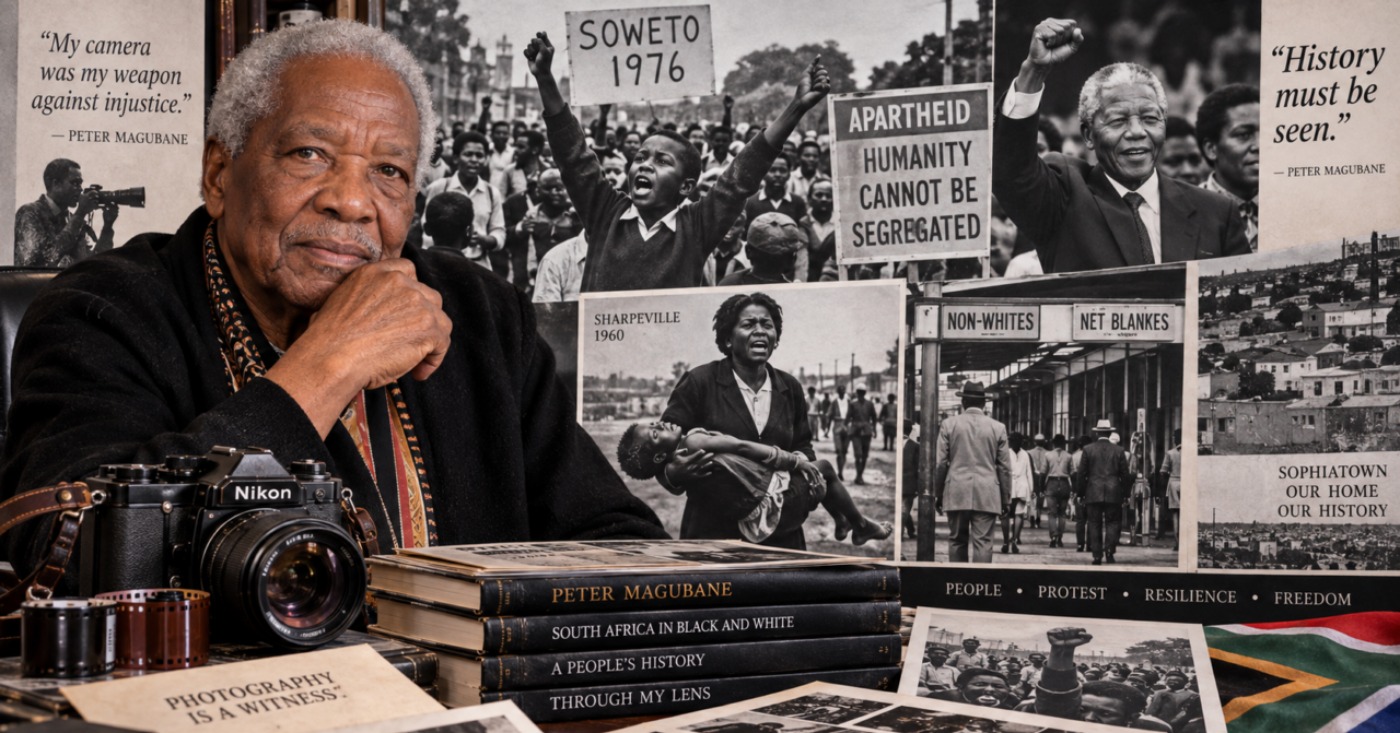
Peter Magubane was more than a photographer. He was a witness, storyteller, historian and courageous chronicler of one of the most turbulent periods in South African history. Born on January 18, 1932, in Vrededorp, Johannesburg, and raised in Sophiatown, Magubane discovered photography as a young boy after receiving a Kodak Brownie camera. That simple camera would eventually become his instrument for documenting the lives, struggles and determination of Black South Africans. He died on January 1, 2024, at the age of 91, leaving behind one of the most important photographic archives of South Africa’s apartheid era.
Magubane’s professional journey began at Drum magazine in 1954. He initially worked as a driver and messenger, but his ambition was to become a photographer. Under the mentorship of Drum’s legendary chief photographer Jürgen Schadeberg, Magubane developed his skills and began photographing major political and social events. His first significant assignment involved covering the 1955 African National Congress convention. From that point forward, photography became his way of documenting a country undergoing enormous change.
The South Africa that Magubane photographed was governed by apartheid, a system that legally enforced racial segregation and discrimination. For Black South Africans, everyday life was shaped by restrictions on where they could live, work and travel. Magubane did not limit himself to photographing politicians or famous leaders. He photographed ordinary people—children, workers, families and communities—giving the outside world a visual record of what apartheid meant in everyday life.
One of the defining moments of Magubane’s career came in 1960, when he photographed the aftermath of the Sharpeville Massacre. His photographs helped bring international attention to the violence surrounding resistance to apartheid. He also photographed the 1956 women’s anti-pass march, the Rivonia Trial involving Nelson Mandela and other activists, and numerous other events that became part of South Africa’s historical record.
Magubane paid an enormous personal price for his work. In 1969, he was arrested while photographing protesters outside Pretoria Central Prison. He was subsequently held in solitary confinement for 586 days. After his release, the apartheid government placed him under a banning order that severely restricted his ability to work and move freely. Yet the restrictions did not convince him to abandon photography. Instead, they demonstrated just how powerful the authorities believed his photographs could be.
In 1976, Magubane documented the Soweto Uprising, when thousands of Black students protested against the apartheid government’s education policies. His photographs captured young people confronting police violence and became some of the most internationally recognized images of the uprising. Despite the danger, Magubane continued photographing what was happening around him. His work transformed individual moments of protest into permanent historical evidence that could not easily be erased.
His creativity was matched by his determination to get the picture. Because authorities restricted photographers and attempted to prevent journalists from documenting certain events, Magubane sometimes concealed his camera in unusual places, including a hollowed-out Bible, bread and other objects. These methods allowed him to continue working when openly carrying a camera could attract police attention. His photographs demonstrated that documentary photography sometimes requires not only technical ability but extraordinary courage and resourcefulness.
After Nelson Mandela was released from prison in 1990, Magubane entered another important chapter of his career. He became Mandela’s official photographer and documented the transition toward democracy, including significant moments surrounding South Africa’s first democratic election and the Truth and Reconciliation Commission. The photographer who had spent decades documenting resistance now had the opportunity to photograph a country moving toward a new political era.
Magubane’s legacy extends far beyond the individual photographs he made. He published numerous books, exhibited internationally and received major honors, including an honorary Doctor of Literature from the University of Cape Town in 2010. His photographs remain part of the historical record because they show not only the brutality of apartheid but also the humanity, resilience and determination of the people who lived through it.
Peter Magubane ultimately demonstrated the extraordinary power of photography. He understood that a photograph can preserve a moment long after the people who witnessed it are gone. His camera recorded injustice, resistance, suffering, courage and eventually freedom. For photographers today, his life offers an enduring lesson: photography is not simply about making beautiful pictures—it can also be about seeing clearly, standing close to history and making sure that important stories are never forgotten. Magubane’s photographs gave South Africa a visual memory, and his life’s work reminds every photographer that sometimes the most important picture is the one that history needs someone brave enough to make.
Based on reporting by The Positive Community.
Black History
HBCU Leaders, Corporate Partners Convene in D.C. to Strengthen Support for Black Colleges’ Athletic Programs
COLUMBUS TIMES — HBCU athletic conference commissioners, university presidents, and corporate leaders gathered in Washington on Tuesday, September 15, for the Salute to HBCU Sports Leadership Reception. This invitation-only event, hosted at Gensler’s K Street office, aimed to deepen investment in historically Black colleges and universities.
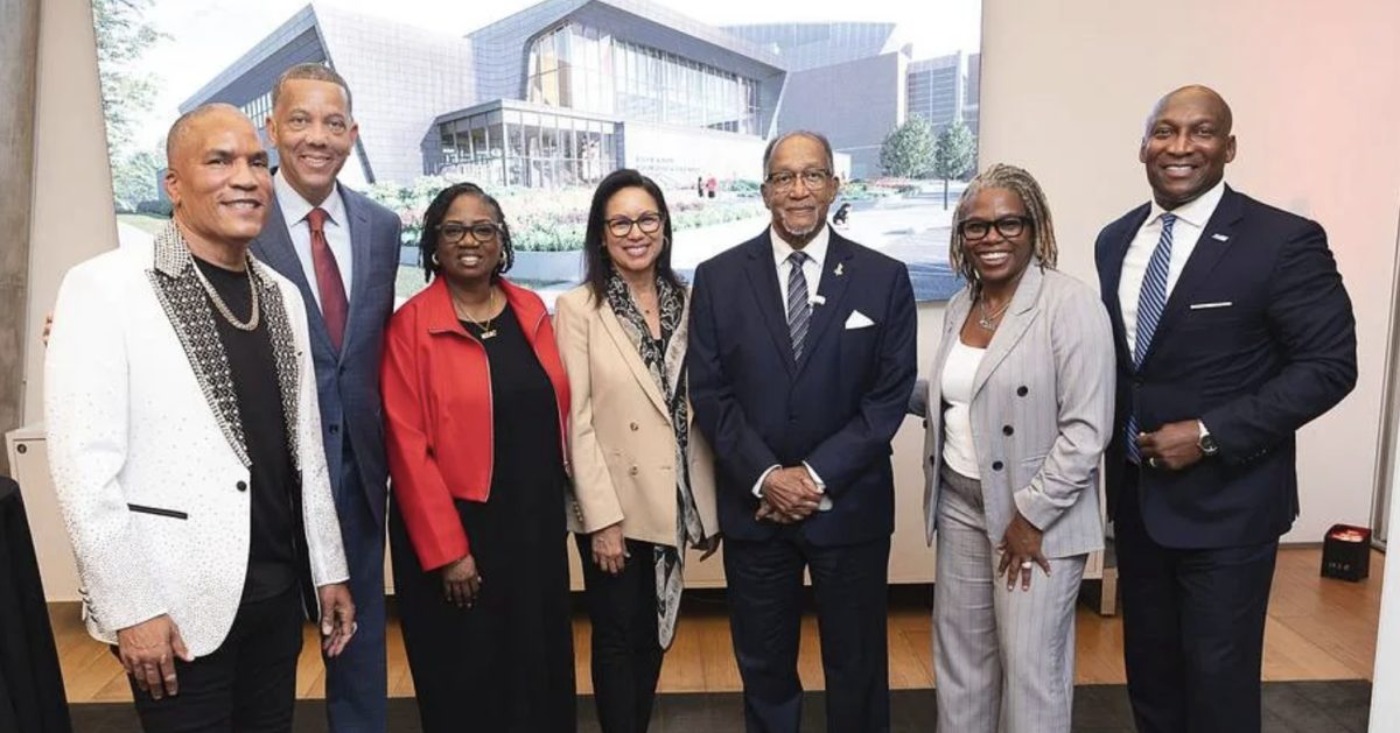
Commissioners from HBCU athletic conferences joined university presidents and corporate leaders in Washington on Tuesday, Sept. 15, for the Salute to HBCU Sports Leadership Reception — an invitation-only gathering aimed at deepening investment in historically Black colleges and universities.
Hosted at Gensler’s K Street office, the evening brought together conference commissioners, campus presidents, and executives from sports, media and design organizations under the theme “Building Partnerships. Celebrating Excellence. Advancing HBCUs.” Gensler highlighted its partnership with Paxton Baker on the event in a post on Instagram, showcasing the room full of HBCU presidents and conference leaders.
Five Conferences, One Room
Commissioners from four NCAA conferences and one NAIA conference were on hand, representing institutions that compete across Division I, Division II and the NAIA:
Anthony Holloman — Southern Intercollegiate Athletic Conference Charles McClelland — Southwestern Athletic Conference Jacqie McWilliams Parker — Central Intercollegiate Athletic Association Sonja Stills — Mid-Eastern Athletic Conference Kiki Baker Barnes — HBCU Athletic Conference
Their presence linked leadership from across the HBCU athletics landscape with campus administrators and organizations working in event management, design and media.
Presidents and Black Press Leadership in the Room
Among the university presidents in attendance were Prairie View A&M’s Tomikia P. LeGrande and Bowie State’s Aminta H. Breaux.
LeGrande’s appearance came just days after the Thurgood Marshall College Fund named her the recipient of its Educational Leadership Award, as announced by Prairie View A&M. She was honored at TMCF’s 39th Anniversary Gala on Sept. 12 in Washington. LeGrande has served as Prairie View A&M’s ninth president since June 2023.
Breaux, who has led Bowie State since July 2017, previously chaired the CIAA’s board of directors, according to her university biography.
Benjamin F. Chavis Jr., president and CEO of the National Newspaper Publishers Association, also attended — fitting, given the NNPA’s role as one of the reception’s presenting partners. Chavis and HBCU GO’s Lawrencia Moten conducted two 30-minute interview sessions with the conference commissioners, covering topics ranging from the NIL era to conference growth and the experience of leading HBCU athletics, according to HBCU GO President Curtis Symonds, who spoke with HBCU Legends about the sessions.
Corporate and Institutional Partners
Five organizations presented the reception together:
Gensler — the architecture and design firm that hosted the event Events DC — the District’s convention and sports authority USA Track & Field — the sport’s national governing body National Newspaper Publishers Association — representing Black newspaper publishers HBCU GO — the network dedicated to HBCU sports and culture
That mix of partners pointed to a range of possible collaborations ahead, from athletic facilities and event operations to sports programming and media coverage.
Building Beyond the Scoreboard
What stood out most was the mix of people in the room — conference commissioners setting strategy for their leagues, university presidents shaping institutional priorities, and corporate partners bringing resources and expertise from multiple industries.
With college athletics undergoing rapid change, particularly for HBCUs navigating the NIL era and shifting conference dynamics, the reception offered a venue for candid conversation and relationship-building. Its underlying purpose went beyond athletics: using sports as an entry point to broader opportunities in education, workforce development and economic growth for HBCUs.
Based on reporting by Columbus Times.
Black History
At CBCF Conference, a Panel Asks What Black Public Figures Owe the People Who Follow Them
COLUMBUS TIMES — The Congressional Black Caucus Foundation’s Annual Legislative Conference featured a panel titled “Platforms & Purpose: A Conversation With Black Men Leveraging Their Reach.” Actor and activist Kendrick Sampson, Rep. Jasmine Crockett, media personality Jason Lee, singer Eric Benét, and rapper Yung Joc discussed how public figures can translate influence into real-world change.
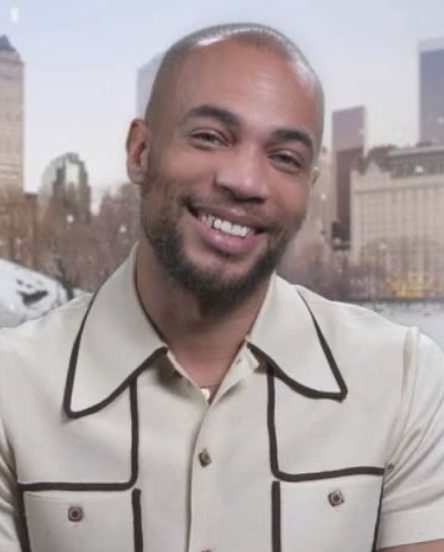
WASHINGTON — Among the more than 100 policy forums and brain trusts at this year’s Congressional Black Caucus Foundation Annual Legislative Conference was a conversation about influence itself: who has it, and what they do with it.
"Platforms & Purpose: A Conversation With Black Men Leveraging Their Reach" brought together actor and activist Kendrick Sampson, Rep. Jasmine Crockett, media personality Jason Lee, singer Eric Benét and rapper and radio host Yung Joc. The session looked at how entertainers, creators and elected officials can turn public attention into real-world change.
The panel took place at the 55th Annual Legislative Conference, a five-day event in Washington that began Wednesday. This year’s theme is "Rooted, Ready & Rising," and the conference coincides with the CBC Foundation’s 50th anniversary. CBCF President and CEO Nicole Austin-Hillery has said the gathering is meant to "combine celebration with purpose," while taking up issues including voting rights, economic opportunity, education, health disparities and criminal justice.
That mix of celebrity and policy is a long-running feature of the conference, which brings lawmakers, advocates, entrepreneurs, students and entertainers into the same rooms. The panel’s premise reflects a broader question as creators reach audiences that rival traditional media.
A career built on both stage and street
Sampson is a natural fit for that conversation. The Houston native is known for television and film work, including HBO’s Insecure, and for his activism off screen. He co-founded BLD PWR, a 501(c)(3) nonprofit that combines entertainment, education and activism.
The organization says its mission is to "reimagine and realize the liberated future we know our people deserve." It works to mobilize entertainment-industry figures and organize communities around racial, gender, immigration, economic and environmental justice, mental health and wellness, and opposition to state violence. BLD PWR emphasizes storytelling and community healing, and it centers the voices of Black, Indigenous and other marginalized communities.
What to watch
The conference runs through Sunday at the Walter E. Washington Convention Center. Details on sessions and registration are available through the CBC Foundation.
Based on reporting by Columbus Times.


HE SAID, HE SAID, HE SAID: Losing What I Never Had: Uncovering My Authentic Self —9.25.26 7PM ET

Kia Seltos: Dashboard Glare Warning Before You Buy! #shorts

Audi Q3 Price, MPG: Is it Worth It? #shorts

Car Buying Advice: DON’T Buy Before Watching This! #shorts

Outback: Snow, Gravel, Rough Roads & Stop-Start Woes #shorts

Voter Education – Homeownership

2027 Kia Seltos SX AWD: 2 Surprises After Test Drive! #shorts

Audi Q3: Malpelo Blue Metallic & Parchment Beige Leather #shorts

Don’t Let Dealers Rip You Off! Escalate and Win! #shorts

Doulas Are Helping Black California Moms Navigate Pregnancy–Even as High Mortality Rates Persist

Arnold Perkins: At 85, a Life of Service, Faith and Giving Back

Young Black Men Suffering in Silence A curse that can be Broken

Young Black Men Suffering in Silence A curse that can be Broken

🎷 Jazz is taking over D.C.!

Women Learned Their Jail Strip Searches Were Recorded. Their Outrage Changed the Law

Black Americans Have Doubts About the U.S. Food System

Latest Massacre in Haiti Reveals Cruelty U.S. Deportations

When Praises Go Up: SUGC Nominated for Prestigious Stellar Award.

Booked and Unbound: The Legacy of Black Women’s Literary Circles

U.S. Sole Nation to Oppose U.N. Resolution Correcting Africa’s Size on World Maps
HE SAID, HE SAID, HE SAID: Losing What I Never Had: Uncovering My Authentic Self —9.25.26 7PM ET
Kia Seltos: Dashboard Glare Warning Before You Buy! #shorts
Audi Q3 Price, MPG: Is it Worth It? #shorts
Car Buying Advice: DON’T Buy Before Watching This! #shorts
Outback: Snow, Gravel, Rough Roads & Stop-Start Woes #shorts
Voter Education – Homeownership
2027 Kia Seltos SX AWD: 2 Surprises After Test Drive! #shorts
Audi Q3: Malpelo Blue Metallic & Parchment Beige Leather #shorts
Don’t Let Dealers Rip You Off! Escalate and Win! #shorts

CX-90 Car Warranty Explained: Powertrain, Roadside Assistance #shorts
-

 Black Press1 week ago
OP-ED: How Does Your State Rank for Pre-K?
-
 Black History3 days ago
The Youngest American Killed in the Vietnam War
-

 Featured1 week ago
Headlines and Hot Topics 📱
-
 Black History4 days ago
Passing for White, Fighting for Black America: The Courage of Walter White
-
 Featured1 week ago
Obama Urges Democrats to make AI a Priority 📱
-
 Sports6 days ago
NFL: Week Two Recap | Jalen Hurts did not fold; Caleb Williams exits game with injury
