
National
Obama’s Reform Plan ‘Misplaced’ for HBCUs

By Freddie Allen
NNPA Washington Correspondent
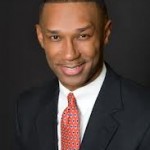
Johnny C. Taylor, Jr., president and CEO of the Thurgood Marshall College Fund.
WASHINGTON (NNPA) – President Obama’s proposal to make colleges more affordable has some good points, but could disproportionately harm Historically Black Colleges and Universities (HBCUs), many of whom are already reeling from changes in the college student loan program that is causing fewer students to remain enrolled in Black colleges, according to education experts.
President Obama recently outlined his college affordability plan during a two-day tour of Buffalo, Syracuse, and Binghamton, N.Y.
The president wants to send more student financial aid to colleges that make efforts to lower costs while raising graduation rates. The college ratings system will track a number of metrics, including tuition costs, graduation rates, student debt and earnings of recent graduates. The information will be readily available for parents and students online.
According to the White House, the average tuition at a public four-year college has recently increased by 250 percent, eclipsing the rise in median family income that only increased 16 percent.
“The average student who borrows for college now graduates owing more than $26,000,” Obama said in Buffalo. “Some owe a lot more than that.”
Lezli Baskerville, president of the National Association for Equal Opportunity in Higher education, a non-profit umbrella organization of the nation’s Historically Black Colleges and Universities (HBCUs) and Predominantly Black Institutions (PBIs), said: “Measuring dollars as some indication of success of a college or university would be terribly misplaced.”
Julianne Malveaux, an economist and immediate past president of Bennett College for Women in Greensboro, N.C., agrees, saying because HBCUs service a different population than predominately White institutions (PWIs), it would be difficult to design a national ratings system that would be fair and equitable to those distinct bodies.
“We have a culture of service in the Black community,” said Malveaux. “What if you want to go work as a social worker, but you would make more money as a corporate lawyer? Some of those metrics are counter-cultural.”
Higher education groups agree that providing families with transparent and accurate information that will assist them in making critical decisions about which college to choose, while pushing colleges to control costs and admit more low-income students are crucial steps in the right direction.
“The obvious goal of the program is something you can’t argue with,” said Johnny C. Taylor, Jr., president and CEO of the Thurgood Marshall College Fund. “Objective good solid information can only be good for the community.”
But for Taylor and many other higher education advocates, the devil is in the details. He argues that the higher education landscape is too complicated for a solution that doesn’t take into account the diversity of the student population that it serves.
Taylor also said that in order to be effective, the ratings system must recognize the heavy-lifting that HBCUs undertake in educating many students who are ill-prepared for the rigors of college courses.
“Schools that take students with an 8th, 9th or 10th grade reading level and get those kids to and through college should be rewarded more than a school that brings in a student that has a good chance of making it through college,” Taylor explained.
A study conducted by the Center on Education and the Workforce at the Georgetown Public Policy Institute, in Washington, D.C., found that, “Many African Americans and Hispanics are unprepared for college, but whites who are equally unprepared still get more postsecondary opportunities.”
The study also reported that Blacks and Latinos who are college-ready are steered into “crowded and underfunded two-year colleges and open-access four-year colleges” at higher rates than their White peers.
“To say schools that graduate 70 percent of their students should get a higher [ratings] number than schools that have a lower graduation rate is going to hurt schools that have a less prepared population of entering students,” said Taylor. “It’s no surprise to me that Harvard University is going to have a higher graduation rate than [Florida A & M University].”
If the graduation rate is coupled with a factor that accounts for the effort that is required to graduate a certain type of student, that measurement could actually help HBCUs and community colleges, Taylor believes.
Of particular concern to Taylor was a system that might compare graduate earnings for a school that does a phenomenal job graduating K-12 classroom teachers versus a school that does a phenomenal job graduating engineers.
“Well, guess which graduates are going to have higher salaries and better jobs?” he said. “I want to make sure that the Department of Education looks at the impact that different majors and careers have on society and a broad classification of people. If they do that, we’ll be okay.”
Measuring the earnings of graduates in a labor market with lingering issues of race and gender discrimination offers yet another challenge.
“It can’t just be about how fast you can grow a dollar,” said Baskerville. “Many HBCUs are founded on ecumenical principles. We encourage students to go into public service, we encourage students to volunteer and to give their time, and if they’re entrepreneurs, we encourage them to be good entrepreneurs. We encourage our male college graduates to be mentors to young Black boys. How do you quantify those things?”
Malveaux said that the Department of Education needs to acknowledge that Black graduates experience unique challenges in the labor market.
According to the Economic Policy Institute, a Washington, D.C. based think tank that studies low- and middle-income families, “The unemployment rate of young black college graduates was 8.5 percent in 2007, rose to 21.9 percent by 2010, and improved to 11.9 percent over the last year (March 2012–February 2013).”
The unemployment rate for young, White college graduates was 8 percent during the same time period.
Even as the president moves to pressure colleges and universities to curb runaway tuition costs, the Department of Education ignored pleas from education groups that represent historically Black colleges and Universities to reverse measures that sidelined thousands of Black students that were eligible for Parent PLUS Loans a few semesters ago.
William R. Harvey, president of Hampton University and the chair of President Obama’s Board of Advisors on HBCUs, said that the changes in the Parent PLUS program resulted in a loss of 28,000 HBCU students and $154 million in revenue to HBCUs.
Harvey said that the president’s goal to have the highest college graduation rates in the world coupled with changes to the PLUS program were “irreconcilable.”
Harvey added that the Department of Education should immediately return to the pre-2011 interpretation of “adverse credit history. This could be done by the Department of Education issuing a guidance document which states that ‘adverse credit history’ is to be interpreted and defined just as it was prior to 2011,” said Harvey.
Malveaux called for an effective HBCU lobbying group, comprised of parents, students and policy people that could work to mitigate any potential damage caused by the president’s college affordability plan.
Taylor remains optimistic about the president’s goals and recent proposal for a college ratings system. He said that the ratings system needs to compare schools that have similar missions and similar student populations and look at which schools have the greatest impact on the largest number of students.
“If they do that, I think HBCU’s are going to be fine, other minority-serving institutions are going to be fine,” said Taylor. “But if they take an overly-simplified kind of approach to a very complex problem, then this is going to be a disaster.”













Black Press
OP-ED: How Does Your State Rank for Pre-K?
BLACKPRESSUSA NEWSWIRE — “Other states should take note: Georgia proves that state-funded preschool with well-qualified teachers, pay parity with K-12, small classes, and strong continuous improvement systems can be scaled as a universal program,” said NIEER director Steve Barnett. “With new initiatives to support quality, Georgia can expect increased enrollment, but leaders should also actively promote increased enrollment.”


Georgia’s state-funded pre-k program for 4-year-olds was recently recognized as the largest state-funded preschool program in the nation to meet all 10 quality benchmarks, and the first universal program to do so. Georgia’s recognition is the top finding in the National Institute for Early Education Research’s new 2025 State of Preschool Yearbook. The yearbook provides an annual snapshot of state-funded preschool across the country. Forty-four states and the District of Columbia fund preschool programs.
Only five additional states meet all 10 of NIEER’s research-based benchmarks for quality —Alabama, Hawaii, Michigan, Mississippi, and Rhode Island—in this year’s report. None of those programs have the reach of Georgia Pre-K. NIEER’s benchmarks measure essential preschool quality indicators, including teacher qualifications, class sizes, early learning standards, and program assessments.
“Other states should take note: Georgia proves that state-funded preschool with well-qualified teachers, pay parity with K-12, small classes, and strong continuous improvement systems can be scaled as a universal program,” said NIEER director Steve Barnett. “With new initiatives to support quality, Georgia can expect increased enrollment, but leaders should also actively promote increased enrollment.”
Nationally, state support for preschool education hit record highs in enrollment and funding in 2024-2025. The pace of growth slowed, however, compared to the prior year, and many states continue to lag behind pre-pandemic enrollment levels. Preschool enrollment increased by 44,000 children nationally, reaching almost 1.8 million, including 37% of U.S. four-year-olds and 9% of three-year-olds. California, Colorado, Michigan, Minnesota, and Missouri contributed the most to increased enrollment, adding more than 52,000 new seats.
States spent nearly $14.4 billion on preschool in 2024-2025. Including federal and local dollars, total spending was almost $17.7 billion. Three states each spent more than $1 billion last year: California ($4.1 billion), New Jersey ($1.2 billion), and New York ($1 billion). Together, these three states account for 45% of all state preschool spending. Texas adds almost another $1 billion.
Spending increased by $434 million, or 3%, adjusted for inflation. Twenty-eight states increased preschool funding, including Michigan and New Jersey, which each added more than $100 million. “Not only does preschool access vary by which state a child happens to live in, but so does the quality of that preschool experience,” said Allison Friedman-Krauss, lead author of the report. “Only high-quality early care and education programs support children’s development enough to result in lasting academic and other gains that ultimately deliver savings for taxpayers.”
A record six states met all 10 of NIEER’s recommended quality standards, with Alabama doing so for the 20th consecutive year. Georgia joined this list this year after improving its teacher-to-child ratio from 1:11 to 1:10 and lowering maximum class sizes to 20. Several states met 9 of 10 benchmarks, including New Mexico, which is working toward universal access for both three- and four-year-olds. Once New Mexico requires all lead teachers to have a bachelor’s degree in early childhood education, it will be on par with Georgia in terms of both quality and quantity.
Not all states moved forward. Twenty states enrolled fewer preschoolers in 2024-2025 than the prior year, with enrollment dropping by more than 1,000 children in Arizona, Florida, New York, Ohio, Oklahoma, and Wisconsin. Seventeen states spent less on preschool than the prior year, adjusted for inflation, with Arizona, North Carolina, Oregon, and Texas seeing the largest percentage declines. Additional information about the State of Preschool Yearbook, including individual state profiles and maps, graphs, and state rankings, can be found at www.nieer.org.
Black Press
Port of Oakland, Army Corps Sign Historic Harbor Design Agreement
OAKLAND POST — Oakland Port Commission President Stephanie Dominguez Walton called the agreement a historic milestone that will support thousands of jobs. “Today marks a historic occasion for the Port as we sign the inaugural Design Agreement for the Turning Basin Widening Project, which will keep Oakland competitive,” said Walton.

A $642 million project designed to accommodate larger cargo ships and strengthen the Port of Oakland’s position as a major Pacific trade gateway moved a significant step closer to construction on Aug. 27.
The U.S. Army Corps of Engineers (USACE) San Francisco District and the Port of Oakland commemorated the signing of the inaugural Design Agreement for the Oakland Harbor Turning Basins Widening Projectduring a ceremony aboard the USS Potomac, the presidential yacht once used by President Franklin D. Roosevelt.
The project will widen the Port’s Inner and Outer Harbor turning basins, allowing today’s increasingly larger and longer vessels more space to safely maneuver and turn around. The current basins are narrow, creating delays and operational inefficiencies.
Oakland Port Commission President Stephanie Dominguez Walton called the agreement a historic milestone that will support thousands of jobs.
“Today marks a historic occasion for the Port as we sign the inaugural Design Agreement for the Turning Basin Widening Project, which will keep Oakland competitive,” said Walton.
The agreement advances the project into its preconstruction engineering and design phase following years of planning and collaboration.
Lt. Col. Virginia Brickner, commander of the USACE San Francisco District, said the signing represented tangible progress toward construction.
“We are moving forward. We are showing progress,” Brickner said.
Major General Jason Kelly, USACE Deputy Commanding General for Civil and Emergency Operations, said dredging is critical for maritime dominance, supply chains, and economic competitiveness.
“Dredging sustains our national economic infrastructure,” he said. “The future demands more, the taxpayer deserves more, and together we’re going to deliver.”
For U.S. Representative Congresswoman Lateefah Simon (D-CA-12), the Port project will support jobs beyond its completion. “This will impact workers and businesses, and every shipping container represents multiple jobs.”
Oakland Mayor Barbara Lee described Oakland as a gateway to international markets and spoke on earlier efforts to deepen Oakland’s shipping channel to 50 feet. While serving in the California Legislature, Lee helped bring together labor, business, environmental advocates and Port officials to resolve disputes surrounding dredging and environmental protections.
“We want the Port to remain competitive economically,” Lee said, excited about both protecting the environment and generating sustainable jobs in the region. “We want to make sure that we create good-paying union jobs, and that the Port continues to not just survive, but thrive.”
Port of Oakland Executive Director Kristi McKenney said economic growth is dependent on investments in the Oakland Harbor’s infrastructure.
“This investment and staying competitive will fuel our economy for years to come,” said McKenney.
The Port of Oakland, with its partners, supports more than 98,000 regional jobs and $174 billion in annual economic activity. The Port oversees the Oakland Seaport, the Oakland San Francisco Bay Airport (OAK), and nearly 20 miles of waterfront, including Jack London Square.
Black Press
Democratic Clubs Interview Candidates for Oakland School Board
OAKLAND POST — For the first time, the interviews were jointly sponsored by the John George Democratic Club, Wellstone Democratic Renewal Club, Oakland East Bay Democratic Club, Black Women Organized for Political Action (BWOPA), Niagara Democratic Club, Block by Block Organizing Network and Oakland African American Chamber of Commerce.

Local Democratic clubs and community organizations interviewed candidates running for Oakland school board in the November elections, including incumbents Jennifer Brouhard in District 2, Mike Hutchinson in District 4 and Valarie Bachelor in District 6.
For the first time, the interviews were jointly sponsored by the John George Democratic Club, Wellstone Democratic Renewal Club, Oakland East Bay Democratic Club, Black Women Organized for Political Action (BWOPA), Niagara Democratic Club, Block by Block Organizing Network and Oakland African American Chamber of Commerce.
The Democratic clubs interviewed only registered Democrats.
John George and Wellstone endorsed Brouhard and Bachelor. Neither endorsed Hutchinson.
In District 4, Wellstone ranked Sylvia Pfeiffer Williams first and Kathryn Camp second. John George ranked Camp first and Williams second.
Hutchinson, an Oakland native and Oakland public schools graduate, highlighted his record.
“I was in board leadership and chaired the Budget and Finance Committee,” he said. “We passed balanced budgets and paid off the state loan early, which allowed us to finally leave state receivership after 22 years.”
Hutchinson said the district faces a financial crisis requiring changes in board leadership and district policies.
“We need a different majority so we can get back on track, end school closures, and manage our resources better,” he said.
Williams taught adult education in Oakland for 18 years.
Williams said her philosophy “comes from the disability justice world, to center the needs of the most vulnerable. When we center the needs of the most vulnerable, we create environments, systems, and learning experiences in which everyone can thrive.”
Williams framed potential school closures as an equity issue.
“Are we thinking about closing schools up in the hills?” she asked. “Or are we thinking about closing schools where communities are in crisis right now?”
Camp, a Bay Area native and Oakland resident of 25 years, has a son in second grade.
“Our kids are only getting one shot at a great education, and I’m running to bring pragmatic, student-centered leadership that restores trust, builds responsibility, and delivers results for every child,” she said.
On her website, Camp pledged accountability and transparency. “As a proud OUSD parent, I know our schools need more than promises – they need fiscal responsibility, equity, and meaningful action guided by long-term strategy,” she said.
“That means protecting classrooms, supporting teachers, using resources wisely, and making decisions that reflect clear priorities and real accountability,” said Camp. “It also means bringing people together and providing the kind of steady leadership that can navigate complex systems, ask hard questions, and stay grounded in what matters most: student outcomes, thriving schools, and a district that works for the communities it serves.”
Wellstone’s Education Committee said it opposed Hutchinson because he frequently challenged the board majority and superintendent.
“He also claims that the teachers’ contract is illegal that a grand jury should be called. He is not endorsed by the teachers’ union; he has been disruptive and non-collaborative at meetings,” and he has been absent 26% of the time, the committee said.
“He claims that the teachers’ contract is illegal and that a grand jury should be called,” the committee said. “He takes individual credit for accomplishments, including paying the state loan, when in fact these changes came from the work of the entire board, or were the result of following through on policy.”
Next week: District 6 school board candidates.
Black History
Nuna Phillips-McKee Celebrates 100 Years: ‘A Century of Faith, Family and God’s Amazing Grace!’
OAKLAND POST — Nuna’s life has been one of Christian service. A longtime member of Wings of Love Maranatha Ministries, now Incredible Church, she serves as director of Community Services and is actively involved in the church’s Food Ministries.

Nuna Phillips-McKee will reach an extraordinary milestone on Sept. 24 —her 100th
birthday, marking a century filled with faith, family, service, laughter and the amazing grace of God.
Born Sept. 14, 1926, in Oakland, Nuna has witnessed a world of change during her lifetime, yet the values that have guided her remain constant: a deep faith in God, devotion to family, a strong work ethic and a heart for serving others.
She enjoyed a distinguished career as a civil servant for more than 40 years, demonstrating the dedication, dependability and strength that have characterized so much of her life.
Nuna’s life has been one of Christian service. A longtime member of Wings of Love Maranatha Ministries, now Incredible Church, she serves as director of Community Services and is actively involved in the church’s Food Ministries.
Through the years, she has continued to help meet the needs of others—not merely with food, but with kindness, compassion and a genuine desire to serve. Her ministry reflects a simple principle by which she lives: when God blesses you, you bless others.
Nuna is the proud mother of one son, whose memory she carries in her heart, and the beloved grandmother of three grandchildren, as well as six great-grandchildren and one great-great-grandchild.
At 100, she has the rare blessing of seeing several generations of her family carrying forward a legacy that began long ago.
She remains the loving, intelligent, witty, and, when the occasion calls for it, delightfully sassy Nuna that her family and friends know so well. Her contagious laugh, quick wit and youthful spirit have endeared her to generations of relatives, church members and friends.
Nuna was born into the large and loving Phillips family of seven sisters and one brother, with bonds that formed in childhood and have remained precious throughout the decades. Their shared love, faith, and family traditions have continued to be a source of joy, strength and countless treasured memories.
As family and friends gather for this special occasion, they will celebrate far more than a number. They will celebrate 100 years of prayers prayed and answered; 100 years of lessons learned and wisdom shared; 100 years of family, faith, laughter and love; 100 years of serving God and serving others.
Most of all, they will celebrate a life that stands as a testimony to God’s faithfulness through every season.
Nuna’s century-long journey can be summed up in the words chosen to commemorate this remarkable occasion: “100 years of God’s amazing grace.”
Black Press
D.A. Ursula Jones Dickson: Terminix to Pay $3.15 Million Over Illegal Disposal of Pesticides, Customer Records
OAKLAND POST — District attorney investigators examining Terminix facilities throughout California between 2021 and 2024 found hundreds of pesticides and other hazardous-waste items that had allegedly been disposed of unlawfully, according to Jones Dickson’s office.

Alameda County District Attorney Ursula Jones Dickson announced a $3.15 million settlement with Terminix International Inc. and Rentokil North America Inc. over allegations that the pest control companies illegally disposed of pesticides and hazardous waste and mishandled confidential customer records.
The settlement was reached by Jones Dickson, 28 other California district attorneys and the Los Angeles city attorney. The companies are collectively identified as Terminix in the settlement.
District attorney investigators examining Terminix facilities throughout California between 2021 and 2024 found hundreds of pesticides and other hazardous-waste items that had allegedly been disposed of unlawfully, according to Jones Dickson’s office.
The investigation also found instances in which Terminix allegedly failed to properly manage and dispose of private customer records, violating California laws intended to protect confidential consumer information.
Terminix cooperated with prosecutors after being notified of the alleged violations, the district attorney’s office said. As part of the settlement, the company agreed to strengthen its policies and procedures governing the handling and disposal of pesticides, hazardous materials and customer records.
The new requirements are intended to prevent prohibited waste from being placed in ordinary trash receptacles or sent to facilities not authorized to receive it. Terminix must also improve safeguards for confidential customer information before records are discarded.
Terminix operates five Alameda County locations under the Terminix and Western Exterminator Company names. The facilities are located in Hayward, Pleasanton and Union City.
Alameda County will receive $160,000 from the statewide settlement for civil penalties and reimbursement of investigative costs.
The agreement resolves the prosecutors’ claims against the companies and requires Terminix to maintain stronger waste-management and privacy protections at its California operations.
Jones Dickson announced the settlement Sept. 4.
Black Press
REPORT: Community Level Policy Is Impacting Homelessness and Drug Abuse in California
OAKLAND POST — The report compiled by the Public Policy Institute of California found that counties that added more permanent housing beds per capita saw larger decreases in homelessness, while areas with larger declines in incarceration following Proposition 47 saw greater increases in homelessness.

Local housing capacity, behavioral health services and criminal justice policies are playing a role in California’s homelessness and drug crises, according to a new report examining how policy decisions have affected outcomes across the state.
The report compiled by the Public Policy Institute of California found that counties that added more permanent housing beds per capita saw larger decreases in homelessness, while areas with larger declines in incarceration following Proposition 47 saw greater increases in homelessness.
“Places that saw larger increases in permanent housing beds per capita saw larger decreases in the homelessness rate,” researchers Magnus Lofstrom, Shannon McConville, and Sean Cremin stated in the report.
California’s homelessness rate has increased more than 60% since 2014, with unsheltered homelessness driving most of the growth. The state had the sixth-highest overall homelessness rate and the second-highest unsheltered homelessness rate among states in 2025.
Researchers found that counties with higher rents tended to have higher homelessness rates. But they did not find a statistically significant relationship between changes in homelessness and changes in local housing markets, poverty or unemployment.
The report also examined Proposition 47, the 2014 ballot measure that reclassified some drug and property offenses from felonies to misdemeanors. Researchers estimate that the law contributed to a roughly 10% increase in California’s unsheltered homelessness rate, equivalent to about 7,000 additional people experiencing unsheltered homelessness between 2015 and 2019.
The researchers also estimated that Prop. 47 was associated with a 7% to 8% increase in serious drug use, measured through overdose deaths, hospitalizations and emergency department visits. Drug treatment admissions fell by roughly 20%, largely because of fewer referrals from courts and criminal justice agencies.
“Our findings suggest that Prop 47 likely did contribute to rising rates of homelessness and drug overdoses, as well as declines in drug treatment,” the researchers stated.
The report cautions that the relationship between homelessness, drug use and criminal justice policy is complex. Researchers found no consistent evidence that California’s 2011 public safety realignment or pandemic-era reductions in incarceration affected homelessness or drug use.
They also emphasized the role of the criminal justice system in connecting vulnerable people with services.
“Jails and prisons serve as sources of shelter for people experiencing or at risk of homelessness,” the researchers stated in the report. They added that courts and criminal justice agencies can help connect people with the drug treatment they need.
California has made major investments in housing and behavioral health services in recent years. The researchers said state and local agencies should continue evaluating whether those investments are reaching people most at risk and whether newer policies, including Proposition 36, are effectively connecting people with treatment.


Small SUV: Avoid These Annoyances Before You Buy! #shorts

Spades the Play – Marcus Callender

Foot-Activated Liftgate: Stay Balanced, Avoid Parking Lot Embarrassment! #shorts

OP-ED: How Does Your State Rank for Pre-K?

Headlines and Hot Topics 📱

Headlines and Hot Topics

Your Rights: Don’t Buy Unwanted Car Add-ons! #shorts

Dealership Secrets: Tips for Car Buyers Revealed! #shorts

Race factor in the murder trial of Lindsay Clancy – Why a single juror can force a mistrial.

Cedrick Frazier – From Defender to Prosecutor: How I’ll Lead the Hennepin County Attorney’s Office.

You Had Me at Hello: the Love and Legacy of Grace Nail and James Weldon Johnson

COMMENTARY: What Two Fathers Talk About at Lunch

Arnold Perkins: At 85, a Life of Service, Faith and Giving Back

COMMENTARY: Stephen A. Smith refuses to look at himself in NABJ’s mirror

Young Black Men Suffering in Silence A curse that can be Broken

Young Black Men Suffering in Silence A curse that can be Broken

COMMENTARY: Property Is Power! the Last Generation to Start from Zero

Headlines and Hot Topics 📱

Michael Chaney on Reviving Black Wall Street: An Olive Branch and Call to Action

Gov. Newsom Nominates 3 Black Women Judges to Serve on State Courts of Appeal
Small SUV: Avoid These Annoyances Before You Buy! #shorts
Spades the Play – Marcus Callender
Foot-Activated Liftgate: Stay Balanced, Avoid Parking Lot Embarrassment! #shorts
Headlines and Hot Topics 📱
Headlines and Hot Topics
Your Rights: Don’t Buy Unwanted Car Add-ons! #shorts
Dealership Secrets: Tips for Car Buyers Revealed! #shorts
Race factor in the murder trial of Lindsay Clancy – Why a single juror can force a mistrial.
Cedrick Frazier – From Defender to Prosecutor: How I’ll Lead the Hennepin County Attorney’s Office.

Rep. Cedrick Frazier – Growing up on Chicago’s South Side – From Englewood to Minnesota: My Story
-

 Black Press1 week ago
Black Americans Have Doubts About the U.S. Food System
-

 Black History1 week ago
U.S. Sole Nation to Oppose U.N. Resolution Correcting Africa’s Size on World Maps
-

 Black History1 week ago
When Praises Go Up: SUGC Nominated for Prestigious Stellar Award.
-

 Black History3 days ago
Latest Massacre in Haiti Reveals Cruelty U.S. Deportations
-

 Black Press7 days ago
Prostate Cancer is Twice as Likely to Kill Black Men. Talking to Your Doctor Could Help Save Your Life
-

 Black History1 week ago
Outnumbered: Elbert Cox’s Equation for Greatness
