
Commentary
Legally Speaking: Joey Jackson Counts Among Countries top Legal Minds
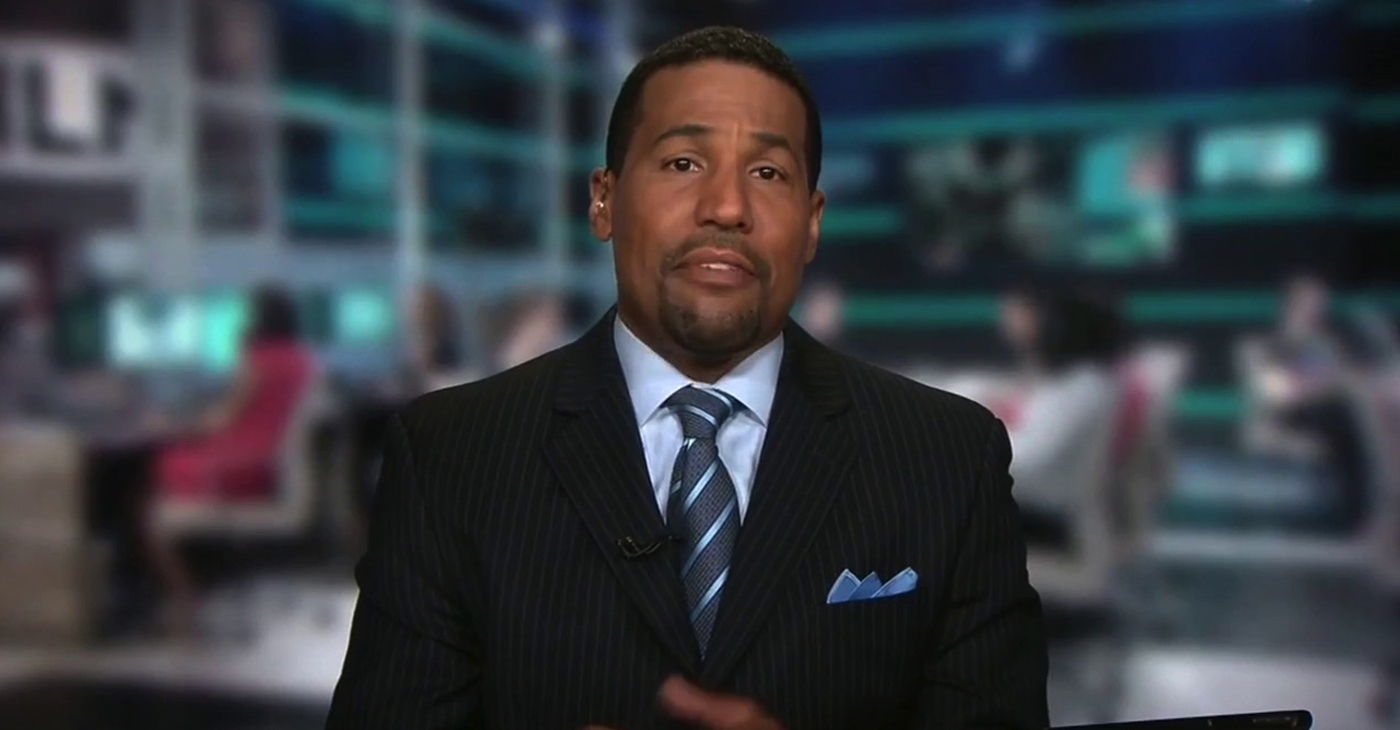
NNPA NEWSWIRE — A nationally-recognized criminal defense attorney, Jackson has gained notoriety as perhaps the most respected legal analyst on television where he provides insight on legal matters for HLN and CNN.

By Stacy M. Brown, NNPA Newswire Correspondent
@StacyBrownMedia
Upon receiving the Harvard Law School Center on the Legal Profession’s Award for Global Leadership two years ago during a celebration of the history of Black Lawyers, acclaimed attorney Vernon E. Jordan Jr. spoke fervently about how he once sat in a courtroom and watched in awe of other legal giants.
Robert Carter, Julius Coleman and Thurgood Marshall were among the names Jordan rattled off. Some would argue that the list could have also included Joey Jackson, of Watford Jackson, PLLC in New York.
A nationally-recognized criminal defense attorney, Jackson has gained notoriety as perhaps the most respected legal analyst on television where he provides insight on legal matters for HLN and CNN.
It’s a career that almost didn’t happen because Jackson told NNPA Newswire that he had little desire to become an attorney and even less interest in television. “My mom insisted I go to college and really guided me in that direction … thank goodness,” he said. “Once there, I learned a whole lot about myself and my tolerance for work and how to be disciplined enough to complete a task.”
He graduated Hofstra Law School in 1995 and worked for the New York State Assembly Speaker as a legislative analyst, the New York State Education Department and Congressman Charles B. Rangel’s office in Washington.
Later, he taught business and Civil Rights Law at Monroe College.
At Watford Jackson, where his focus is two federal districts and the Supreme Court, Jackson works on cases that include the criminal defense, regulatory enforcement, government investigations, labor union arbitration and complex litigation practice areas.
“What inspires me is the ability to make a difference in people’s lives,” Jackson said. “Winning a case often gives someone a new life because it protects their freedom and gives them a more favorable view of the justice system.”
He gave a profound nod to the late Johnnie Cochran, the famed lawyer who successfully defended O.J. Simpson during “The Trial of the Century.”
“[Cochran] died about 13 years ago, yet his name comes up in legal circles regularly as a person who stood for justice, would go to the end of the earth for his clients, and never took no for an answer,” Jackson said of Cochran.
“In his eyes, no case was impossible to win – and that’s how he lived and the example he set. ‘Look for the opportunities and the possibilities,’” he said, adding, “Let’s face it, O.J. was guilty.”
As well-liked and respected as he is on television, Jackson said becoming a legal analyst happened by accident. “I received a phone call from the Fox News Channel out of the blue about 10 years ago. They were looking for someone to comment on a criminal case,” Jackson recalled.
“I had no clue what they were talking about or asking of me since I was not connected to the case. I nearly talked my way out of a television career by asking them why someone unconnected to the case would speak about it.”
Jackson continued:
“The caller explained that they customarily have legal panels and debates about cases and that they researched my background and thought I would be a good candidate.”
Jackson provided commentary for Fox News for nearly 5 years, without compensation but other networks realized his talent and wealth of knowledge. Jackson was offered a contract with Court TV’s “In Session,” which eventually led to a deal with HLN and later CNN where he’s often called upon for celebrity cases.
“If reality TV teaches us anything, it is that people love soap operas. People enjoy learning that celebrities are as imperfect as the rest of us are,” Jackson said.
“They enjoy even more knowing that the long arm of justice can wrap its arms around even those we believe to be so larger as to be larger than life itself.
“We think of celebrities as being rich people with perfect lives, who are untouchable. Following their cases shows us that this is far from true.”
Jackson continued:
“And let’s not forget that sometimes the magnitude of the crime itself makes the person a celebrity – Jodi Arias, Casie Anthony, George Zimmerman.
“We can relate to the stories and drama that unfolds as we all weigh in as jurors, putting in our 3 cents and expressing our point of view.”
Once a prosecutor, Jackson said as a defense attorney he prepares his clients by “being the agent of reality.”
“I am a cheerleader, a booster, a supporter, and a soldier – but I am also a realist, and always try to be straightforward with a client regarding their chances or prevailing,” he said.
In describing some of his tougher cases, Jackson recalled that, as a prosecutor, he was once put in charge of prosecuting a football player who had just signed a multi-million dollar deal and was in New York celebrating at the China Club.
“He ended up beating up the victim pretty bad because the victim was trying to talk to his girlfriend. I could not downgrade the charges because the victim was hospitalized and beaten pretty badly,” Jackson said.
“His defense attorney was an experienced veteran from a major firm, who belittled me, shamed me, and tried to get into my head at every turn. I wasn’t being unreasonable, just thought he had to be held accountable. We went to trial and he was convicted,” Jackson said.
As a defense attorney, Jackson described one oddly adjudicated case where his client was being prosecuted in two jurisdictions for various crimes, including attempted murder.
“The prosecutor reached a global plea deal, meaning they got approval from the other county to resolve his case with a plea in the jurisdiction we were in. It was a sweet deal. Five years to cover three violent felony cases (the others were armed robbery with violent assault).
“My client could not make up his mind as to whether he wanted to go to trial or take the deal. I implored him to take the deal, but he said he wasn’t sure. I am very sensitive to a client who doesn’t want a deal because I never want to give the impression that I am forcing him to do so.
“I asked the judge for more time and the judge gave my client until after the lunch recess to take the deal or go to trial. I spent the entire lunch speaking with my client and his family.
“He finally said it made sense and he would take the deal.
“When we came back after lunch, the prosecutor doubled the offer and said he wanted ten years unless my client told on his associates.
“A two-hour lunch would cost my client 5 more years. He took the deal. The judge scolded the prosecutor for being so dishonorable but it was to no avail. My client got the 10 years anyway (he was facing 25)… I felt miserable.”
With heightened awareness of sexual harassment and assaults, Jackson applauded the #MeToo movement, but also offered caution. “The #MeToo movement and #TimesUp are important in allowing women to express themselves without shame or fear of reprisals,” he said. “It’s high-time that women are able to tell their stories – without being denigrated, disbelieved, ridiculed and belittled, so kudos to the movement.”
“That said, it’s perfectly appropriate to challenge evidence, scrutinize every situation thoroughly, and evaluate every case on a case-by-case basis,” Jackson said. “That’s what our judicial system is all about, and will continue to be about.”
Jackson called it a privilege to work in law and to educate television viewers.
“My regret is that I cannot help everyone who reaches out, but we do the best to provide as much assistance as we can,” he said.
To that end, Jackson named three of what he called the most important things he’d want everyone to know about him.
“That I try to face life with optimism and energy by seeing the good over the bad; that I try to treat all people with dignity and respect no matter their station; and that I try to wake up every day, and leave no stone unturned in trying to make an impact in whatever I do,” Jackson said.












Black Press
Statement from the President of the National Association of Black Journalists on Press Ban
TEXAS METRO NEWS — The National Association of Black Journalists (NABJ) condemned President Donald Trump’s decision to deny access to MS NOW journalists and his threats against CNN and Politico due to unfavorable coverage. The NABJ stated that journalists hold power accountable for the American people, and government officials cannot grant or withhold access based on reporting they like or dislike.

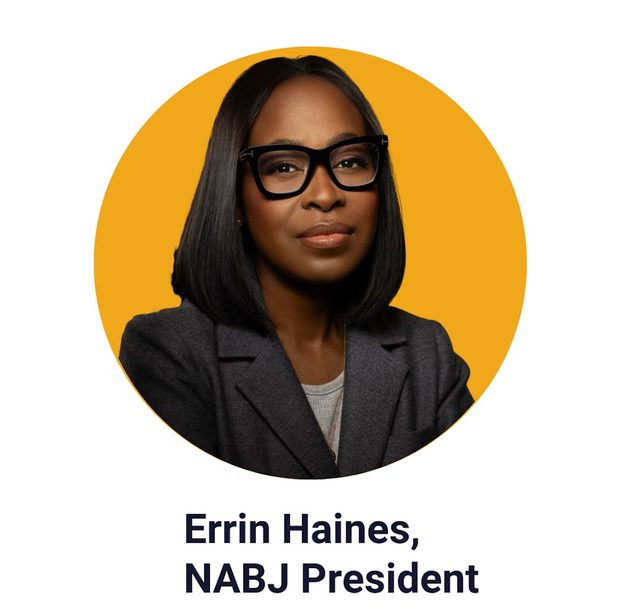
NABJ condemns President Donald Trump’s decision to deny access to MS NOW journalists and his threat to exclude CNN and Politico because of coverage he dislikes. The role of journalists is to hold power accountable on behalf of the American people. Government officials cannot reward reporting they find favorable with access, or withhold access as punishment for journalists who have scrutinized or criticized them. This retaliation is a threat not only to the news organizations being targeted, but to every journalist working to report independently and without fear of government reprisal. The White House belongs to the American people, and they have a right to know what their government is doing. Journalists must be free to ask difficult questions and report the answers. A free and independent press is not a privilege granted at the discretion of any president. It is a cornerstone to a healthy and functioning democracy. The First Amendment can never be optional.
Based on reporting by Texas Metro News.
Black Press
America’s Reading Crisis Demands More Than Concern. It Demands Action.
JACKSON ADVOCATE — A national literacy crisis is emerging as reading achievement continues to decline across the United States. Nearly 40% of fourth graders read below the basic level, and roughly one-third of eighth graders are below basic, marking the highest share ever recorded.

By Marc H. Morial
National Urban League President & CEO
New York City’s troubling decline in reading scores, despite one of the most ambitious literacy reform efforts in the nation, is a wakeup call for the entire nation.
Across the country, reading achievement continues to decline. Nearly 40 percent of fourth graders read below the basic level and roughly a third of eighth graders are reading below basic, the highest share ever recorded.
Taken together, these numbers reveal a national literacy crisis that threatens economic opportunity, educational equity, and our nation’s future competitiveness.
Reading is not merely another subject in school. Reading is the foundation upon which all learning rests. A child who struggles to read struggles to learn history, science, mathematics, and civics. A young person who cannot effectively read and analyze complex information faces barriers to college completion, workforce success, and informed participation in our democracy.
That is why the growing literacy crisis is fundamentally an opportunity crisis. Behind every percentage point is a child whose future opportunities hang in the balance. Persistent achievement gaps mean that Black and Latino students continue to bear a disproportionate share of the consequences when reading instruction falls short. If we are serious about economic mobility and educational justice, literacy must be at the center of the conversation.
For more than two decades, many schools embraced Balanced Literacy approaches that sought to cultivate a love of reading by putting books in students’ hands and encouraging independent reading. The approach was well-intentioned, but too often foundational skills instruction, particularly phonics and decoding, suffered.
The evidence is increasingly clear that explicit, systematic instruction helps more children become successful readers. States and school districts that are embracing these principles deserve credit for moving in the right direction. But millions of students are already in middle school, high school, and even college struggling to read complicated texts, analyze difficult arguments, and complete entire books.
What is our plan for them?
Too many students arrive in high school lacking the reading stamina necessary to engage deeply with literature, history, or complex informational texts. College professors increasingly describe students who struggle with lengthy assignments that previous generations navigated more comfortably.
To be clear, Balanced Literacy alone cannot explain these trends. Increased screen time, constant digital distractions, shortened attention spans, and the dominance of algorithm-driven content all influence students’ reading habits and learning experiences.
Yet recognizing these factors cannot become an excuse for inaction.
Instead, it should compel us to think more broadly about literacy.
The challenge before us is not simply helping children sound out words. It is helping them develop the capacity to wrestle with complex ideas, sustain attention, evaluate evidence, and build knowledge through reading. It is helping them become informed citizens and lifelong learners.
And that requires a comprehensive, systemic strategy.
We need high-quality literacy instruction beginning in early childhood settings and extending throughout elementary school. We need to strengthen early intervention so that struggling readers receive support before learning gaps become entrenched. We must carefully examine the quality and effectiveness of programs serving our youngest learners, including Head Start and other early childhood initiatives.
At the same time, we need a national commitment to literacy recovery for older students. Districts and states should be developing evidence-based strategies that help adolescents strengthen comprehension, vocabulary, knowledge-building, and engagement with complex texts. Students who fell behind during the pandemic and those who continue to struggle deserve intensive support, not lowered expectations.
We should also have serious conversations about the role of technology in children’s lives. Restricting unnecessary screen exposure, particularly in the early grades, should be part of a broader effort to rebuild reading habits and attention spans that support learning.
More concerning than the decline in reading scores is the absence of a clear, large-scale strategy to address the growing crisis. Every year that a struggling reader falls further behind increases the likelihood that they will face lifelong educational and economic disadvantages.
The recent reading results from New York City are a warning. The national NAEP results are an even louder one. Together, they tell us that incremental change is not enough.
We know more about how children learn to read than ever before. We know that literacy is the gateway to opportunity. What remains to be seen is whether we have the collective will to act with the urgency this moment demands.
Our children cannot afford for us to wait.
Based on reporting by Jackson Advocate.
Art
Peter Magubane: a Camera Against Apartheid
THE POSITIVE COMMUNITY — Peter Magubane, a pioneering South African photographer, dedicated his life to documenting the realities of apartheid. Born in 1932, Magubane began his career at Drum magazine in 1954, initially as a driver before becoming a photographer.
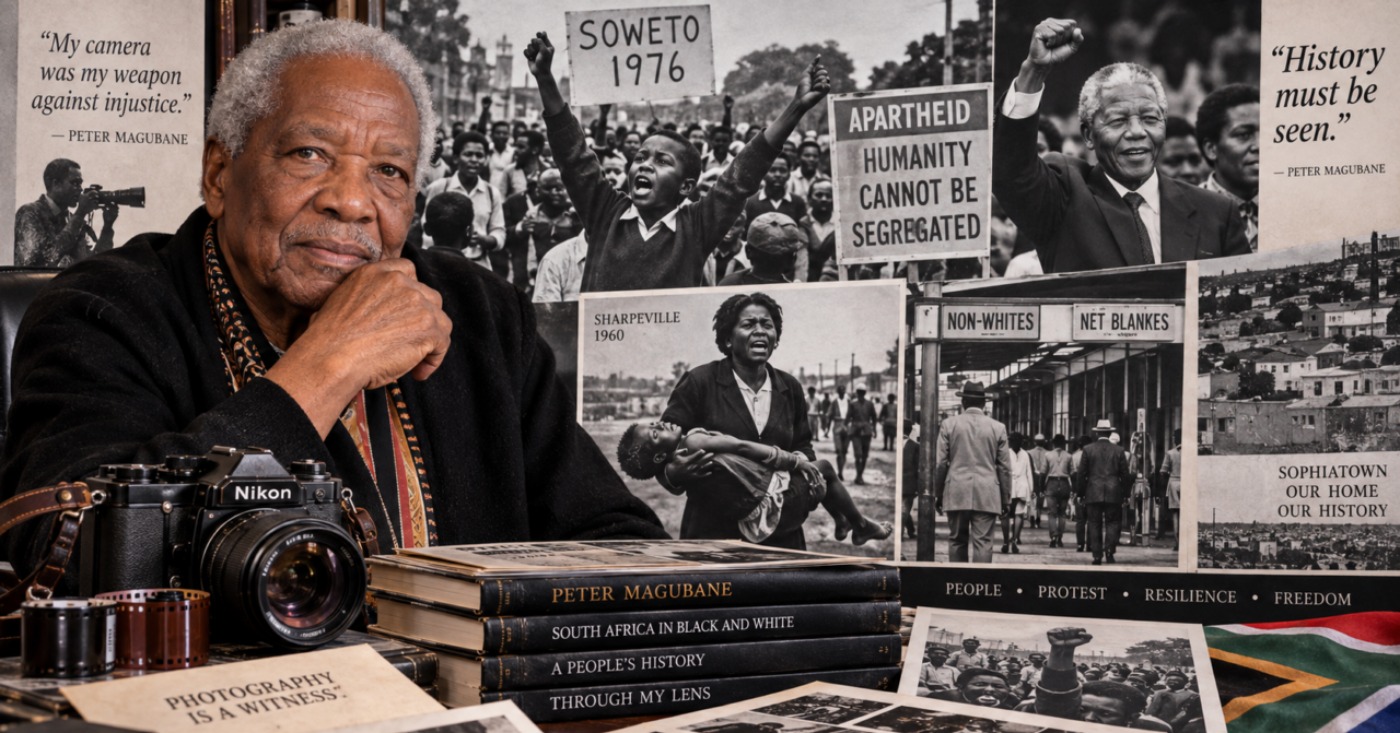
Peter Magubane was more than a photographer. He was a witness, storyteller, historian and courageous chronicler of one of the most turbulent periods in South African history. Born on January 18, 1932, in Vrededorp, Johannesburg, and raised in Sophiatown, Magubane discovered photography as a young boy after receiving a Kodak Brownie camera. That simple camera would eventually become his instrument for documenting the lives, struggles and determination of Black South Africans. He died on January 1, 2024, at the age of 91, leaving behind one of the most important photographic archives of South Africa’s apartheid era.
Magubane’s professional journey began at Drum magazine in 1954. He initially worked as a driver and messenger, but his ambition was to become a photographer. Under the mentorship of Drum’s legendary chief photographer Jürgen Schadeberg, Magubane developed his skills and began photographing major political and social events. His first significant assignment involved covering the 1955 African National Congress convention. From that point forward, photography became his way of documenting a country undergoing enormous change.
The South Africa that Magubane photographed was governed by apartheid, a system that legally enforced racial segregation and discrimination. For Black South Africans, everyday life was shaped by restrictions on where they could live, work and travel. Magubane did not limit himself to photographing politicians or famous leaders. He photographed ordinary people—children, workers, families and communities—giving the outside world a visual record of what apartheid meant in everyday life.
One of the defining moments of Magubane’s career came in 1960, when he photographed the aftermath of the Sharpeville Massacre. His photographs helped bring international attention to the violence surrounding resistance to apartheid. He also photographed the 1956 women’s anti-pass march, the Rivonia Trial involving Nelson Mandela and other activists, and numerous other events that became part of South Africa’s historical record.
Magubane paid an enormous personal price for his work. In 1969, he was arrested while photographing protesters outside Pretoria Central Prison. He was subsequently held in solitary confinement for 586 days. After his release, the apartheid government placed him under a banning order that severely restricted his ability to work and move freely. Yet the restrictions did not convince him to abandon photography. Instead, they demonstrated just how powerful the authorities believed his photographs could be.
In 1976, Magubane documented the Soweto Uprising, when thousands of Black students protested against the apartheid government’s education policies. His photographs captured young people confronting police violence and became some of the most internationally recognized images of the uprising. Despite the danger, Magubane continued photographing what was happening around him. His work transformed individual moments of protest into permanent historical evidence that could not easily be erased.
His creativity was matched by his determination to get the picture. Because authorities restricted photographers and attempted to prevent journalists from documenting certain events, Magubane sometimes concealed his camera in unusual places, including a hollowed-out Bible, bread and other objects. These methods allowed him to continue working when openly carrying a camera could attract police attention. His photographs demonstrated that documentary photography sometimes requires not only technical ability but extraordinary courage and resourcefulness.
After Nelson Mandela was released from prison in 1990, Magubane entered another important chapter of his career. He became Mandela’s official photographer and documented the transition toward democracy, including significant moments surrounding South Africa’s first democratic election and the Truth and Reconciliation Commission. The photographer who had spent decades documenting resistance now had the opportunity to photograph a country moving toward a new political era.
Magubane’s legacy extends far beyond the individual photographs he made. He published numerous books, exhibited internationally and received major honors, including an honorary Doctor of Literature from the University of Cape Town in 2010. His photographs remain part of the historical record because they show not only the brutality of apartheid but also the humanity, resilience and determination of the people who lived through it.
Peter Magubane ultimately demonstrated the extraordinary power of photography. He understood that a photograph can preserve a moment long after the people who witnessed it are gone. His camera recorded injustice, resistance, suffering, courage and eventually freedom. For photographers today, his life offers an enduring lesson: photography is not simply about making beautiful pictures—it can also be about seeing clearly, standing close to history and making sure that important stories are never forgotten. Magubane’s photographs gave South Africa a visual memory, and his life’s work reminds every photographer that sometimes the most important picture is the one that history needs someone brave enough to make.
Based on reporting by The Positive Community.
Black History
At CBCF Conference, a Panel Asks What Black Public Figures Owe the People Who Follow Them
COLUMBUS TIMES — The Congressional Black Caucus Foundation’s Annual Legislative Conference featured a panel titled “Platforms & Purpose: A Conversation With Black Men Leveraging Their Reach.” Actor and activist Kendrick Sampson, Rep. Jasmine Crockett, media personality Jason Lee, singer Eric Benét, and rapper Yung Joc discussed how public figures can translate influence into real-world change.
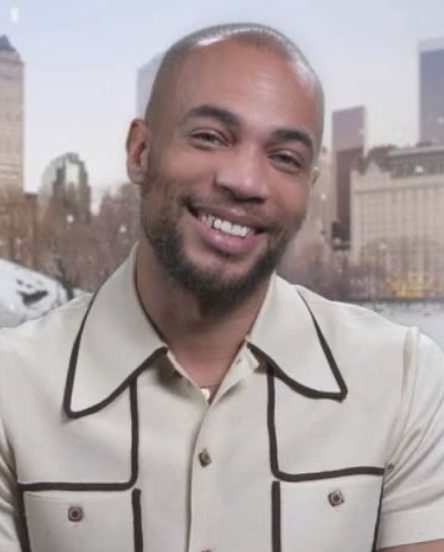
WASHINGTON — Among the more than 100 policy forums and brain trusts at this year’s Congressional Black Caucus Foundation Annual Legislative Conference was a conversation about influence itself: who has it, and what they do with it.
"Platforms & Purpose: A Conversation With Black Men Leveraging Their Reach" brought together actor and activist Kendrick Sampson, Rep. Jasmine Crockett, media personality Jason Lee, singer Eric Benét and rapper and radio host Yung Joc. The session looked at how entertainers, creators and elected officials can turn public attention into real-world change.
The panel took place at the 55th Annual Legislative Conference, a five-day event in Washington that began Wednesday. This year’s theme is "Rooted, Ready & Rising," and the conference coincides with the CBC Foundation’s 50th anniversary. CBCF President and CEO Nicole Austin-Hillery has said the gathering is meant to "combine celebration with purpose," while taking up issues including voting rights, economic opportunity, education, health disparities and criminal justice.
That mix of celebrity and policy is a long-running feature of the conference, which brings lawmakers, advocates, entrepreneurs, students and entertainers into the same rooms. The panel’s premise reflects a broader question as creators reach audiences that rival traditional media.
A career built on both stage and street
Sampson is a natural fit for that conversation. The Houston native is known for television and film work, including HBO’s Insecure, and for his activism off screen. He co-founded BLD PWR, a 501(c)(3) nonprofit that combines entertainment, education and activism.
The organization says its mission is to "reimagine and realize the liberated future we know our people deserve." It works to mobilize entertainment-industry figures and organize communities around racial, gender, immigration, economic and environmental justice, mental health and wellness, and opposition to state violence. BLD PWR emphasizes storytelling and community healing, and it centers the voices of Black, Indigenous and other marginalized communities.
What to watch
The conference runs through Sunday at the Walter E. Washington Convention Center. Details on sessions and registration are available through the CBC Foundation.
Based on reporting by Columbus Times.
Black Press
Clickbait: the Toll of a Bad Headline
SOUTHERN UNIVERSITY – SOUTHERNDIGEST — Southern University is widely known for its Human Jukebox, a celebrated part of HBCU culture. However, the university also boasts a highly-ranked nursing school, recognized by Nurse.org as the best in the U.S. for two consecutive years, with a 100% first-time pass rate on a national certification exam in 2025.

Ask someone outside of Louisiana what they know about Southern University, and there is a good chance the conversation will eventually lead to HBCU culture and the Human Jukebox. And rightfully so. The Human Jukebox has earned its reputation through generations of hard work, discipline and excellence. It represents more than halftime entertainment; it is part of the heart of Southern University and HBCU culture. But after the Jukebox, what comes next? That is where Southern has a public relations problem.
Southern University is home to a nursing school that was named Best Nursing School in the United States by Nurse.org for the second consecutive year in 2026. The program also reported a 100% first-time pass rate on the 2025 American Academy of Nurse Practitioners certification examination. Accomplishments like those should be just as inseparable from Southern’s name as its band and culture.
Instead, Southern’s positive story is too often forced to compete with another narrative: housing shortages, unanswered questions, aging infrastructure, power outages and the familiar feeling among students that something else has gone wrong. The recent power outages made that especially difficult to ignore.
Southern lost power on Sept. 1, forcing classes to be canceled. Days later, another outage affected campus operations, eventually leading the university to close campus for multiple days and shift classes remotely. Students told local news stations about losing food, struggling without air conditioning and Wi-Fi, and trying to keep up with schoolwork while the campus dealt with electrical problems. Watching frustrated students explain their experiences to local reporters made me ask a simple question: Is this bad PR? At first, I thought the answer was obvious. Communication during the outage felt too slow. Students wanted to know when power would return, whether classes would continue and when campus life would return to normal. When information is limited, rumors fill the gap. One person says the power is back. Someone else says it went back out. Students begin relying on each other before they rely on the institution. But learning more about what happens behind the scenes complicated my original opinion.
The people responsible for communicating cannot simply release whatever information is circulating. They may be waiting on utility companies, facilities officials, emergency management or university leadership to confirm what is actually happening. Publishing an estimate that turns out to be wrong can create even more confusion. That does not mean communication should stop.
There is a difference between saying, “We don’t know,” and saying nothing. Even when there is no new information, students can still be told that there is no new information. An update saying officials are still waiting for confirmation, explaining what is currently known and telling students when to expect another update creates something extremely important during a crisis: certainty about the communication process, even when there is uncertainty about the situation itself.
But the more I thought about “Bad PR?” the more I realized Southern’s problem is bigger than how quickly an email goes out. Public relations cannot turn the electricity back on. It cannot build a residence hall overnight. It cannot make every office answer its phone. It cannot win a football game. At some point, an institution’s reputation has to be supported by the institution itself.
Southern entered Fall 2026 with campus housing completely occupied and its housing waitlist at capacity. The university is responding by moving forward with new housing that is expected to add approximately 850 beds. That investment matters. But it also represents a larger pattern Southern cannot afford to continue: waiting until a problem becomes part of the student experience before the solution becomes visible. Southern cannot continuously rely on the resilience of its students as part of its operating model.
There is almost a collective “struggle bus” mentality that can develop on campus. Something is broken. Something is delayed. Another office is not answering. Another unexpected problem appears. But at least we are still here, getting our education and figuring it out. Southern certainly develops character. But students should not have to develop character by constantly learning to navigate problems that an evolving university should be working to eliminate.
That is especially important because Southern does not exist in isolation. Across Baton Rouge sits LSU, one of the most recognizable universities in the state. Comparisons between the two institutions are almost inevitable, whether those comparisons are fair or not. Southern should not try to become LSU. It should become the strongest possible version of Southern.
There is something different about attending an HBCU. There is value in entering classrooms where students who look like you can be recognized for their intelligence without first having to prove that they belong there. There is value in being surrounded by people who may come from completely different backgrounds while sharing an experience rooted in Black history, culture and achievement. Southern has that. It has legacy. It has culture. It has nationally recognized programs. It has students worth celebrating. It has one of the most recognizable bands in college culture. The problem is not that Southern lacks a brand. Southern’s problem is keeping that legacy intact while building an institution capable of carrying it into the future. Construction around campus shows that change is happening. New housing is coming. Infrastructure is being addressed. But physical construction cannot be the only visible evidence of progress. Students should be able to experience that evolution in customer service, communication, technology, facilities and the everyday systems they depend on.
The Human Jukebox does not need less recognition. The rest of Southern needs to reach the same standard of excellence that makes the Jukebox so easy to celebrate. If Southern wants to control its narrative nationally, the answer cannot simply be better marketing whenever something goes wrong. Southern already has the story.
The nursing students achieving nationally recognized results are part of the story. The students earning degrees are part of the story. The culture is part of the story. The Jukebox is part of the story. The history and generations of alumni are part of the story.
But so are the outages, housing frustrations and institutional problems students experience. Public relations can decide how a story is communicated, but it cannot permanently separate reputation from reality. Maybe Southern does not have a “bad PR” problem after all. Maybe Southern has an institution with an incredibly strong brand that is sometimes being asked to carry more weight than it should. If Southern truly wants to control its narrative, that work cannot begin and end with a press release. It has to begin within.
Based on reporting by Southern University – SouthernDIGEST.
Black Press
OP-ED: How Head Start Also Helps Parents
BLACKPRESSUSA NEWSWIRE — “I never thought I would be here before Head Start. It was rough. No childcare, job loss. I’ve been helpless,” she shared on stage at the National Head Start Conference in Baltimore. “When I applied, I did not think my daughter would get in. When I got the call, I cried tears of joy.”
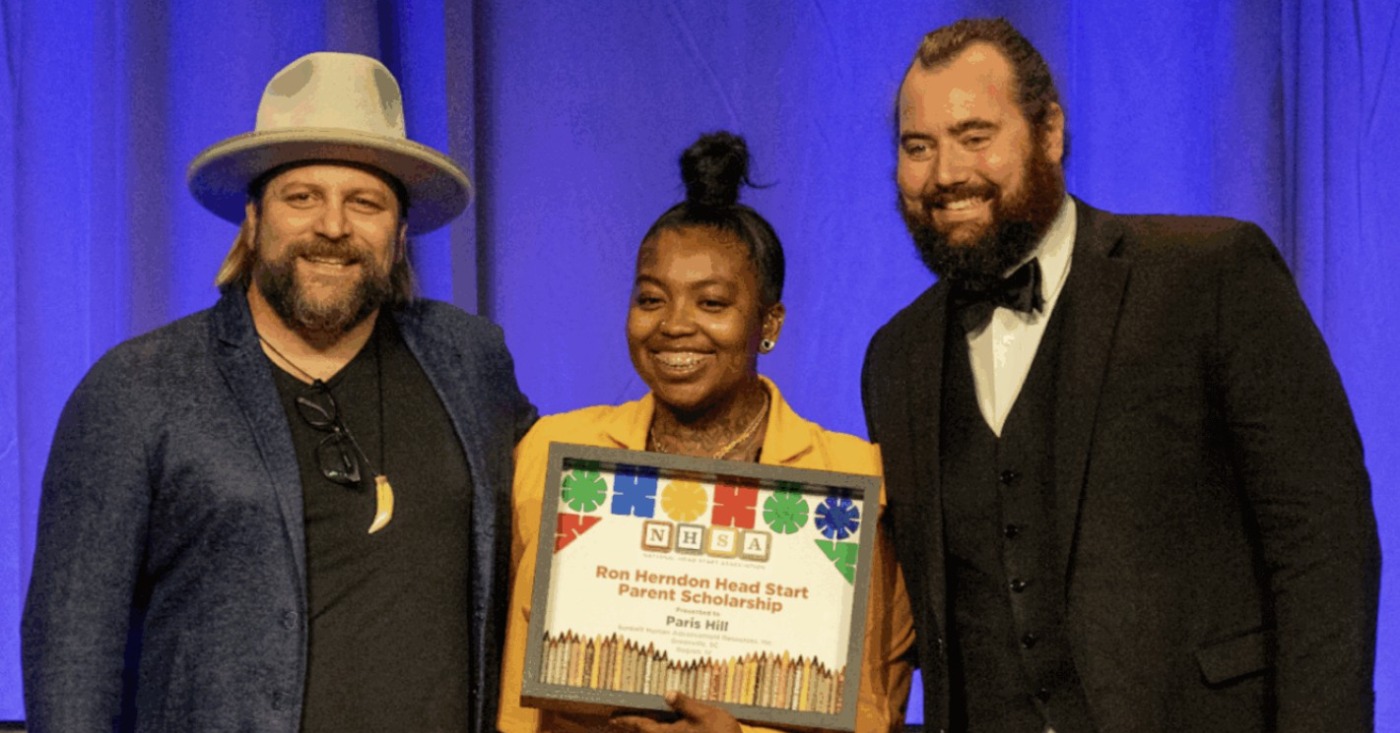
Ron Herndon Head Start Parent Scholarship awardee Paris Hill, of Sunbelt Human Advancement Resources in Greenville, South Carolina, says that Head Start has been instrumental in reaching her dreams.
“Head Start made me sit and realize my goals and what steps I needed to take to achieve them. They show compassion, love, and dedication to helping parents. They push you to do, to be, and to do better—not only as parents but for yourself.”
Hill embodies the spirit of NHSA’s Ron Herndon Scholarship, which celebrates a Head Start parent who goes above and beyond in their community.
During the pandemic, Hill participated in virtual classroom instruction with her children and engaged in parent virtual activities such as Parent Committee meetings and financial literacy classes. She recently contributed over 96 hours to her program.
“I never thought I would be here before Head Start. It was rough. No childcare, job loss. I’ve been helpless,” she shared on stage at the National Head Start Conference in Baltimore. “When I applied, I did not think my daughter would get in. When I got the call, I cried tears of joy.”
Hill enrolled in college and pursued a bachelor’s degree in applied sciences with a concentration in business management. She has met and exceeded her personal goal of becoming a nail technician and creating her own business.
The $2,500 parent scholarship supported her vision. “Head Start made me sit and realize my goals and what steps I needed to take to achieve them. They show compassion, love, and dedication to helping parents. They push you to do, to be, and to do better — not only as parents but for yourself.”
She has an uncommon career goal — to become a mortician — and has already found part-time work. She has found it rewarding to assist families who were going through challenging times because of the death of a loved one.
“When I first applied for the parent scholarship program, I was excited and this was my time to show what I’m capable of. It fills my heart with joy knowing I had a team of teachers and directors pushing me to do better and acknowledging me as parents and not just as a mom.”


2027 Kia Seltos X Line AWD: Worth the Price? #shorts

Headlines and Hotlines

Headlines and Hotlines 📱

Easy Car Entry, Smooth Ride, Effortless Turns! #shorts

Statement from the President of the National Association of Black Journalists on Press Ban

America’s Reading Crisis Demands More Than Concern. It Demands Action.

HBCU Leaders, Corporate Partners Convene in D.C. to Strengthen Support for Black Colleges’ Athletic Programs

Peter Magubane: a Camera Against Apartheid

HBCU Leaders, Corporate Partners Convene in D.C. to Strengthen Support for Black Colleges’ Athletic Programs

At CBCF Conference, a Panel Asks What Black Public Figures Owe the People Who Follow Them

You Had Me at Hello: the Love and Legacy of Grace Nail and James Weldon Johnson

Young Black Men Suffering in Silence A curse that can be Broken

Arnold Perkins: At 85, a Life of Service, Faith and Giving Back

Young Black Men Suffering in Silence A curse that can be Broken

BSPNTX Announces 2026-27 Scholarships Recipients

🎷 Jazz is taking over D.C.!

Women Learned Their Jail Strip Searches Were Recorded. Their Outrage Changed the Law

Black Americans Have Doubts About the U.S. Food System

Barbados – Julius Garvey, Son of Marcus Garvey, Joins PM Mottley in the Rededication of the Garvey Amphitheater

Latest Massacre in Haiti Reveals Cruelty U.S. Deportations
2027 Kia Seltos X Line AWD: Worth the Price? #shorts
Headlines and Hotlines
Headlines and Hotlines 📱
Easy Car Entry, Smooth Ride, Effortless Turns! #shorts

Cannabis prohibition was rooted in racism: Jess Jackson with the MN Office of Cannabis Management

Kia Seltos: 3 Questions Before You BUY! #shorts

The Conversation With Al McFarlane (09/22/2026

LIVE! — ASK ALMA! — TUS. 9.22.26 7PM EST

The People’s Revival National Campaign Launch

Interior 2026 GMC Acadia Denali Ultimate AWD 360 Video
-
 Black History1 week ago
Latest Massacre in Haiti Reveals Cruelty U.S. Deportations
-
 Black History1 week ago
Henry O. Flipper: A Trailblazer at West Point and Beyond
-
 Black History1 week ago
OP-ED: If AI Is the New Language of Power, Then NAN Wants Black Communities Fluent
-
 Black Press1 week ago
Asm. Smallwood-Cuevas’s Bill Repealing ‘Racist’ CalWORKs ‘Man-in-the-House’ Rule Clears Legislature
-

 Black History1 week ago
OPINION: Nolan Wells’ Death One of Several Signifying Racial Terror Lives on in U.S. South
-

 Black Press1 week ago
OP-ED: How Does Your State Rank for Pre-K?
