
Commentary
I watched Taraji P. Henson take her place on the Hollywood Walk of Fame
NNPA NEWSWIRE — “I want to say to all of the little brown babies all over the world, ‘Look at me and see you,’” the 48-year-old actress said. “I was a single mom, raised by a single mom and lived in the hood. …I never focused on my circumstances. I focused on my dream and looked at God.”


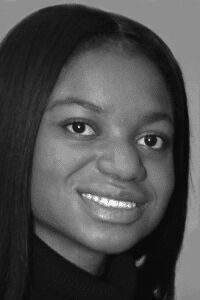
Brianna A. Smith
By Brianna A. Smith, Special to The New Tri-State Defender
HOLLYWOOD – “The Hollywood Walk of Fame is a journey through history and today my legacy will be forever etched in the history of Hollywood. I’ve worked so hard for this. It’s surreal,” said Taraji P. Henson.
I was on hand Monday, January 28th, for the 11:30 a.m. ceremony that unfolded in the 6200 block of Sunset Blvd. and culminated with Henson’s star added to the prestigious Hollywood Walk of Fame.
“I want to say to all of the little brown babies all over the world, ‘Look at me and see you,’” the 48-year-old actress said. “I was a single mom, raised by a single mom and lived in the hood. …I never focused on my circumstances. I focused on my dream and looked at God.”
Henson dedicated her star to her family as she fought back tears.
Henson’s mother and 94-year-old grandmother were in the audience. She reflected on her early career in Hollywood, noting that she arrived in Los Angeles in the early 1990s with $700 and her son on her hip.
Turning to her grandmother, she said, “I hope you are so proud because this is your legacy.”
Her A-list friends, John Singleton and Mary J. Blige, came out to support and honor her.

Taraji P. Henson fights for roles that will break through glass ceilings and does so with the young women coming behind her in mind, she said.
Singleton directed Henson in her breakout film – the 2001 coming-of-age hood classic “Baby Boy,” the 2005 crime drama “Four Brothers” and a 2015 episode of her Fox hip-hop drama “Empire.”
Singleton also was among the producers of “Hustle & Flow,” the 2005 film set in Memphis. Henson provided the vocals for the film’s Oscar-winning Three 6 Mafia track, “It’s Hard Out Here for a Pimp.”
Audiences do indeed “see themselves” in Henson, he told the crowd.
Blige appeared with Henson in the 2009 Tyler Perry-directed romantic musical comedy-drama “I Can Do Bad All by Myself.” She also sang on the 2015 Fox special “Taraji and Terrence’s White Hot Holidays.”
“She has been there for me, she has brought me through so many things and brought sunshine to my darkest days,” Blige said of her close friend.
“Made me laugh till I cried on days when I just wanted to cry; a true angel. What an amazing woman. You are the definition of a phenomenal woman.”
Director Adam Shankman and producer Will Packer also paid tribute to Henson, who sported a bright red mini dress, black sandals and matching cardigan for her star’s unveiling.
“Taraji P. Henson is a powerful woman and a powerful actress. She is an entertainer that fans cannot take their eyes off of due to her great acting ability,” said Ana Martinez, producer of the Walk of Fame Ana Martinez. “We welcome her bright star on our Walk of Fame.”
Henson’s stellar list of movie and TV roles include “Hidden Figures,” “Baby Boy,” “Ralph Breaks the Internet,” “The Curious Case of Benjamin Button,” “Acrimony” and, of course, “Empire.”
The Howard University alum has won numerous awards, including from the Golden Globes, Screen Actors Guild, the Broadcast Film Critics Association (Critics’ Choice), BET and the NAACP (Image Awards).
Now 48, Henson fights for roles that will break through glass ceilings and does so with the young women coming behind her in mind, she said.
“We can’t drop the torch now ladies out there, anybody in the industry; we also need our men,” she said. “That’s why I love men, I protect them because we need each other. We can’t bash each other, we have to reach across the table and help each other. …
Henson is engaged to former NFL cornerback Kelvin Hayden. Her latest film, “What Men Want,” opened in theatres February 8th.
“Everything I do is for the positive, forward movement of humanity,” she said. “That’s how powerful art is. I don’t take anything for granted. Every role I take on is just as special as the last one.”
There now are 2,655 stars on the Hollywood Walk of Fame. I thoroughly enjoyed witnessing my favorite actress receive hers.









Black History
IN MEMORIAM: The Rev. Leon “Sonny” Clark, Longtime Orange County Pastor and Community Leader, Dies at 72
Rev. Leon William “Sonny” Clark, the longtime pastor of New Spirit Baptist Church in Santa Ana and a prominent faith and community leader in Orange County, passed away on September 9 at the age of 72. Born in Bennettsville, South Carolina, Clark was a U.S. Navy veteran who dedicated his life to service. He served various Southern California churches before leading New Spirit Baptist Church for over 22 years, extending his work into counseling, mentoring, and civic engagement, and supporting the African American community. To learn more about his life and contributions, read more.

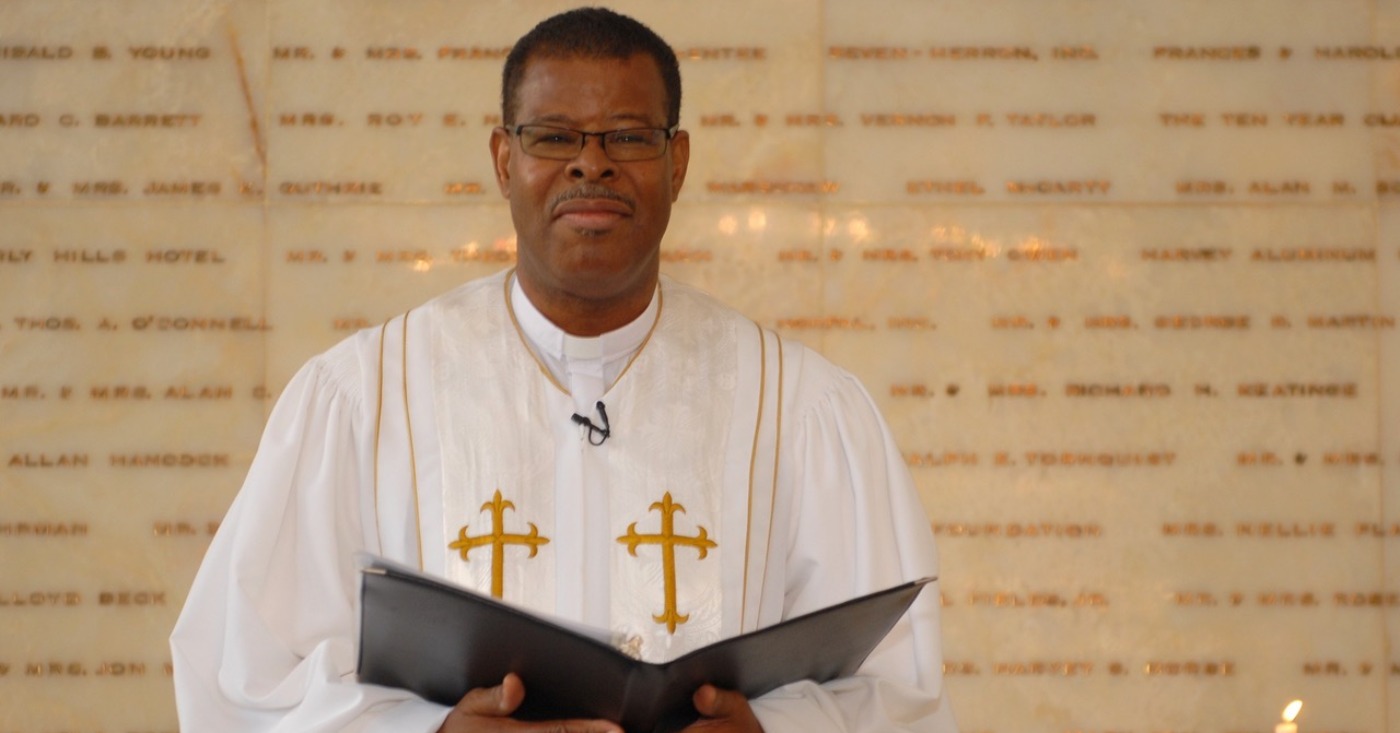
Rev. Leon William “Sonny” Clark, longtime pastor of New Spirit Baptist Church in Santa Ana and a respected faith and community leader in Orange County, died Sept. 9. He was 72.
Born Oct. 2, 1953, in Bennettsville, South Carolina, Clark was a U.S. Navy veteran who later built a life of service centered on family, faith, ministry, and community.
Clark began his formal ministry at Metropolitan Baptist Church in Altadena in 1978. After acknowledging his call to ministry in 1980, he preached his first sermon and went on to serve churches throughout Southern California, including Second Baptist Church in Riverside, Mount Vernon Baptist Church in Rubidoux, Antioch Missionary Baptist Church in Pomona, and Friendship Baptist Church in Yorba Linda.
In November 2003, Clark was called to lead New Spirit Baptist Church in Santa Ana, where he served as pastor for more than 22 years. His work extended beyond the pulpit through counseling, mentoring, civic engagement, and efforts to strengthen Orange County’s African American community.
Clark served on the Orange County Heritage Council and supported efforts to preserve and celebrate African American history and culture. He helped organize the Orange County Black History Parade and Unity Festival, served on the Interfaith Committee and the Orange County Transit Authority, and served as president of the Orange County Ministers Conference.
In 2024, the City of Santa Ana recognized Clark for his contributions to the community. He also received the Orange County Southern Baptist Association Hall of Faith Award and was previously honored as Pastor of the Year by the Orange County Heritage Council.
Clark is survived by his wife, Andrea Joyles Clark; six children, Shawn Williams, Le Ondra Clark Harvey, Kyla Coward, Joshua Clark, Marissa Clark and Ashley Clark; grandchildren and great-grandchildren; siblings; extended family; and the New Spirit Baptist Church congregation.
A wake will be held Thursday, Oct. 1, from 4 to 8 p.m. at New Spirit Baptist Church, 701 S. Sullivan St. in Santa Ana, with a remembrance service from 5 to 6:30 p.m.
A Celebration of Life will be held Friday, Oct. 2, at Friendship Baptist Church, 17145 Bastanchury Road in Yorba Linda. Viewing begins at noon, followed by the service at 1 p.m.
Burial will take place Monday, Oct. 5, at 10:15 a.m. at Riverside National Cemetery.
Clark often shared a guiding principle that shaped his ministry: “Start where you are. Use what you have. Do what you can.”
Black History
Remembering Chauncey Bailey as Student Journalists Face Threats to Truth-Telling
Nearly two decades ago, Oakland Post reporter and editor-in-chief Chauncey Bailey was tragically murdered for investigating a crooked business. His assassination shocked the journalism world and is remembered as student journalists today face increasing threats and censorship. A former classmate of Bailey and chair of the Student Press Law Center notes a significant rise in calls from students seeking legal advice amid a hostile environment. This situation highlights the importance of protecting young journalists and their pursuit of truth. Read more to learn about Bailey’s legacy and current challenges facing student press.
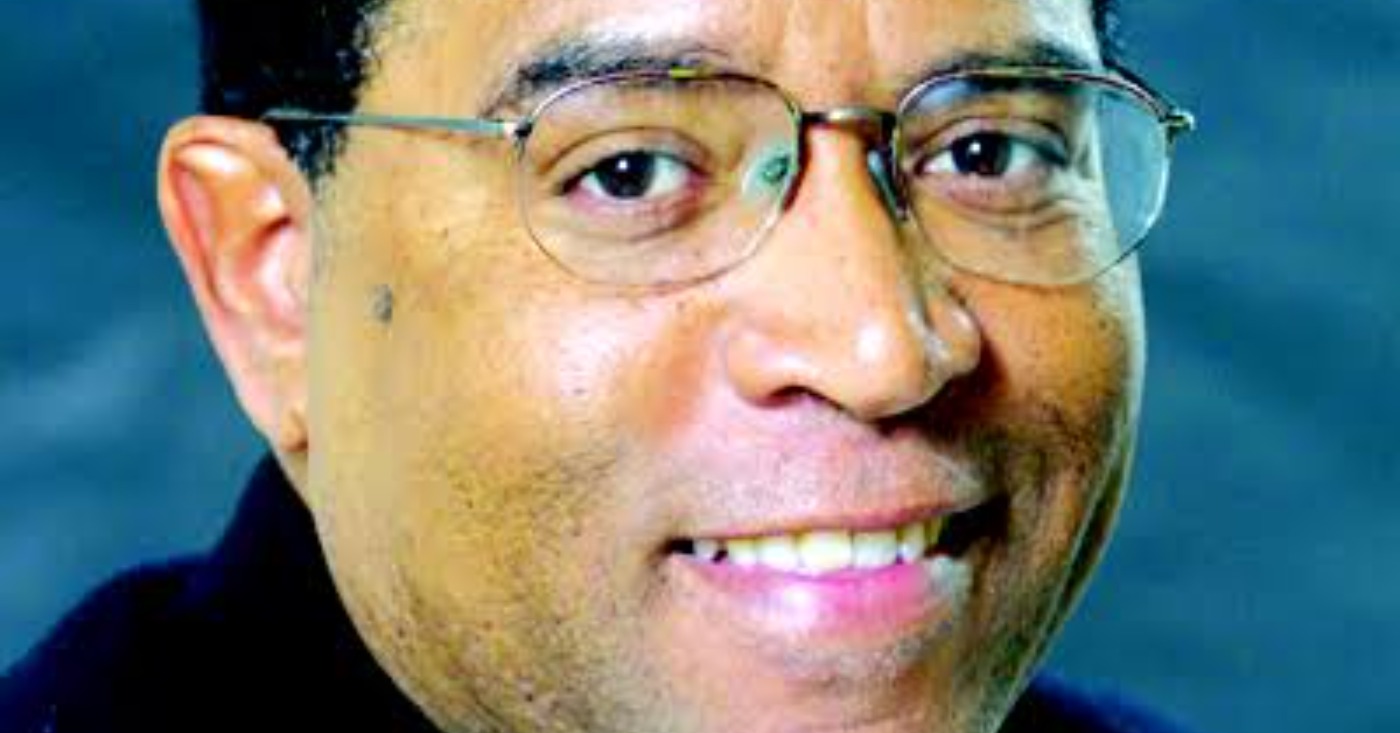
It is nearly 20 years since Chauncey Bailey, a crusading journalist, was murdered
on an Oakland street corner, gunned down to prevent him from writing stories about a
crooked business.
I hope people remember Bailey, a reporter and editor-in-chief for the
Oakland Post, the city’s Black newspaper. He had already written several articles about
the problems of a business called Your Muslim Bakery and was working on another
when the bakery’s owner ordered an employee to kill Bailey.
His murder shocked the journalism world that found the idea of an American
reporter killed for doing his job unfathomable. For me, the shock and sadness were also
personal.
I knew Bailey. In the mid-1970s we were classmates in the Michelle Clark Memorial
Foundation program, the precursor to the Institute for Journalism Education Summer
Program. A program, backed by the Ford Foundation, that provided intensive training
for fledgling minority journalism students and then placed them in jobs at newspapers
and television stations.
I’m reminded of Bailey and that program when I visit the East Bay at the end of
September to discuss the future of student journalism. To me, the visit will not only
evoke memories of Bailey. It will also be an opportunity to hone strategies to protect and
support student journalists who are under attack today, maybe not in the way that took away Chauncey Bailey, but an attack, nonetheless.
Spurred by the hostility toward the free press emanating out of Washington, high
school and college journalists are facing a barrage of censorship and harassment from
school administrators and local officials.
The 24-hour hotline staffed by the Student Press Law Center (SPLC), the non-profit I chair, has seen a 35% increase in calls from student journalists seeking legal advice on censorship, libel and copyright issues during the past two years, as well as a tripling in the number of complaints of harassment, including threats of firing, of faculty advisors.
I am not suggesting today’s national climate is as dangerous as the murderous
intentions of Yusef Bey IV, the man who ordered Bailey’s assassination. But the
harassment of student journalists does kill something else. It can destroy the desire of
student journalists to continue their growth to become professional news gatherers and
producers – something the country will always need.
It is that professional maturation that I’m reminded of when I think back on Chauncey
Bailey.
Truth be told, when we were classmates back in 1974 Bailey was the class clown,
known more for his sardonic wit than his writing or reporting talent. I have vivid
memories of Bailey sitting at his desk in the back of the room regaling us with sarcastic
comments. Sure, he was funny.
And he didn’t exhibit the level of reporting skills of our other classmates such as Milton Coleman who went on to be the Deputy Managing Editor of the Washington Post or Alexis Scott who for years has run the Atlanta Daily World.
After a series of reporting jobs in Hartford, Connecticut, Detroit, Michigan, and Oakland, Bailey had risen in talent and skill to helm this very newspaper. A tip from a source led Bailey to look into the possibility that Bey was running Your Muslim Bakery into bankruptcy. Word that Bailey was working on that story filtered back to Bey who ordered the journalist killed.
On August 2, 2007, Bailey was shot three times at point-blank range as he walked to work.
So, when I think of my trip to the East Bay my thoughts go to journalism’s past
represented by Chauncey Bailey’s sacrifice and what the staff and the board of SPLC
can do to secure the current and future work of student journalists.
Steven A. Holmes is a former Pulitzer Prize-winning journalist. His novel “Black Messiahs” was published in May this year.
Black Press
Statement from the President of the National Association of Black Journalists on Press Ban
TEXAS METRO NEWS — The National Association of Black Journalists (NABJ) condemned President Donald Trump’s decision to deny access to MS NOW journalists and his threats against CNN and Politico due to unfavorable coverage. The NABJ stated that journalists hold power accountable for the American people, and government officials cannot grant or withhold access based on reporting they like or dislike.
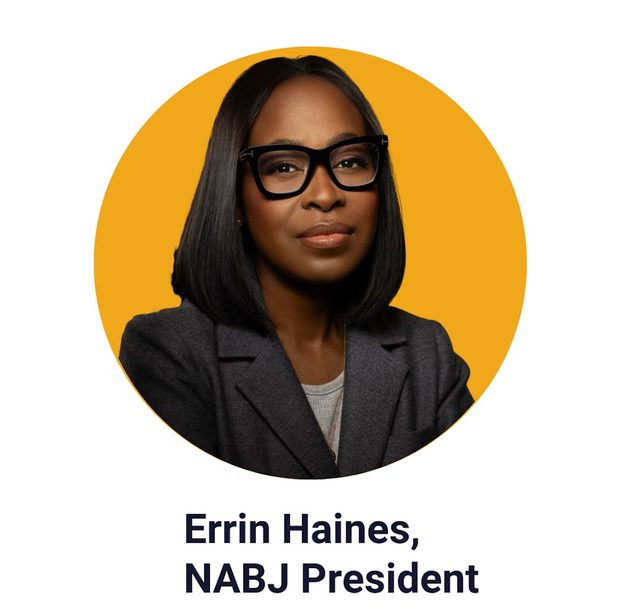
NABJ condemns President Donald Trump’s decision to deny access to MS NOW journalists and his threat to exclude CNN and Politico because of coverage he dislikes. The role of journalists is to hold power accountable on behalf of the American people. Government officials cannot reward reporting they find favorable with access, or withhold access as punishment for journalists who have scrutinized or criticized them. This retaliation is a threat not only to the news organizations being targeted, but to every journalist working to report independently and without fear of government reprisal. The White House belongs to the American people, and they have a right to know what their government is doing. Journalists must be free to ask difficult questions and report the answers. A free and independent press is not a privilege granted at the discretion of any president. It is a cornerstone to a healthy and functioning democracy. The First Amendment can never be optional.
Based on reporting by Texas Metro News.
Black Press
America’s Reading Crisis Demands More Than Concern. It Demands Action.
JACKSON ADVOCATE — A national literacy crisis is emerging as reading achievement continues to decline across the United States. Nearly 40% of fourth graders read below the basic level, and roughly one-third of eighth graders are below basic, marking the highest share ever recorded.

By Marc H. Morial
National Urban League President & CEO
New York City’s troubling decline in reading scores, despite one of the most ambitious literacy reform efforts in the nation, is a wakeup call for the entire nation.
Across the country, reading achievement continues to decline. Nearly 40 percent of fourth graders read below the basic level and roughly a third of eighth graders are reading below basic, the highest share ever recorded.
Taken together, these numbers reveal a national literacy crisis that threatens economic opportunity, educational equity, and our nation’s future competitiveness.
Reading is not merely another subject in school. Reading is the foundation upon which all learning rests. A child who struggles to read struggles to learn history, science, mathematics, and civics. A young person who cannot effectively read and analyze complex information faces barriers to college completion, workforce success, and informed participation in our democracy.
That is why the growing literacy crisis is fundamentally an opportunity crisis. Behind every percentage point is a child whose future opportunities hang in the balance. Persistent achievement gaps mean that Black and Latino students continue to bear a disproportionate share of the consequences when reading instruction falls short. If we are serious about economic mobility and educational justice, literacy must be at the center of the conversation.
For more than two decades, many schools embraced Balanced Literacy approaches that sought to cultivate a love of reading by putting books in students’ hands and encouraging independent reading. The approach was well-intentioned, but too often foundational skills instruction, particularly phonics and decoding, suffered.
The evidence is increasingly clear that explicit, systematic instruction helps more children become successful readers. States and school districts that are embracing these principles deserve credit for moving in the right direction. But millions of students are already in middle school, high school, and even college struggling to read complicated texts, analyze difficult arguments, and complete entire books.
What is our plan for them?
Too many students arrive in high school lacking the reading stamina necessary to engage deeply with literature, history, or complex informational texts. College professors increasingly describe students who struggle with lengthy assignments that previous generations navigated more comfortably.
To be clear, Balanced Literacy alone cannot explain these trends. Increased screen time, constant digital distractions, shortened attention spans, and the dominance of algorithm-driven content all influence students’ reading habits and learning experiences.
Yet recognizing these factors cannot become an excuse for inaction.
Instead, it should compel us to think more broadly about literacy.
The challenge before us is not simply helping children sound out words. It is helping them develop the capacity to wrestle with complex ideas, sustain attention, evaluate evidence, and build knowledge through reading. It is helping them become informed citizens and lifelong learners.
And that requires a comprehensive, systemic strategy.
We need high-quality literacy instruction beginning in early childhood settings and extending throughout elementary school. We need to strengthen early intervention so that struggling readers receive support before learning gaps become entrenched. We must carefully examine the quality and effectiveness of programs serving our youngest learners, including Head Start and other early childhood initiatives.
At the same time, we need a national commitment to literacy recovery for older students. Districts and states should be developing evidence-based strategies that help adolescents strengthen comprehension, vocabulary, knowledge-building, and engagement with complex texts. Students who fell behind during the pandemic and those who continue to struggle deserve intensive support, not lowered expectations.
We should also have serious conversations about the role of technology in children’s lives. Restricting unnecessary screen exposure, particularly in the early grades, should be part of a broader effort to rebuild reading habits and attention spans that support learning.
More concerning than the decline in reading scores is the absence of a clear, large-scale strategy to address the growing crisis. Every year that a struggling reader falls further behind increases the likelihood that they will face lifelong educational and economic disadvantages.
The recent reading results from New York City are a warning. The national NAEP results are an even louder one. Together, they tell us that incremental change is not enough.
We know more about how children learn to read than ever before. We know that literacy is the gateway to opportunity. What remains to be seen is whether we have the collective will to act with the urgency this moment demands.
Our children cannot afford for us to wait.
Based on reporting by Jackson Advocate.
Art
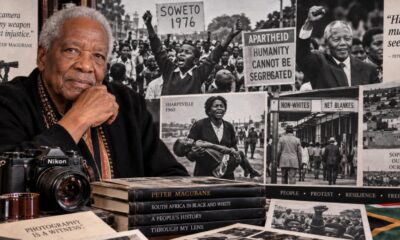
Peter Magubane: a Camera Against Apartheid
THE POSITIVE COMMUNITY — Peter Magubane, a pioneering South African photographer, dedicated his life to documenting the realities of apartheid. Born in 1932, Magubane began his career at Drum magazine in 1954, initially as a driver before becoming a photographer.
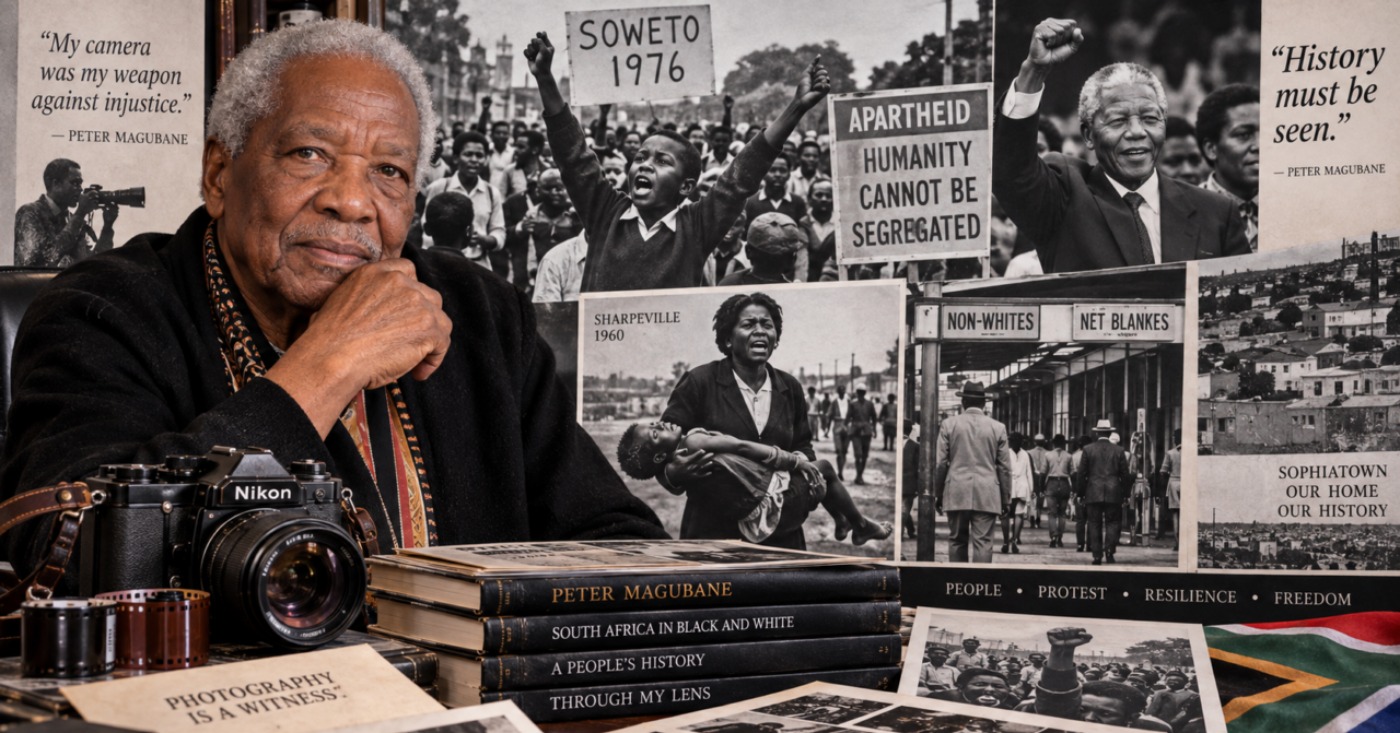
Peter Magubane was more than a photographer. He was a witness, storyteller, historian and courageous chronicler of one of the most turbulent periods in South African history. Born on January 18, 1932, in Vrededorp, Johannesburg, and raised in Sophiatown, Magubane discovered photography as a young boy after receiving a Kodak Brownie camera. That simple camera would eventually become his instrument for documenting the lives, struggles and determination of Black South Africans. He died on January 1, 2024, at the age of 91, leaving behind one of the most important photographic archives of South Africa’s apartheid era.
Magubane’s professional journey began at Drum magazine in 1954. He initially worked as a driver and messenger, but his ambition was to become a photographer. Under the mentorship of Drum’s legendary chief photographer Jürgen Schadeberg, Magubane developed his skills and began photographing major political and social events. His first significant assignment involved covering the 1955 African National Congress convention. From that point forward, photography became his way of documenting a country undergoing enormous change.
The South Africa that Magubane photographed was governed by apartheid, a system that legally enforced racial segregation and discrimination. For Black South Africans, everyday life was shaped by restrictions on where they could live, work and travel. Magubane did not limit himself to photographing politicians or famous leaders. He photographed ordinary people—children, workers, families and communities—giving the outside world a visual record of what apartheid meant in everyday life.
One of the defining moments of Magubane’s career came in 1960, when he photographed the aftermath of the Sharpeville Massacre. His photographs helped bring international attention to the violence surrounding resistance to apartheid. He also photographed the 1956 women’s anti-pass march, the Rivonia Trial involving Nelson Mandela and other activists, and numerous other events that became part of South Africa’s historical record.
Magubane paid an enormous personal price for his work. In 1969, he was arrested while photographing protesters outside Pretoria Central Prison. He was subsequently held in solitary confinement for 586 days. After his release, the apartheid government placed him under a banning order that severely restricted his ability to work and move freely. Yet the restrictions did not convince him to abandon photography. Instead, they demonstrated just how powerful the authorities believed his photographs could be.
In 1976, Magubane documented the Soweto Uprising, when thousands of Black students protested against the apartheid government’s education policies. His photographs captured young people confronting police violence and became some of the most internationally recognized images of the uprising. Despite the danger, Magubane continued photographing what was happening around him. His work transformed individual moments of protest into permanent historical evidence that could not easily be erased.
His creativity was matched by his determination to get the picture. Because authorities restricted photographers and attempted to prevent journalists from documenting certain events, Magubane sometimes concealed his camera in unusual places, including a hollowed-out Bible, bread and other objects. These methods allowed him to continue working when openly carrying a camera could attract police attention. His photographs demonstrated that documentary photography sometimes requires not only technical ability but extraordinary courage and resourcefulness.
After Nelson Mandela was released from prison in 1990, Magubane entered another important chapter of his career. He became Mandela’s official photographer and documented the transition toward democracy, including significant moments surrounding South Africa’s first democratic election and the Truth and Reconciliation Commission. The photographer who had spent decades documenting resistance now had the opportunity to photograph a country moving toward a new political era.
Magubane’s legacy extends far beyond the individual photographs he made. He published numerous books, exhibited internationally and received major honors, including an honorary Doctor of Literature from the University of Cape Town in 2010. His photographs remain part of the historical record because they show not only the brutality of apartheid but also the humanity, resilience and determination of the people who lived through it.
Peter Magubane ultimately demonstrated the extraordinary power of photography. He understood that a photograph can preserve a moment long after the people who witnessed it are gone. His camera recorded injustice, resistance, suffering, courage and eventually freedom. For photographers today, his life offers an enduring lesson: photography is not simply about making beautiful pictures—it can also be about seeing clearly, standing close to history and making sure that important stories are never forgotten. Magubane’s photographs gave South Africa a visual memory, and his life’s work reminds every photographer that sometimes the most important picture is the one that history needs someone brave enough to make.
Based on reporting by The Positive Community.
Black History
At CBCF Conference, a Panel Asks What Black Public Figures Owe the People Who Follow Them
COLUMBUS TIMES — The Congressional Black Caucus Foundation’s Annual Legislative Conference featured a panel titled “Platforms & Purpose: A Conversation With Black Men Leveraging Their Reach.” Actor and activist Kendrick Sampson, Rep. Jasmine Crockett, media personality Jason Lee, singer Eric Benét, and rapper Yung Joc discussed how public figures can translate influence into real-world change.
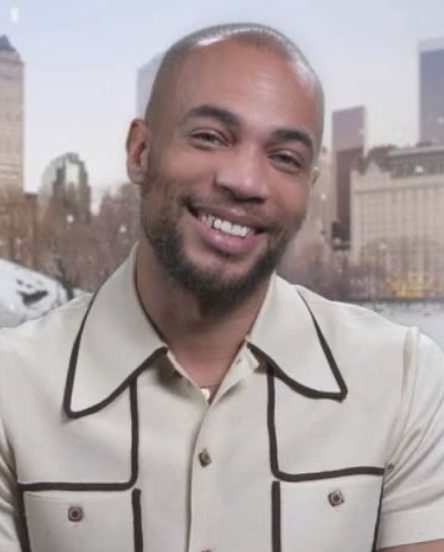
WASHINGTON — Among the more than 100 policy forums and brain trusts at this year’s Congressional Black Caucus Foundation Annual Legislative Conference was a conversation about influence itself: who has it, and what they do with it.
"Platforms & Purpose: A Conversation With Black Men Leveraging Their Reach" brought together actor and activist Kendrick Sampson, Rep. Jasmine Crockett, media personality Jason Lee, singer Eric Benét and rapper and radio host Yung Joc. The session looked at how entertainers, creators and elected officials can turn public attention into real-world change.
The panel took place at the 55th Annual Legislative Conference, a five-day event in Washington that began Wednesday. This year’s theme is "Rooted, Ready & Rising," and the conference coincides with the CBC Foundation’s 50th anniversary. CBCF President and CEO Nicole Austin-Hillery has said the gathering is meant to "combine celebration with purpose," while taking up issues including voting rights, economic opportunity, education, health disparities and criminal justice.
That mix of celebrity and policy is a long-running feature of the conference, which brings lawmakers, advocates, entrepreneurs, students and entertainers into the same rooms. The panel’s premise reflects a broader question as creators reach audiences that rival traditional media.
A career built on both stage and street
Sampson is a natural fit for that conversation. The Houston native is known for television and film work, including HBO’s Insecure, and for his activism off screen. He co-founded BLD PWR, a 501(c)(3) nonprofit that combines entertainment, education and activism.
The organization says its mission is to "reimagine and realize the liberated future we know our people deserve." It works to mobilize entertainment-industry figures and organize communities around racial, gender, immigration, economic and environmental justice, mental health and wellness, and opposition to state violence. BLD PWR emphasizes storytelling and community healing, and it centers the voices of Black, Indigenous and other marginalized communities.
What to watch
The conference runs through Sunday at the Walter E. Washington Convention Center. Details on sessions and registration are available through the CBC Foundation.
Based on reporting by Columbus Times.


Asm. Corey Jackson Announces Launch of 24-Hour Childcare in His District

IN MEMORIAM: The Rev. Leon “Sonny” Clark, Longtime Orange County Pastor and Community Leader, Dies at 72

Poll: Becerra Widens His Lead Over Hilton; Californians Split on Wealth Tax

From Historic Memories to New Possibilities: Oakland Celebrates Coliseum 60

Bridging the gap between academic research and commercial drug development

County Office of Education Says OUSD Finances Are Getting Healthier, Materially Stronger

LIVE FREE Sunday Dinner Brings Faith, Fellowship and Civic Conversation to Oakland

Remembering Chauncey Bailey as Student Journalists Face Threats to Truth-Telling

BLACspace Cooperative Invites Bay Area to Experience Oakland’s Black Cultural Ecosystem Through a BLAC Map Tour + Party

In Wake of Death on Doorstep, Williams Chapel Baptist Church Calls for Better Care, Funding for Unhoused

Arnold Perkins: At 85, a Life of Service, Faith and Giving Back

Women Learned Their Jail Strip Searches Were Recorded. Their Outrage Changed the Law

Black Americans Have Doubts About the U.S. Food System

Latest Massacre in Haiti Reveals Cruelty U.S. Deportations

When Praises Go Up: SUGC Nominated for Prestigious Stellar Award.

Booked and Unbound: The Legacy of Black Women’s Literary Circles

U.S. Sole Nation to Oppose U.N. Resolution Correcting Africa’s Size on World Maps

Prostate Cancer is Twice as Likely to Kill Black Men. Talking to Your Doctor Could Help Save Your Life

Outnumbered: Elbert Cox’s Equation for Greatness

COMMENTARY: Big Mama Said ‘Don’t Let Grief Break the Bank’

The 8 Numbers on Your Deal Sheet

Whitehall Arts Academy J5 Thrive LA Sentinel KIDS EDITION Event

BOYS CONFERENCE Nov 14 LA City Parks and Recreation J5 Thrive L

Skateboard Lessons Boxing Lessons J5 Thrive LA Sentinel KIDS ED

Black L.A. Vote Party

Banking on Family Business

5 Free Car Checks: Don’t Get Ripped Off! #shorts

2024 Kia Seltos: Verdict & Buyer’s Guide #shorts

NEVER Sign a Contract Without Reading Every Line! #shorts

Your Vote Matters…Don’t Let Them Silence You!
-
 Black History5 days ago
The Youngest American Killed in the Vietnam War
-
 Black History6 days ago
Passing for White, Fighting for Black America: The Courage of Walter White
-
 Sports1 week ago
NFL: Week Two Recap | Jalen Hurts did not fold; Caleb Williams exits game with injury
-

 Black Press6 days ago
Mayor Lee Announces $1 Million Kaiser Permanente Grant for Pilot Program to Address Homelessness, Clean Up Public Spaces throughout Oakland
-
 Art5 days ago
Peter Magubane: a Camera Against Apartheid
-
 Black Press1 week ago
Event Preview: ‘Fashion v. Fascism’ – A Runway Revolution Is Coming to the Bay Area
