
California Voice - San Francisco Bay View
Hip hop and culture: ‘High Power’ by Grand Opus
SAN FRANCISCO BAY VIEW — In the African American community, hip hop serves as a musical culture and an instrument to voice the struggles and hardships of the African American race in the United States, such as discrimination, poverty and other social injustices. This implies that hip hop goes beyond the music level like other songs whose focus is on amusement.


By Chinyere Egu
In the African American community, hip hop serves as a musical culture and an instrument to voice the struggles and hardships of the African American race in the United States, such as discrimination, poverty and other social injustices. This implies that hip hop goes beyond the music level like other songs whose focus is on amusement.
Therefore, it is a cultural propagating tool that allows refreshing of the memory of Black Americans long after slavery was abolished. As a culture, hip hop has a massive influence on the Black community and many other people around the world through sharing knowledge and the rich history of African Americans. One conscious hip hop group that changes and influences the way of life of the Black community is Grand Opus, which is the dynamic duo Joc Scholar and Centric.
In fact, you can never talk about hip hop music and neglect the contribution that Grand Opus has made into the hip hop music industry. Grand Opus has managed to go further and explore areas that have not been seen for a long period of time.
Grand Opus composes music that is informational, supportive and contains African American culture that educates and informs many people, especially in their community. Grand Opus released a conscious album in 2018 called “High Power” that contains their culture and informative messages to inspire and help many Black people to chase their dreams and change their community.
Centric, the producer of Grand Opus from Oakland, California, has been making beats since 2004 and has experience and knowledge producing music that inspires many people. Joc Scholar, the emcee of the group, from Fresno, California, who has been writing rhymes since the age of 9, also has put out multiple albums, like “Kold Krush,” “Water from the Nile” and “Freedom Song.”
Scholar uses his rhymes to make hip hop songs that have a West Coast style and a powerful message that includes the hardships and struggles of the Black community. Grand Opus express their opinion on matters that are important to society, such as fighting against police brutality, homelessness and other social evils, that encourages many people to continue to pursue their dreams and success.
Since the late ‘70s, hip hop culture has been an instrument of empowerment for communities without a voice to fully express themselves via the language of art. Grand Opus’ sophomore album “High Power” contains a perfect blend of thought provoking lyricism and hard hitting beats that make hip hop come alive and communicate a powerful message of empowerment and hope to the Black community.

Grand Opus invited some of the youth they performed for in Berkeley backstage after the show.
In addition, Grand Opus hip hop songs contain messages of self, people and unity, emphasizing that knowledge is light. It is possible to believe that such an emphasis must have contributed a lot to the enlightenment that is currently growing very fast amongst the African Americans.
The songs contain knowledge that helps Black community to build their society and fight for their rights and dreams. Grand Opus’ “High Power” album contains major hits such as “Black Rose,: “The Times,” “The MC,” “Be Free” and “High Power,” which speak up, stand up and defend the history and struggle of the Black community. Other hip hop groups with nothing positive to say deserve criticism.
Though I feel that independent artists are underrated, some artists like Grand Opus give to their community in their music with their powerful words, communicating their message to a wide audience. Grand Opus targets adults, youths and all American people who want positive music that inspires and spreads culture to the world.
In addition, Grand Opus believes that no matter how hard life gets, it is important to always strive to do better and keep your head up until you succeed. Their mantra is to provide a positive message to the Black community and act as a voice to speak up for the voiceless and less fortunate.
Grand Opus uses hip hop and culture to spread powerful messages of peace, unity and empowerment to the Black community. With their new album, “High Power,” the group will be out on tour educating minds through their music in mid-2019. Dates can be found online at Grandopusca.com and on Twitter @Grandopusca. “High Power” can be found at all digital stores as well.
Student editor Chinyere Egu continues to promote positive hip hop from the Bay Area and can be reached at [email protected].
This article originally appeared in San Francisco Bay View.












Black History
OP-ED: PTSD SC — Post-Traumatic Stress Disorder Solitary Confinement
SAN FRANCISCO BAY VIEW — Each of California’s governors and CDCr cabinet secretaries from 1977 to 2015 knowingly enhanced their system to become more repressive upon the prisoners held in solitary confinement in the SHUs. We prisoners have known for the past decades that California citizens have not condoned the torture of California prisoners. Nevertheless, since the ‘60s, each state governor and legislature knowingly sanctioned solitary confinement torture.

By Sitawa Nantambu Jamaa and Baridi J. Williamson
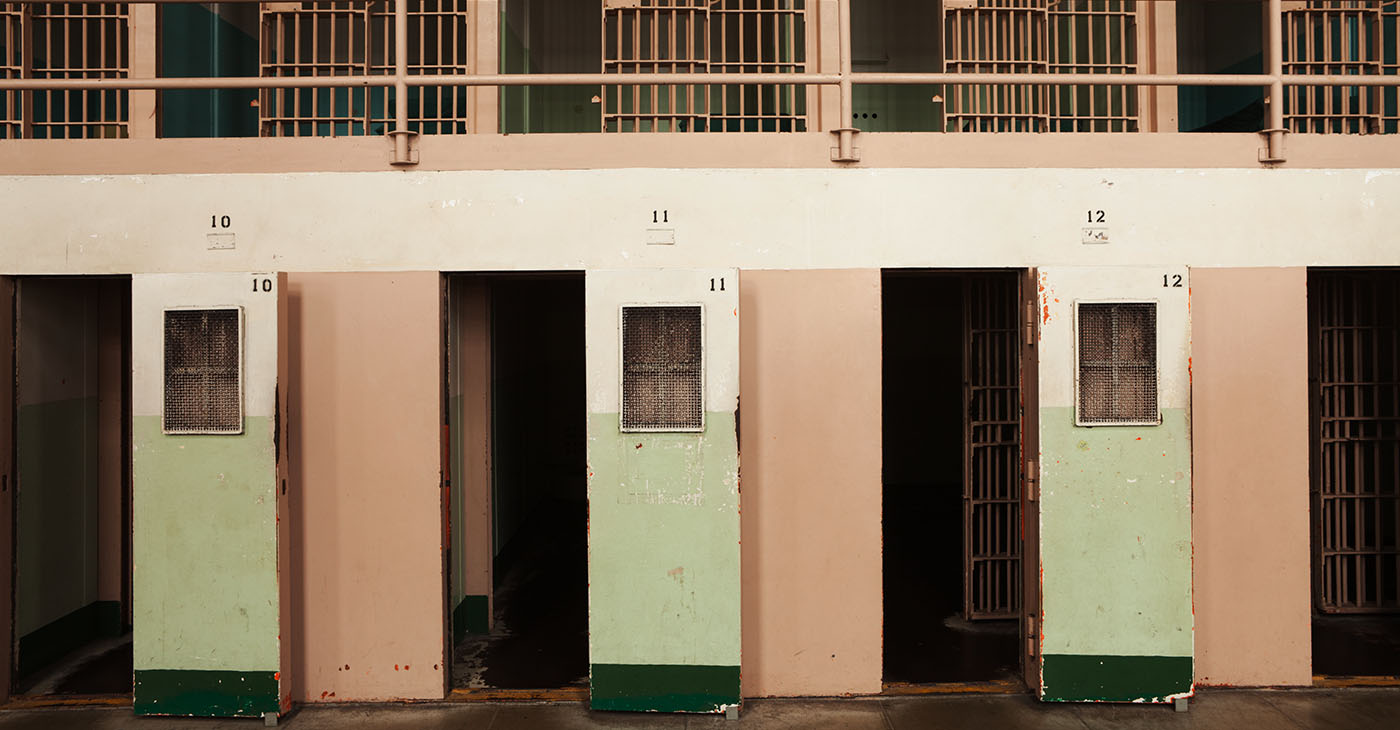
California Department of Corrections and rehabilitation (CDCr) had been locking classes of prisoners up in solitary confinement since the ‘60s as part of CDCr’s para-military low-intensity warfare, to break the minds and spirits of its subjects, California’s prisoner class. CDCr’s solitary confinement has two operating components: 1) punishing you and 2) physically and mentally destroying you.

“End Solitary Confinement” – Art: Adrian Andrade. This powerful artwork and cover note is dated Aug. 24, 2015, two and a half years ago; it was being saved for just the right story, and that time has come. The artist writes: “I’m a prisoner housed in the PBSP SHU, have been since I was 21. I’m 27 now and still pushing forward with my head up. This is my view from the top bunk.” Send our brother, who was then housed in C2-117 and has since been released to General Population at another prison, some love and light: Adrian Andrade, F-37180, High Desert State Prison, P.O. Box 3030, Susanville CA 96127
And conscious prisoners began to “demand” their human, constitutional and civil rights,[ii] as exemplified by those politicized prisoners of war (PPOW) like W.L. Nolen.[iii] In the late ‘60s, Nolen and other PPOWs filed a civil rights class action case challenging the inhumane, degrading conditions and institutional racism that was prevalent at Soledad Prison’s solitary confinement O-wing,[iv] as well as throughout CDCr’s prison system to date.
The 1986 CDCr task force report recommended that CDCr build “supermax” prisons for this politicized class of prisoners, which was echoed by the California prison guards’ union (known today as CCPOA) in continuing their low-intensity warfare upon California prisoners up into and through the ‘80s.
Shortly thereafter, California government through its apparatus CDCr, built its solitary confinement torture sites, such as Security Housing Units (SHUs) and Administrative Segregation (Ad-Segs) at Tehachapi in December 1986, New Folsom in December 1987, Corcoran in December 1988 and at Pelican Bay State Prison in December of 1989. All were designed with the malicious intent to destroy human lives through their diabolical low-intensity warfare scheme of mass validation – group punishment – indeterminate SHU classification and enhanced “debriefing” interrogation, known as “snitch, parole or die!”
Each of California’s governors and CDCr cabinet secretaries from 1977 to 2015 knowingly enhanced their system to become more repressive upon the prisoners held in solitary confinement in the SHUs. We prisoners have known for the past decades that California citizens have not condoned the torture of California prisoners. Nevertheless, since the ‘60s, each state governor and legislature knowingly sanctioned solitary confinement torture.
California’s CDCr – with the winks and nods of lawmakers and judges – has held countless prisoners in solitary confinement, whether it is called Ad-Seg, Management Control Unit, Adjustment Center, SHU or Administrative SHU, longer than any prison system within the United States, ranging up to 45 years of torture and acts of racial discrimination from Soledad Prison’s O-wing to PBSP’s new form of solitary confinement torture.
The case of Madrid v. Gomez was the first acknowledgement on the part of California authorities and judiciary recognizing the harm that CDCr had been causing – mental torture – to those held in solitary confinement across the state’s prison system.[v]
We prisoners have known for the past decades that California citizens have not condoned the torture of California prisoners. Nevertheless, since the ‘60s, each state governor and legislature knowingly sanctioned solitary confinement torture.
The Madrid case touched on the harsh conditions and treatment toward the solitary confinement prisoners at PBSP. It is a clear fact that during the years 1989 to 1994, PBSP had one of the most notorious Violence Control Units (VCUs) in the U.S. CDCr-PBSP officials utilized the VCU for to violate prisoners’ human, constitutional and civil rights by beating us and destroying the minds and spirits of so many of us for years.
An example of how some prisoners would find themselves forced into PBSP’s VCU is when the CDCr bus would arrive at PBSP and park outside the entrance doorway to solitary confinement – Facilities C and D. A squad of goons dressed in paramilitary gear with black gloves, shields and riot helmets would be there waiting. They called themselves the “Welcoming Committee.”
These guards, describing themselves as the Green Wall guard gang, using “G/W” and “7/23” as symbols for “Green Wall,” would roam through the SHU corridors assaulting, beating and scalding prisoners. See Madrid v. Gomez.
The Welcoming Committee would select one or more prisoners and pull them off the bus – usually choosing those the transportation guards accused of “talking loud.” They would take each one to the side and jump on him, then drag him off through the brightly lighted doorway.
These guards, describing themselves as the Green Wall guard gang, using “G/W” and “7/23” as symbols for “Green Wall,” would roam through the SHU corridors assaulting, beating and scalding prisoners.
When the rest of the prisoners were escorted off the bus into the corridor to be warehoused in the general SHU cells, they would see those beaten prisoners dragged off the bus “hog-tied”[vi] and lying on their stomachs or crouched in a fetal position, sometimes in a pool of blood.[vii] Later, they were dragged off to the VCU, where they were targeted with intense mind-breaking operations.
When these prisoners were eventually taken out of VCU and housed in the general SHU cells, they mostly displayed insanity – smearing feces all over their bodies, screaming, yelling, banging cups, throwing urine.[viii] And it was only when prisoners began to go public about the VCU at PBSP that CDCr ceased those practices.[ix]
The effects of solitary confinement at PBSP compelled CDCr to establish Psychiatric Service Units (PSUs) in response to the Madrid ruling for remedying the conditions that were destroying the minds of all prisoners who were held captive from the time of the Madrid ruling in 1995 through 2014, but they were poor and ineffective. Those released to the PSU from SHU fared no better than others held in solitary confinement at PBSP.
Prisoners in SHU continued to suffer mental, emotional and physical harm with no remedy made available by CDCr until we were released out to General Population units by the Departmental Review Board (DRB) between 2012 and 2014 and the Ashker v. Brown class action settlement in 2015.
These released prisoners were coming from a torture chamber, where by necessity they created coping skills like self-medicating. Typically, when coming out of solitary confinement, women and men prisoners show signs of depressive disorder and symptoms characteristic of self-mutilation, mood deterioration and depression, traumatic stress disorder, hopelessness, panic disorder, anger, obsessive-compulsive disorder, irritability, anhedonia, fatigue, feelings of guilt, loss of appetite, nervousness, insomnia, worry, increased heart rate and respiration, sweating, hyperarousal, serious problems with socialization, paranoia, loss of appetite, as well as cognitive issues, nightmares, muscle tension, intrusive thoughts, fear of losing control, and difficulty concentrating.[x]
Prisoners in SHU continued to suffer mental, emotional and physical harm with no remedy made available by CDCr until we were released out to General Population units by the Departmental Review Board (DRB) between 2012 and 2014 and the Ashker v. Brown class action settlement in 2015.
The California prison system realized that these prisoners held initially at PBSP and subsequently at Tehachapi and throughout the system had their constitutional rights violated under the Eighth Amendment ban against cruel and unusual punishment and the 14th Amendment guarantee of due process of the law, for decades.[xi]
Jules Lobel of the Center for Constitutional Rights and lead counsel in Ashker stated:
“The torture of solitary confinement doesn’t end when the cell doors open. California’s continued violation of the Constitution and new evidence of the persistent impact of prolonged solitary confinement requires CDCR to make essential changes in their conduct and rehabilitative programs, and, more broadly, demonstrates the urgent need to end solitary confinement across the country.”[xii]
The Ashker v. Brown class action, settled in 2015, is a historic lawsuit exposing those violations and the harms they cause. We, as California prisoners and citizens of this state, deserve to be treated for the intentional cruelty caused by state-sanctioned torture. This is especially so for the hundreds of solitary confinement prisoners who have spent more than 27 months in any form of solitary confinement, which constitutes torture, according to the Ninth Circuit.[xiii]
CDCr has continued to shun its governmental responsibilities and has not effectively remedied the pain and suffering of thousands of solitary confinement prisoners who have been released to General Population through the DRB and Ashker. All of them are suffering from various aspects of Post-Traumatic Stress Disorder Solitary Confinement (PTSDSC).
We, as California prisoners and citizens of this state, deserve to be treated for the intentional cruelty caused by state-sanctioned torture.
If you are reading this, join us in writing, emailing and calling Gov. Brown (916-445-2841 or [email protected]), Secretary of CDCr Scott Kernan (916-324-7308) and Sen. Holly Mitchell (916-324-7308 or https://sd30.senate.ca.gov/e-mail-holly), who chairs the Public Safety Committee overseeing CDCr, and demand the following government actions be taken to remedy the decades of damage done to us:
- That CDCr provide statewide men’s and women’s PTSDSC support groups modeled after the “Men’s’ Group” program we created at Salinas Valley State Prison Facility C, which has been approved by the administration – wardens, community resources managers (CRMs) – for our PTSDSC class and is only awaiting locating a sponsor to get started;
- That CDCr allow all PTSDSC prisoners to go through this six-month relief program at their respective GP locations;
- That CDCr provide effective in-service training of staff in fairly and respectfully dealing with PTSDSC class members, including in appeals, disciplinary and medical matters;
- That CDCr adopt all recommendations in the 2017 report of the Human Rights in Trauma Mental Health Lab at Stanford University, detailing the ongoing negative health consequences that Ashker class members have suffered following their release from long-term solitary confinement into GP:
- Provide peer-facilitated support groups for all PTSDSC class members; and
- Provide independent psychiatric care for all PTSDSC class members to receive PTSDSC mental and emotional health and psychological services in this form.
- That Gov. Brown and the California legislature order the Board of Parole Hearings to stop denying our PTSDSC class members who are serving life sentences a fair opportunity to be released home, thereby doubly punishing and torturing us because we were unlawfully kept in solitary confinement without due process and exercised our constitutionally protected right to peacefully protest with hunger strikes to be released, refusing to debrief and become their snitches.
In struggle!
Prisoner Human Rights Movement
©Dec. 1, 2017, Sitawa Nantambu Jamaa and Baridi J. Williamson. Send our brothers some love and light: Sitawa Nantambu Jamaa (R.N. Dewberry), C-35671, and Baridi J. Williamson, D-34288, SVSP C-118, P.O. Box 1050, Soledad CA 92960.
[i] See “CDCR Task Force Report on Gangs, Violence and SHU,” 1986, citing CDCr’s 1971 “Report to Gov. Ronald Reagan on Revolutionary Organizations”
[ii] Same as above
[iii] See “Melancholy History of Soledad Prison,” by Min Yee
[iv] See case of W.L.Nolen, et al. vs. Fritzgerald, Warden of Soledad Prison (1969)
[v] See Madrid v. Gomez (U.S. Dist. Ct., N.D.Cal., no. c-90-3094), 889 F.Supp. 1146 (1995)
[vi] See Madrid, above, at footnote 5
[vii] See article, “Potty Watch: PBSP Human Rights Violations” by the Freedom & Justice Project, published in Prison Focus April 2011
[viii] See Madrid
[ix] See PBSP SHU prisoners’ letters and interviews, Pelican Bay Information Project (PBIP)
[x] See 2017 Stanford University lab report by the Human Rights in Trauma Mental Health Lab, detailing the ongoing negative health consequences Ashker class members have suffered following their release from long-term solitary confinement into the general prison population.
[xi] Ashker v. Brown, class action (U.S.N.D.Cal. no. 09-cv-05796-CW) settlement 2015
[xii] Walker, Taylor, “Two Years After End of Indefinite Solitary in CA, CDCR Violating Terms Of Settlement, and Inmates Experiencing Lasting Psychological Effects, Says Center For Constitutional Rights,” 11/22/17, WitnessLA, witnessla.com
[xiii] See Brown v. Oregon Dept. of Corrections, 751 F.3d 983, 988 (9th Cir. 2014)
California Voice - San Francisco Bay View
California Hotel tenants fight for their human right to housing
SAN FRANCISCO BAY VIEW — Holding signs saying “Protect our right to stay” and chanting “Housing is a human right,” residents of Oakland’s California Hotel, the stately old five-story brick landmark at 3501 San Pablo Ave., demonstrated July 14 against being unlawfully kicked out of their homes. The owners attempted to intimidate the 72 remaining residents of the 150-unit building into moving by having property manager the John Stewart Co. threaten to stop paying the property’s utilities and security bills.


By Reginald James
Holding signs saying “Protect our right to stay” and chanting “Housing is a human right,” residents of Oakland’s California Hotel, the stately old five-story brick landmark at 3501 San Pablo Ave., demonstrated July 14 against being unlawfully kicked out of their homes. The owners attempted to intimidate the 72 remaining residents of the 150-unit building into moving by having property manager the John Stewart Co. threaten to stop paying the property’s utilities and security bills.
However, last Friday, an Alameda County Superior Court judge granted a temporary restraining order requiring the owners, Oakland Community Housing Inc. (OCHI), to keep the gas, water and electricity on, according to attorney John Murcko.
“When we are removed by what is called urban renewal, we call it what it really is: gentrification.”
Oakland Nation of Islam Minister Keith Muhammad
“The tenants want to stay here,” said Murcko, who also represented the tenants in two previous lawsuits over deplorable conditions at the property. “A lot of them have been here over a decade. Most have no place else to go.”
Murcko stated that OCHI is under contract requiring them to manage the property as affordable housing to very low-income tenants. That is a stipulation of the low-cost 30-year government loans OCHI used to buy and maintain the hotel.
Residents initially received a letter June 18 stating, “The John Stewart Company will no longer be the management agent for your community effective July 15, 2008.” As if to add confusion and insult to injury, the letter continues, “It has been a pleasure working with you and we wish you the best.”
A follow-up letter dated June 20 states, “Cahon Associates, Inc., the owner of the building, cannot afford to hire another management company to operate the California Hotel or subsidize the operating deficit that exists at the property. In addition, local and state law require onsite management for buildings the size of the California Hotel. If the owner does not replace the onsite manager, the building will be out of compliance with local and state law.” Cahon Associates is a subsidiary of OCHI.
The letter continues, “As a result, the building may close down shortly after July 15. Tenants should begin to look for another place to live and plan to vacate the building on or before July 15th. Eden Information & Referral (Eden I&R) will be available to provide some tenant assistance to help in your search for new housing.”
The City Council approved a little over $893,000 for relocation assistance for residents of properties owned by OCHI. However, as reported in the materials presented to the Council, the scarcity of affordable housing stock has contributed to the difficulty of tenants relocating.
“The closing of seven affordable rental properties will have significant negative impacts,” according to the June 17 City Council agenda materials. “Foremost is the tremendous negative impact on the 215 current residents who will have to relocate in a rental market that is already tight.”.
“There’s nothing available,” California Hotel tenant Robin Menefee said. “There’s nowhere to go.” Menefee will stay after the John Stewart Co. abandons the property.
OCHI subsidiary Cahon Associates claims it is broke. “They own 13 buildings probably worth $130 million,” said Murcko. “This is a fraud on the city and a fraud on the people of Oakland.”
Since informing the city, OCHI has received a $1.5 million subsidy to cover management and other operating costs for their numerous properties in Oakland, with most going to the California Hotel, according to the Oakland Tribune. But residents don’t feel the money was invested in improving their living conditions. There were many complaints of infestation. Even a major lobby window on the ground floor on San Pablo was broken and boarded up.
The company received $5.1 million from the City of Oakland in the ‘80s to buy the property and has since received tens of millions in state and federal monies.
The Oakland Tribune reported that Sean Rogan, deputy director of the city’s department of Housing and Economic Development, attributes the failure of tenants relocating to bad advice from outside agitators. “It’s unfortunate and counterproductive that other organizations are urging the tenants to not sign anything and don’t take the tenant relocation assistance,” he said.
However, residents attribute their determination to stay to the lack of available housing and their resentment at being forced to move out of their homes. Although they’ve consistently paid rent, they’ve never reaped the improvements they’ve been promised.
“They want me to get the hell out,” said Lee Jenkins, a 60-year-old resident who has lived in the building for 16 years. “I don’t want to go nowhere. They haven’t given me an eviction notice, so I’m going to fight it.”
Jenkins, like many of the elderly or disabled living in the building, who are either low income or no-income, has nowhere else to turn.
Oakland Nation of Islam Minister Keith Muhammad, who spoke at the rally, put the events in context of the larger land grab taking place in Oakland:
“When we are removed by what is called urban renewal, we call it what it really is: gentrification,” said Muhammad. “They want to turn West Oakland into East San Francisco.”
The minister also saw a relationship between the removal of tenants and the recent so-called “Nutcracker” sting in June, which resulted in 50 arrests. Muhammad suggests the raids, resulting in the seizure of 40 weapons but no arrests of any actual weapon suppliers is “managed mayhem” that will allow the plan to force low-income people, especially African-Americans, from their homes to escalate and intensify.
“When this property hits the open market, no one who lives here now will likely be able to live here again, because we will not be able to afford it,” Muhammad added.
When asked by television reporters, “What happens if property management leaves,” Murcko responded, “The tenants will step up.” And they have.
On IndyBay.org in an update, Lynda Carson reported that “George Stringer, a long-time tenant of the California Hotel … stated that the John Stewart Company packed up and moved today, shut down the front desk and left by around 5-6 p.m.
“‘The John Stewart Company packed up to go, and left behind a security guard to keep an eye on the place, and the rest of us that are holding out are doing just fine, so far,’ said Stringer. ‘These people tried to force us out as though we do not have any rights as tenants in Oakland or California, and we’re staying as long as we can. The rents are too high for us to try and move anywhere else at this point, and we are better off staying put and exerting our rights as tenants.’”
Stringer, born in Monroe, Louisiana, and raised in Oakland, knows the rules. He managed the Exodus House in Oakland until he moved to the California Hotel three years ago. There he pays $400 a month for a single room with bath and shares a kitchen with other tenants on his floor.
“The California Hotel is just the first building,” said Robbie Clark, an organizer with Just Cause Oakland, who led the chants and rallying cry with tenants and supporters Monday. “There will more than likely be others. We have to come together as a community and prevent the displacement of residents.”
Cahon Associates also owns six other affordable housing developments in Oakland, including Marin Way, San Antonio Terraces, James Lock Court and Slim Jenkins Court. One property, Drasnin Manor, is facing foreclosure by Washington Mutual. Foreclosure would possibly eliminate any affordable housing restrictions, according to City documents.
All six are scheduled to be closed down and turned into transitional housing with the eviction of the residents in the future after the California Hotel is shut down.
A June 5 report from the Redevelopment Agency and the City of Oakland warns that at least 537 tenants in 11 out of 14 properties owned by OCHI are at risk of losing their housing. OCHI owns about 638 units of affordable housing and all of their tenants are at risk of losing their homes in the coming months, according to the report.
OCHI did not respond to requests for comment but will have to face tenants in court July 30 at 2:30 p.m. at the Hayward Hall of Justice, Department 510, 24405 Amador St. in Hayward. For more information, contact Robbie Clark at Just Cause Oakland, (510) 763-5877, email [email protected] or visit www.justcauseoakland.org.
Reginald James is editor-in-chief of the Laney Tower newspaper at Laney College in Oakland. Email him at [email protected]. Housing rights advocate Lynda Carson contributed to the story. She may be reached at [email protected] or (510) 763-1085.
This story is published as part of SFBV’s Bay View Archive project, made possible by the San Francisco Foundation. For more information, click here.
This article originally appeared in the San Francisco Bay View.
California Voice - San Francisco Bay View
Last NY Panther in prison, Jalil Muntaqim draws strong support for 11th parole hearing in 48 years
SAN FRANCISCO BAY VIEW — A group of prominent academics, lawyers and activists published an open letter on May 21 calling for the release of political prisoner Jalil Muntaqim (aka Anthony Bottom), the only remaining Black Panther incarcerated in New York. He was arrested 48 years ago, when he was 19 years old, and is scheduled for his 11th parole hearing in September 2019. Signers include Professor Angela Davis of the University of California at Santa Cruz, Professor Cornel West of Harvard, actor and activist Danny Glover, musician and filmmaker Boots Riley, author Michelle Alexander and co-founder of Black Lives Matter Patrisse Cullors.


By the Center for Constitutional Rights
New York – A group of prominent academics, lawyers and activists published an open letter on May 21 calling for the release of political prisoner Jalil Muntaqim (aka Anthony Bottom), the only remaining Black Panther incarcerated in New York. He was arrested 48 years ago, when he was 19 years old, and is scheduled for his 11th parole hearing in September 2019. Signers include Professor Angela Davis of the University of California at Santa Cruz, Professor Cornel West of Harvard, actor and activist Danny Glover, musician and filmmaker Boots Riley, author Michelle Alexander and co-founder of Black Lives Matter Patrisse Cullors.
The letter reads:
“We the undersigned offer our strongest support for the release of Jalil Muntaqim (aka Anthony Bottom) on parole. We also ask that New York Gov. Andrew Cuomo commute his sentence to time served. Jalil was arrested in 1971 when he was only 19 years old and a member of the Black Panther Party. Forty‐eight years later he is the only Black Panther prisoner who remains incarcerated in New York State prisons. It is time for this father, grandfather and great-grandfather to come home.
“Over the decades, Jalil has consistently demonstrated his commitment to sustaining family relationships, pursuing educational advancement and providing service to the community, inside and outside of prison. He has served as a teacher, mentor and role model for hundreds of other incarcerated people. He stands as an example of the potential to reflect, change and grow despite the many challenges of the prison environment.
“Jalil is scheduled for his 12th parole hearing this coming September. One of his co‐defendants, Albert ‘Nuh’ Washington, died in prison in 2000. The other, Herman Bell, was released in April 2018 after serving almost 45 years in prison. There is no justification for Jalil to be held in prison any longer. He should be released at his next parole hearing when he will be 68 years old.
“We believe in the principles of restorative justice. While we understand the serious nature of the crimes for which Jalil has been convicted, a life sentence should not be a death sentence. Forty‐eight years is long enough. After all this time, Jalil Muntaqim belongs with his family and his community.”
See the letter here.
To contract CCR, go to https://ccrjustice.org/home/who-we-are/contacting-center-constitutional-rights.
This article originally appeared in the San Francisco Bay View.
California Voice - San Francisco Bay View
Food insecurity increases in the Bayview
SAN FRANCISCO BAY VIEW — We all need access to healthy food. Food insecurity, not knowing where your next meal will come from, contributes to multiple risk factors: low birth weight babies and childhood learning difficulties; and hypertension, heart disease, diabetes and other chronic health conditions in adults.


By Judy Goddess
We all need access to healthy food. Food insecurity, not knowing where your next meal will come from, contributes to multiple risk factors: low birth weight babies and childhood learning difficulties; and hypertension, heart disease, diabetes and other chronic health conditions in adults.
Food insecurity has been a persistent issue in San Francisco. A 2013 report by the Food Security Task Force (FSTF), found that one in four San Franciscans were considered “food insecure.” After reviewing that report, the Board of Supervisors pledged to “end hunger by 2020.” “Food is a basic human right; everyone needs access to proper nutrition to support health and well-being,” they declared.
In mid-December 2018, the FSTF issued an updated report. The new report found that rather than food insecurity lessening, more people are food insecure. In 2018, close to one in three San Franciscans are at risk of food insecurity. In other words, more San Franciscans are at risk of food insecurity today than were five years ago.
Federal poverty guidelines determine eligibility for federal nutrition assistance. These guidelines are determined on a national level and do not vary with the local cost of living. “As the cost of living in San Francisco increases and income inequality grows, this national measure of poverty becomes increasingly inadequate as an eligibility threshold for federal nutrition programs.”
In 2017, the federal poverty level for a family of three was placed at $20,420 a year. Based on the cost of housing, transportation, food and other consumer goods in San Francisco, the Insight Center for Community Economic Development has estimated that it takes three to five times the FPL to survive in San Francisco; in other words, in 2017, it took from $61,240 to $102,100 for a family of three to adequately meet its minimal basic needs.
Because the FPL is so far below what it takes to make it in San Francisco, the FSTF report focused on residents with incomes two times that level, or $40,840 for a family of three. Using those figures, 227,000 residents were considered at high risk of food insecurity. Within that group, 110,000 residents make less than $20,420 a year and are at highest risk of food insecurity.
“Because of their increased vulnerability, food and nutrition programs are especially critical for pregnant women, children, seniors, people experiencing homelessness, immigrants, and people who have physical and mental health conditions of all kinds. Additionally, due to concentrated poverty among these groups, transitional aged youth (18-24), people with disabilities, African Americans, Native Americans and Pacific Islanders are also at high risk for food insecurity.”
City government and local community groups have increased their efforts to address this gap. But, despite allocating an additional $48 million in city funds to expand and develop new programs and extensive fundraising by local nonprofits, the City is still far from reaching the goal set by the Board of Supervisors in 2013.
Food insecurity in the Bayview in 2018
Some basic facts about the Bayview as outlined in the 2018 Food Security Task Force report:
• 37 percent of Bayview residents (27,094 people) live on less than 200 percent of the FPL ($40,840); 19 percent (13,935 residents) live in families with incomes at or below the $20,420.
• 47 percent of Bayview children from birth to 17 years live in families with incomes less than $40,840; 32 percent live in families with incomes at or below $20,420.
• 46 percent of Bayview youth 18-24 years live in families with incomes at or below $40,840; 24 percent live in families with incomes at or below $20,420.
• 61 percent of Bayview seniors (65+) live in families with incomes at or below $40,840; 15 percent live in families with incomes at or below $20,420.
• 66 percent of Bayview adults with disabilities (ages 18-59) live in families with incomes at or below $40,840; 34 percent live in families with incomes at or below $20,420.
No one agency or organization bears sole responsibility for ensuring that San Franciscans have access to healthy food and do not go hungry. Food and nutrition programs are offered by six different departments.
Over the next several issues, I will describe the various food programs available to provide a food safety net in the Bayview. Please send questions, concerns and your tips for making it to [email protected].
Judy Goddess, a journalist who is herself a senior, writes about issues important to seniors.
This article originally appeared in the San Francisco Bay View.
Books
COMMENTARY: ‘Poverty Scholarship,’ THE book to read if you care about poverty
SAN FRANCISCO BAY VIEW — As a professor with UC Berkeley’s Global Poverty and Practice Program, this is the book I have been waiting for, and that I want all of my students to read. I am so grateful for the effort that has gone into the writing and publishing of this essential book.


By Cecilia Cissell Lucas
As a professor with UC Berkeley’s Global Poverty and Practice Program, this is the book I have been waiting for, and that I want all of my students to read. I am so grateful for the effort that has gone into the writing and publishing of this essential book.
In programs like the one in which I teach, we often talk about notions of “expertise” and about the need for those who experience issues most directly to be central parts of designing solutions. Too often, however, when it comes to poverty, the voices of poor people are only presented through the ventriloquism of academics, professional activists, and service providers. This book, by contrast, is an act of self-determination.
This book contains deep theory regarding the origins of poverty and current homelessness crises, as well as case studies describing solutions being designed and implemented by poor people, in collaboration with those who have access to greater material means. The word “collaboration” is key here; the solutions being modeled involve horizontal approaches, not inconsequential “participation” or “input” on strategies being determined by those with more money and more power.
In addition to theories and solutions, this book is also a work of art, full of creative writing, creative thinking, and descriptions of creative doing of all kinds. One of the subsections of the book actually focuses specifically on Art and Cultural Work, as this work is central to POOR Magazine. Other areas discussed include Media Production, Education, Healthcare and Social Work, Employment, Activism and Advocacy, Housing Provision and Community Reparations as an alternative to charity and philanthropy.
It is easy to despair at the enormity of the problems that exist. This book, however, in its description of the work being done by the authors, is hope in action.
I have also had the privilege of experiencing the teachings of POOR Magazine live, as well as visiting Homefulness, the self-determined solution to houselessness they are creating, and can say without hyperbole that the work they are doing is not only cutting-edge, it is absolutely fundamental to the kinds of personal, interpersonal, cultural, institutional and societal changes we need to make if we truly care about poverty.
I cannot overemphasize how much I urge everyone to read, learn from and be moved to action by this book. If you live in or are visiting the Bay Area, I also recommend coming to meet the authors and check out the work they are doing on the ground. But I am so grateful that this book now exists so that those who are not able to come in person can still learn from the enormous wisdom, experience and expertise of these magnificent leaders.
Cecilia Cissell Lucas is a faculty member at UC Berkeley, teaching in the Global Poverty and Practice Program and co-teaching a course on Art and Activism. She is also the co-founder of Creating Freedom Movements: more justice, more joy. She can be reached at [email protected].
This article originally appeared in the San Francisco Bay View.
California Voice - San Francisco Bay View
SF Board of Supervisors unanimously passes Jeff Adachi Youth Rights ordinance
SAN FRANCISCO BAY VIEW — Youths ages 17 and below who are detained by San Francisco police officers will now be guaranteed to have an attorney present during their Miranda advisement.


by Katy St. Clair
San Francisco – Youths ages 17 and below who are detained by San Francisco police officers will now be guaranteed to have an attorney present during their Miranda advisement, and the authorities are required to have a parent or guardian present during their questioning, Juvenile Division Manager for the San Francisco Public Defender’s Office Patricia Lee announced Feb. 27.
Ordinance No. 181217 has been named for late Public Defender Jeff Adachi and was passed unanimously. The “Jeff Adachi Youth Rights” ordinance is the first of its kind in California, and Lee hopes that similar guidelines will soon be implemented throughout the state.
“Our youth are incredibly scared and vulnerable when they are asked to talk to the police, and many of them cannot understand what their rights are,” said Lee. “I’ve represented 12-year-olds who don’t even understand what a lawyer is or what the courts do. This ordinance ensures that they will have an advocate for them who will make sure that they understand what is happening.”
The right to waive legal counsel will not be allowed to be applied to youth, as well. As of Jan. 1, 2018, youth 15 and under were required to have an attorney present, but now thanks to the Board of Supervisors the ordinance will apply to all youth 17 and under.
Supervisor Hillary Ronen led the charge for these changes and posted on her Facebook page that this ordinance “creates the strongest law in the country protecting children and youth in police custody.”
The Public Defender’s Office is currently in mourning at the sudden death of Jeff Adachi, who was just elected to his fifth term as public defender.
“We are so excited to have this important legislation be named in honor of our fearless visionary leader, Jeff Adachi, who championed the rights of youth and provided a level of resources not only to our juvenile unit but to the communities in San Francisco where our youth and families reside,” said Lee. “Through this ordinance, Jeff is still championing the rights of our youth. This decision will have a far-reaching impact on youth in SF and hopefully soon in the rest of California and the nation. Rest in power, Jeff Adachi!”
Katy St. Clair, public information officer for the San Francisco Public Defender’s Office, can be reached at [email protected].
This article originally appeared in the San Francisco Bay View.


Foot-Activated Liftgate: Stay Balanced, Avoid Parking Lot Embarrassment! #shorts

OP-ED: How Does Your State Rank for Pre-K?

Headlines and Hot Topics 📱

Headlines and Hot Topics

Your Rights: Don’t Buy Unwanted Car Add-ons! #shorts

Dealership Secrets: Tips for Car Buyers Revealed! #shorts

Race factor in the murder trial of Lindsay Clancy – Why a single juror can force a mistrial.

Cedrick Frazier – From Defender to Prosecutor: How I’ll Lead the Hennepin County Attorney’s Office.

Rep. Cedrick Frazier – Growing up on Chicago’s South Side – From Englewood to Minnesota: My Story

2026 Mazda CX90 Turbo S Premium Plus: Is It For You? #shorts

COMMENTARY: Big Mama Said: “When Spider Webs Unite, They Can Tie up a Lion”

You Had Me at Hello: the Love and Legacy of Grace Nail and James Weldon Johnson

Aretha’s Gospel Voice Still Resonates

Kimberlé Crenshaw: A Voice for Justice

COMMENTARY: Our Voices: We Have Walked This Road Before

Bree Carroll’s All Things EPIC Delivers a Structural Blueprint for Purposeful Living

COMMENTARY: What Two Fathers Talk About at Lunch

Arnold Perkins: At 85, a Life of Service, Faith and Giving Back

COMMENTARY: Stephen A. Smith refuses to look at himself in NABJ’s mirror

Young Black Men Suffering in Silence A curse that can be Broken
Foot-Activated Liftgate: Stay Balanced, Avoid Parking Lot Embarrassment! #shorts
Headlines and Hot Topics 📱
Headlines and Hot Topics
Your Rights: Don’t Buy Unwanted Car Add-ons! #shorts
Dealership Secrets: Tips for Car Buyers Revealed! #shorts
Race factor in the murder trial of Lindsay Clancy – Why a single juror can force a mistrial.
Cedrick Frazier – From Defender to Prosecutor: How I’ll Lead the Hennepin County Attorney’s Office.
Rep. Cedrick Frazier – Growing up on Chicago’s South Side – From Englewood to Minnesota: My Story
2026 Mazda CX90 Turbo S Premium Plus: Is It For You? #shorts

Let’s Talk – Spades: the Play- By Marcus Callender
-
 Black Press1 week ago
Black Americans Have Doubts About the U.S. Food System
-

 Black History1 week ago
U.S. Sole Nation to Oppose U.N. Resolution Correcting Africa’s Size on World Maps
-

 Black History1 week ago
When Praises Go Up: SUGC Nominated for Prestigious Stellar Award.
-

 Black History3 days ago
Latest Massacre in Haiti Reveals Cruelty U.S. Deportations
-

 Black Press6 days ago
Prostate Cancer is Twice as Likely to Kill Black Men. Talking to Your Doctor Could Help Save Your Life
-
 Black History1 week ago
COMMENTARY: Big Mama Said ‘Don’t Let Grief Break the Bank’
