
Dwight Brown
FILM REVIEW: Tyrel
NNPA NEWSWIRE — The script creates a black protagonist, Tyler (Jason Mitchel, Straight Outta Compton), who is friends with a white dude, Johnny (Christopher Abbott). Nothing seems abnormal about their ebony/ivory relationship and the two seem to have a believable bond that should stand the strain of odd situations.


By Dwight Brown, NNPA News Wire Film Critic

Jason Mitchell and Christopher Abbott in Tyrel
It’s a situation nearly every black man has experienced at some point in his life: Being the only African American in a room, party, meeting… It can be both an alienating and insular experience all at one time. Jordan Peele captured the essence of that feeling and monetized it, winning countless awards and raking in millions of dollars with his horror/thriller Get Out. Chilean writer/director Sebastián Silva (Magic Magic, Nasty Baby, The Maid) is equally deft at setting up the same eerie premise, but woefully lacking with the follow through.
The script creates a black protagonist, Tyler (Jason Mitchel, Straight Outta Compton), who is friends with a white dude, Johnny (Christopher Abbott). Nothing seems abnormal about their ebony/ivory relationship and the two seem to have a believable bond that should stand the strain of odd situations.
It is with a complete sense of safety and innocence that one wintry day brotherman accepts an invite for a trip up to the Catskills with his friend. How was he to know that their car would run out of gas on a quiet road? How was he to know that the trip would be an exclusive gathering of young white men whose collective bromance does not relate to him or his cultural norms? As Johnny’s crew gathers at his buddy Nico’s (Nicolas Arze) isolated cabin, the abode gets flooded with more and more guys.

Scene from Tyrel starring Jason Mitchell
The beer flows like the mighty Mississippi. More grass is smoked in minutes than days at Snoop Dogg’s house. The guys chat, gab and share anecdotes. They say things that demonstrate that they haven’t been around lots of black people. Tyler feels uncomfortable and estranged—to the point that brotherman wants to escape.
Mitchell’s interpretation of his character’s viewpoint and paranoia builds to an unsubstantiated fear that snowballs out of control. He doesn’t have to do much to make you feel the weirdness he experiences. His gestures and looks are quite effective. The ensemble of twentysomething and thirty-something men well contributes to a believable frat-house camaraderie that makes it look like they are living off the fumes of their youth, though they are not kids anymore.
The more curious plot shift and odd triad dynamic involves Tyler fleeing to the home of some neighbors. They’re a couple that includes a slightly nosy and ultraliberal white wife (Ann Dowd, Hereditary) and her somewhat suspicious black husband (the late Reg E. Cathey, House of Cards). She fawns over Tyler, and her spouse asks him a hell of a lot of probing questions.

Jason Mitchell in TYREL. Photo courtesy of Magnolia Pictures
It’s a pity the film doesn’t amount to more than the sum of its parts. It’s almost a waste of Heidi Bivens (Spring Breakers) very subtle and natural costume design, David Cherof’s perfect-palette art direction and Alexis Zabe’s (The Florida Project) intuitive cinematography that helps set the time and place without getting in the way.
Sometimes a film’s short running time (86 minutes) feels like it is miraculous because the editors (Jennifer Lame and Sofia Subercaseaux) must have whittled down a massive amount of footage into a succinct final version. In this case however, it seems like the editors should get credit for fluffing up a series of dull sequences into a head-scratching but cohesive movie.
Back to filmmaker Sebastian Silva: If this film has a far-reaching purpose, he’s keeping that raison d’etre to himself. Tyler gets shoved out on a limb, with no net below, and he never figures out why. Neither do the viewers who observe him. Outside of a general queasy feel, what’s on screen accomplishes nothing. Or at least nothing new.
Visit NNPA News Wire Film Critic Dwight Brown at DwightBrownInk.com and BlackPressUSA.com.











Black History
MOVIE REVIEW: Revolutionaries Revisit 1960s in ‘One Battle After Another’
BLACKPRESSUSA NEWSWIRE — And so, this group of revolutionaries, French 75, fought in the dark and battled during broad daylight. Trying to bring justice to a world gone askew. Committing crimes and political/social performance art. That’s the gist of “One Battle After Another.”
By Dwight Brown
Contributing Writer
The revolution will not be televised. But it’s been made into a movie.
They knew what they were doing in the 1960s. Helping the less fortunate escape arrest. Robbing banks. Sticking it to the man. Rebelling against military authority run amuck.
And so, this group of revolutionaries, French 75, fought in the dark and battled during broad daylight. Trying to bring justice to a world gone askew. Committing crimes and political/social performance art.
That’s the gist of “One Battle After Another.”
Back in the day, Perfidia (played by Teyana Taylor) was the bravest of the bunch. An Amazon warrior fearless against military forces. Also, greatly in love with her partner Bob Ferguson (played by Leonardo DiCaprio,).
They were the king and queen of their movement. She flaunted her revolutionary power and sexual prowess. In part, that led her to an odd encounter with the enemy, a Col. Steven J. Lockjaw (played by Sean Penn). A mistake that led to more mistakes.
And so, years, later, after Perfidia’s bad choices metastasized, her legend was tarnished. Now, her man Bob is a single dad raising her teenage daughter Willa (played by Chase Infiniti) and trying to maintain a quiet life.
Slowed down somewhat by a love of weed and drink, even within the haze of being constantly high, Bob is focused on keeping his daughter safe. Protected from malevolent military forces and corrupt commanders. Protected until a phone call warns him that danger is around the corner.
That’s the foundation of director/writer Paul Thomas Anderson’s (“There Will Be Blood”) take on the chaotic political scene back in the ‘60s that segued into the repressive ’80s. When and where a bunch of anarchists, whose heyday was long over, were still hunted like prey by the military. It feels like the script, project and themes are going in several directions.
An obvious commentary on the increasingly militaristic times we live in now, where cities are being shadowed by U.S. armed forces and ICE agents.
Then there’s the story about the strong radicalized woman Perfidia, who’s out to save the world but is shamed by weaknesses that hurt her and those she loves.
Parts of the screenplay are based on the postmodern fiction novel “Vineland,” by Thomas Pynchon. A tale that follows a father and daughter, descendants of 1960s radical politics, as they live in Ronald Reagan’s 1980s America when counterculture waned and conservatism dominated.
That’s a lot to digest. And that’s the issue. Splintered ideas. A narrative that won’t pull all audiences through.
Yes they’ll care that Bob and Willa are under attack. They’ll hate Captain Lockjaw for a variety of reasons, including trying to join an elite white racist men’s club that’s bent on racial purification.
Under normal circumstances watching protagonists trying to beat the antagonists would be enough. Not here. Something is off. Likely the distracting political satire vibe that may further sideline viewers’ emotions. Like hearing an inside joke that’s just not funny or ironic enough.
It’s a miscue that affects some performances, too. DiCaprio knows how to interpret unique characters better than most.
A complicated teen in “The Basketball Diaries,” an adventurous young man in “Titanic” and middle-aged-frontiersman in “Revenant.” He finds the nuances in the people he plays in ways others can’t. He’s a chameleon whose artistry is so sleight of hand you never notice him acting.
Yet here, because the film has tonal issues, his half comic performance seems like wasted gimmickry, like he’s struggling to find Bob’s soul.
Penn’s performance meets the same fate. This is a versatile, formidable actor whose won Oscars for “Milk” and “Mystic River.” Yet his interpretation of Lockjaw, a sordid horny and evil man, seems affected at best.
The facial expressions and nervous ticks might have worked on a similar character in another movie. On the other hand, Taylor adds an intensity to Perfidia that fleshes out her complex persona well. When she brandishes a rifle, runs for her life and ties up her lovers. You don’t wonder if she would actually do it. You know she would.
Though the script may cause some debate, Anderson’s directing skills won’t. A night scene in which young men try to help Bob escape from soldiers by fleeing across rooftops is captivating.
The guys are gliding on skateboards and jumping roof to roof. It’s a memorable vision, second only to a car chase sequence when Willa is being chased by an assassin and the assassin is being chased by Bob. The autos zoom over a California highway that runs over hills and down valleys.
The footage shot by cinematographer Michael Bauman (“Licorice Pizza”), is as mesmerizing as the intensifying musical score by Jonny Greenwood (“The Power of the Dog”). The rest of the tech team (production designer Florencia Martin, costume designer Coleen Atwood, editor Andy Jurgensen), helps to evoke the time and place.
Still, it may be hard for audiences to conjure up decisive feelings, of any magnitude, for what they see. It’s easy to remain distant. Detached. Observant but not absorbed.
To like some of the pieces but not the whole puzzle. Yes, the revolution has been cinematized. Sometimes it’s a clear vision. Sometimes not.
Dwight Brown is the film critic for the National Newspaper Publishers Association News Wire.
Benjamin F. Chavis Jr.
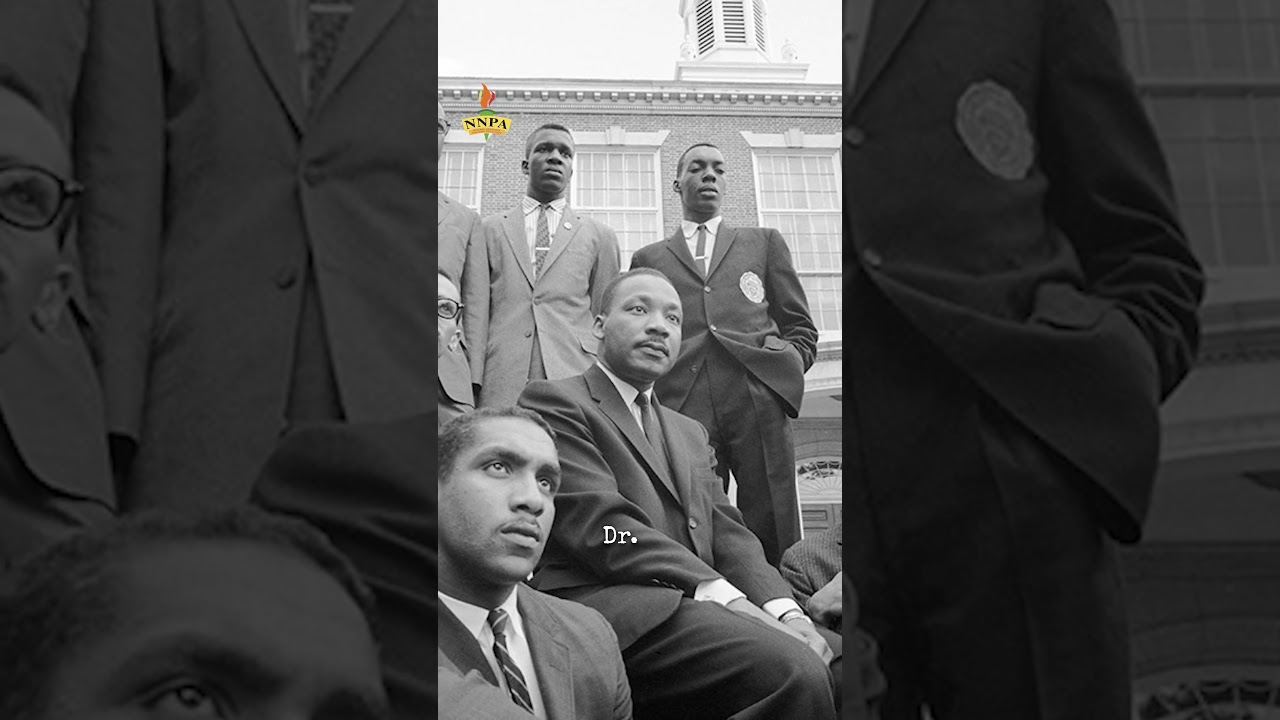
VIDEO: IN MEMORIAM — The NNPA Mourns the Loss of Rev. James Lawson
NNPA NEWSWIRE — The NNPA mourns the loss of Rev. James Lawson.
Black Press
‘Daughters’ Wins 2024 Sundance Film Festival Audience Award and Festival Favorite Award
NNPA NEWSWIRE — First-time doc director Angela Patton, CEO of Girls for Change, teamed with video music director Natalie Rae (Leon Bridges: Bad Bad News) and they documented the journey of four young girls looking forward to attending a prom in a Washington, D.C. prison. Aubrey, Santana, Raziah, and Ja’Ana are anxious as they prepare for the event. Their dads, Keith, Mark, Alonzo and Frank, are twice as nervous.

Black Press
FILM REVIEW: Lift
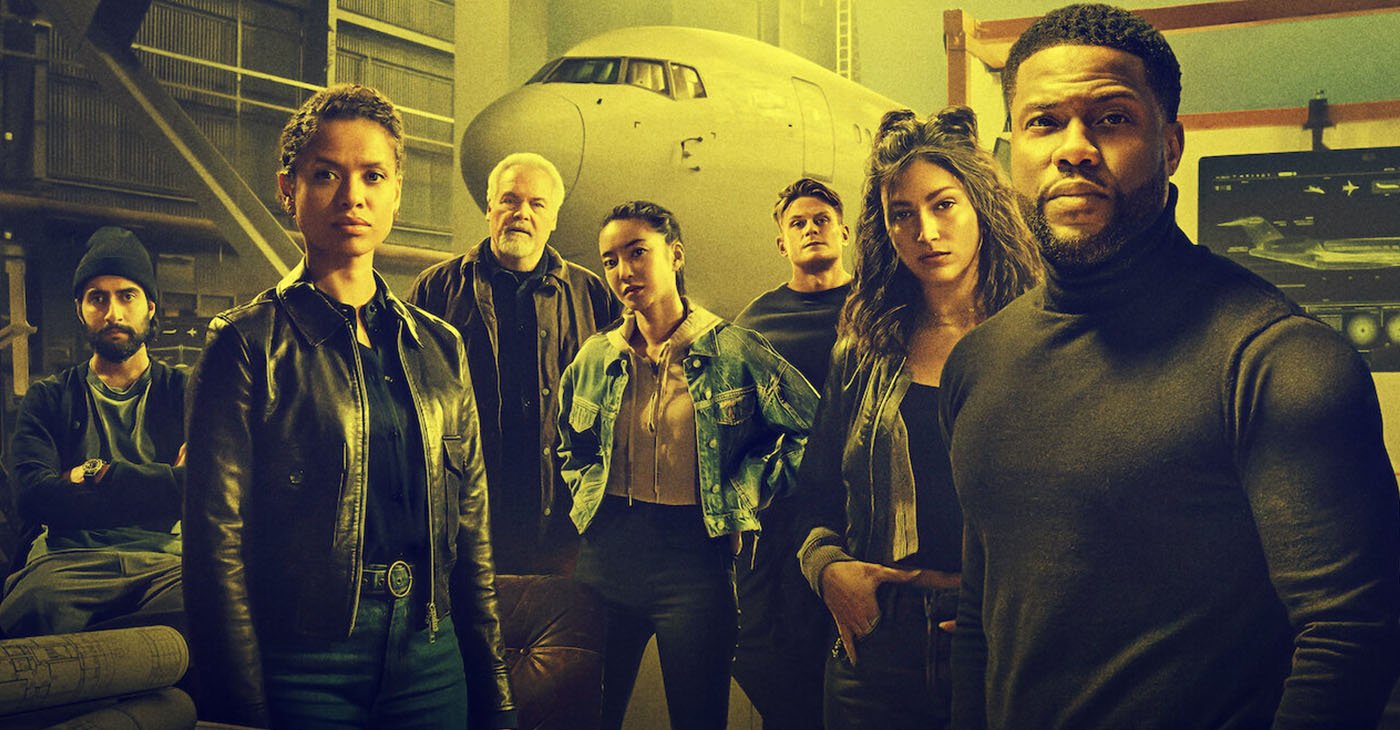
NNPA NEWSWIRE — Comedian and comic actor Kevin Hart tries to ditch his funny, smart-mouth persona to play a suave international thief. Hart showed he can stretch from his comic roots in the drama The Upside. But can he, with the aid of action film director F. Gary Gray (The Fate of the Furious), handle an Idris Elba type role in a film that should have Ocean’s Eleven-style intrigue? We shall see.
Black History
FILM REVIEW: The Greatest Night in Pop – 2024 Sundance Film Festival
NNPA NEWSWIRE — Legendary artists. Legendary moment. Legendary song. For a certain generation, 1980s lovers and music fans, this is the show of shows. A pop music, pop culture milestone. You get what you’re looking for. You hear what you wanna hear. This nostalgic musical doc rocks as much as a live concert, but in the most divine, communal way.



by Dwight Brown film critic for DwightBrownInk.com and NNPA News Wire
(*** = 3 stars)
It doesn’t start with a big bang, but it ends with one.
Coming off the heels of the phenomenally successful, $1.4B grossing Top Gun: Maverick, expectations for this Tom Cruise vehicle to ignite the summer box office are high. Will it make a billion dollars? Only audiences will decide.
“The Entity,” an AI being, threatens to upend the world. One precious device will start the mayhem. It’s a key, a relic that is being hunted by Ethan Matthew Hunt (Cruise), a field agent and operative for the Impossible Mission Force (IMF). He works with his team: the hacker Luther Stickwell (Ving Rhames), tech field agent Benji Dunn (Simon Pegg) and with an assist from former MI6 agent Ilsa Faust (Rebecca Ferguson). They’re like family. Hunt: “Your life will always matter to me more than my own.”
In fact, the film’s thrilling but not astonishingly thrilling beginning consists of Hunt trying to rescue Faust in a desert oasis set upon by villains. Riding over the barren land like something out of the 1962 Lawrence of Arabia playbook, the IMF crusader attempts to save the day with sands blowing in his face, a sharpshooter clearing a path for him and a fight scene that would be far more convincing if it didn’t look like it was filmed on a backlot set with an incessant wind machine.
Previous M:I directors have included Brian de Palma, J.J. Abrams and John Woo. All brought their own style to the episodes they created. Oscar-winning screenwriter Christopher McQuarrie (Usual Suspects) turned filmmaker (Mission: Impossible – Rogue Nation 2015, Mission: Impossible – Fallout 2018) handles writing, directing and producing duties. So, this baby belongs to him and Tom Cruise.
McQuarrie’s script adds a bevy of duplicitous characters. The most dazzling is a pickpocket thief named Grace (Hayley Atwell), who Hunt can’t trust, shouldn’t trust, but does. However, she is not the antagonist—there are several. The most venomous is Gabriel (Esai Morales), Hunt’s old adversary and a terrorist determined to use the key to fulfil his heinous plans. The characters are in motion. Their subplots play out, sometimes in scenes where dense exposition halts the pace. Showing works better than telling. Show don’t tell.
Cinematographer Fraser Taggart captures the many set pieces, car chases, brawls and dazzling escapes that are played out in Abu Dhabi, Venice, Rome, England and European locations. The music blares at the right time (composer Lorne Balfe), hotel rooms, offices and train car interiors (production design Gary Freeman) are up to M:I standards. And 163 minutes roll by unnoticeably (editor Eddie Hamilton) because the action is well-measured and engaging. Especially when Hunt and Grace are in an airport trying to blend into crowds and avoid their enemies’ detection. Danger surrounds them as they pass off artifacts and cigarette lighters like magicians with something up their sleeves. Grace: “Is anyone not chasing us?!”
It’s easy to like what’s on view. Especially when Hunt is running to the rescue like he started a 100-yard dash that turned into a marathon. The final scenes in this Part One of a two-part series hit their peaks like they should. Hunt leaps off a mountain on a motorcycle into thin air. He and Gabriel fight on the roof of a fast-moving train, which strains belief, but who cares? And a daring escape from a dangling locomotive is flabbergasting and must have been hard to film.
The script, direction and certainly Cruise’s keen ability to draw you into his predicaments and mindboggling stunts are all on display. Adrenaline-pumping sequences, flirtatious interludes, high pitch drama and a save-the-world plot do their jobs. However, something about the process doesn’t feel new.
Action fans have seen car chases with vehicles careening down steps before. Assassins fighting assassins. Gadget trickery, tricky maneuvers and slights of hand. This is the year John Wick: Chapter 4 expanded the whole notion of what immersive action films could be. How they could drain the blood and life out of audiences with sheer audacity, head-scratching fight choreography and over-the-top violence. That’s the new gold standard. That’s why this Mission… is very good for what it is, but not as astounding as it could be.
Maybe they’re saving the best for last. Maybe they’re saving the best for Mission: Impossible – Dead Reckoning Part Two, which will be released June 28, 2024. Maybe that one will start and end with a bang!
Trailer: https://www.youtube.com/watch?v=avz06PDqDbM
Visit NNPA News Wire Film Critic Dwight Brown at DwightBrownInk.com.
The post Mission: Impossible – Dead Reckoning Part One Movie Review appeared first on Chicago Defender.


Event Preview: ‘Fashion v. Fascism’ – A Runway Revolution Is Coming to the Bay Area

Harman Kardon Sound & Luxury Outback: Smooth, Quiet Ride #shorts

Mazda’s 3.3L Turbo Engine: Power & Tech Explained #shorts

Live from CBC

Live from CBC 📱

5 Easy Car Checks Before You Sign! #shorts

Big Conversations, Big Culture, Big DMV Energy

Mazda CX-90: Powerful Inline-6 & Towing Capabilities #shorts

Signatures Bind You! Nearly 19,000 Vehicle Complaints Filed! #shorts

Test Drive Alert: Avoid False Braking Alarms! #shorts

You Had Me at Hello: the Love and Legacy of Grace Nail and James Weldon Johnson

Arnold Perkins: At 85, a Life of Service, Faith and Giving Back

Young Black Men Suffering in Silence A curse that can be Broken

Young Black Men Suffering in Silence A curse that can be Broken

Women Learned Their Jail Strip Searches Were Recorded. Their Outrage Changed the Law

The utility deal with Newsom is heating up, and Black households are left footing the bill.

Indiana Crisis, Karmelo Anthony, Pentagon Questions and the Tupac Murder Case 📱

🎷 Jazz is taking over D.C.!

BSPNTX Announces 2026-27 Scholarships Recipients

Black Americans Have Doubts About the U.S. Food System
Harman Kardon Sound & Luxury Outback: Smooth, Quiet Ride #shorts
Mazda’s 3.3L Turbo Engine: Power & Tech Explained #shorts
Live from CBC
Live from CBC 📱
5 Easy Car Checks Before You Sign! #shorts
Big Conversations, Big Culture, Big DMV Energy
Mazda CX-90: Powerful Inline-6 & Towing Capabilities #shorts
Signatures Bind You! Nearly 19,000 Vehicle Complaints Filed! #shorts
Test Drive Alert: Avoid False Braking Alarms! #shorts

Obama Urges Democrats to make AI a Priority
-
 Black History5 days ago
Latest Massacre in Haiti Reveals Cruelty U.S. Deportations
-

 Black Press1 week ago
Prostate Cancer is Twice as Likely to Kill Black Men. Talking to Your Doctor Could Help Save Your Life
-

 Featured1 week ago
Headlines and Hot Topics 📱
-

 Black History1 week ago
Booked and Unbound: The Legacy of Black Women’s Literary Circles
-

 Black Press1 week ago
PRESS ROOM: National Organization of Concerned Black Men (CBM) Celebrates 50 Years of Mentoring, Leadership, Legacy
-
 Black History5 days ago
Henry O. Flipper: A Trailblazer at West Point and Beyond
