
Commentary
COMMENTARY: Electronic Cigarettes May Save Lives
NNPA NEWSWIRE — “So, what about e-cigarettes, a way for smoking addicts (they don’t like it when you call them that) to ingest nicotine in a less harmful way than smoking? I think they are a great way to ameliorate some of the effects of smoking.”

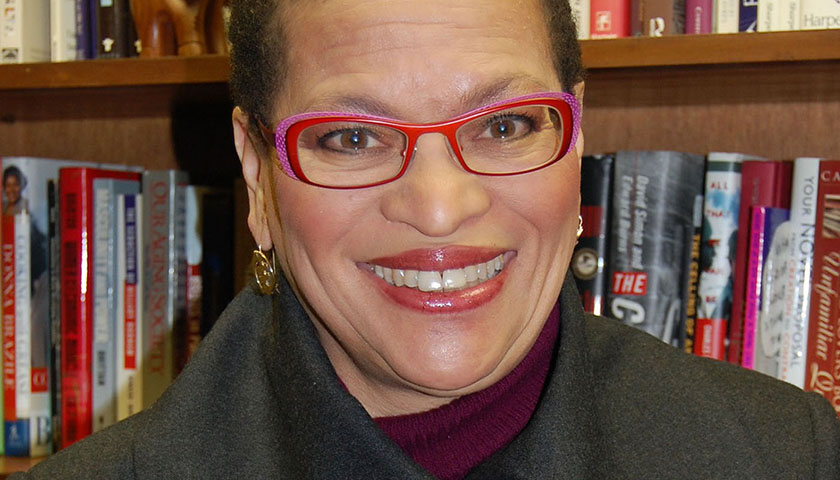
By Julianne Malveaux
Smoking kills. We’ve all heard the public service announcements, seen the ads featuring hard-breathing people dying from lung cancer. We’ve all heard about what smoking does to lungs and hearts and stamina. And this issue is personal for me. My 90-year-old mama smoked until she was diagnosed with COPD (chronic obstructive pulmonary disease) more than a decade ago. Until then, she tried almost everything she could to quit – from the patch to pills to an ill-advised attempt to stop smoking by smoking brands she did not like! Smoking kills, and nicotine is addictive. And it hits African Americans harder than others, although we start smoking later and smoke fewer cigarettes than whites. Still, smoking is associated with the top three killer diseases for Blacks – heart disease, cancer, and strokes. But short of outlawing tobacco, how do we stop, or reduce, addiction to nicotine?
Municipalities tax cigarettes as a way to provide a financial disincentive from smoking. But research shows that those addicted to nicotine, especially African American smokers, do not adjust their smoking habits in the face of increased prices. (https://smokingcessationleadership.ucsf.edu/raceethnicity) Entrepreneurs and scientists have also responded by developing market-based smoking cessation products. Nicorette gum, approved in 1984, is an example of the way that the effect of nicotine is somewhat minimized by delivering nicotine without smoke. Similarly, Nicoderm CQ is patch delivers nicotine through the skin. Most recently, Nicorette has developed a mint lozenge. Then there is medication – the FDA approved Zyban in 1997. Chantix was approved in 2006, and its price has doubled since 2013. These drugs have had mixed effectiveness in stopping smoking.
So, what about e-cigarettes, a way for smoking addicts (they don’t like it when you call them that) to ingest nicotine in a less harmful way than smoking? I think they are a great way to ameliorate some of the effects of smoking. And e-cigarettes don’t have the same harmful effects of second-hand smoke. With the majority of Black children being exposed to second-hard smoke that’s reason enough to consider e-cigarettes. Lot of folks disagree. They think that selling e-cigarettes promotes smoking, not contains it. They think that flavored e-cigarettes are attractive to teens and make it easier for them to begin smoking. They would restrict access to e-cigarettes because they are convinced that they are bad for public health.
I beg to differ! I think that e-cigarettes are a way for those addicted to nicotine to minimize the effects of their smoking. I wonder if my mom would experience fewer consequences from her years of smoking if she had the e-cigarette option years ago. She was always clear that smoking killed, and when I was a kid and experimented with smoking, was forced to eat a cigarette, upchuck the effects, and be turned off tobacco for life. But as clear as she was, she struggled with that addiction, and as easily doing a pack a day when she quit. Would e-cigarettes have eased her pain and help her manage her addiction? I think so. (https://csures.com/wp-content/uploads/2018/07/Russell-et-al-2018-Smoking-Transitions-Among-Adult-JUUL-Users.pdf)
For sure, using products like the vaping product Juul would have saved her money. A study from LendEdu says that those who switch from cigarettes to the vaporized JUUL product save $58 per month from the switch (https://lendedu.com/blog/financial-cost-of-juul). Will they eventually stop smoking? There is no research to support that premise. However, it is clear that vaping is less dangerous than smoking. That, alone, is a reason to make ecigarettes and other products that vaporize nicotine available to the public.
Efforts to ensure that young people have limited access to e-cigarettes and other products that vaporize tobacco are appropriate. Efforts to restrict access to others are ill-advised. If we care about those who are committed to smokers and addicted to nicotine, then we will make it easy for them to access alternatives to smoking. E-cigarettes may change, even save, their lives.
The ads that tell us that smoking kills tells only part of the story. The other part is that nicotine has major negative health effects, but that those who are addicted can ingest it less harmfully. This should be of particular concern to the African American community, since so many are dying from smoke-related causes.
Public policy should embrace, not condemn, electronic cigarettes. And health advocates should not be fooled by the hype of vaping prohibition while smoking addicts are seeking alternatives.
Julianne Malveaux is an author and economist. Her latest book “Are We Better Off? Race, Obama and Public Policy” is available via www.amazon.com for booking, wholesale inquiries or for more info visit www.juliannemalveaux.com.









Black Press
OPINION: The New American Fear – From 9-11 to AI
The terrorists didn’t invent American racism, xenophobia or political paranoia. We shouldn’t give 19 hijackers that much credit. But after 9/11, America built an enormous security structure around fear. Surveillance expanded. Wars followed. Congress created the Department of Homeland Security. TSA transformed airports. Immigration enforcement was reorganized and ICE was created.


I was quiet about 9/11 until this week, when terrorism got an upgrade.
Artificial intelligence.
I have taken 9/11 seriously every year. Twenty-five years later, I was all “feeled out.”
I’ve gone to Ground Zero. I’ve written about the dead, the survivors, the first responders and those who survived that day only to become sick years later.
But this isn’t another column about where we were.
It’s about what America became.
For me, September 11, 2001, marks the beginning of a New America. Not the diverse, multicultural America I hoped was emerging.
This is the America that fear built.
I was 3,000 miles away in the Bay Area watching CNBC.
Then the planes hit.
The markets shut down.
And something else opened.
Fear.
At first, fear brought us together. We had a common enemy and, briefly, rediscovered a common good.
But fear is a terrible foundation for democracy.
The person we feared was initially the terrorist.
Then the Muslim.
Then the Arab.
Then the Sikh mistaken for an Arab.
Then the immigrant. The undocumented. The person at the border.
The category continues to expand.
Maybe that’s the real 25-year story of 9/11.
We went from finding common ground to looking for flaws that prove somebody doesn’t belong.
The terrorists didn’t invent American racism, xenophobia or political paranoia. We shouldn’t give 19 hijackers that much credit.
But after 9/11, America built an enormous security structure around fear.
Surveillance expanded. Wars followed. Congress created the Department of Homeland Security. TSA transformed airports. Immigration enforcement was reorganized and ICE was created.
Temporary emergency became permanent infrastructure.
Recently, Anthropic researcher Jacob Coxon quit his job and warned that people building advanced AI genuinely believe it could kill humanity by the end of this decade.
He walked away two months before his Anthropic equity vested.
That’s credibility.
President Trump has taken a different view. On Sept. 14 he called fears of AI destroying humanity a “HOAX” and declared, “WHOEVER WINS AI, WINS!” He said the only guardrail AI needs is a “STRONG AND SMART (High IQ!) PRESIDENT.”
We have built the threat.
We finance it. We feed it our words, photographs, voices, art and knowledge. We invite it into our homes and carry it in our pockets.
Americans are confronting something genuinely frightening.
AI could eliminate or transform jobs. And its increasingly powerful systems raise questions even some of their creators say they cannot fully answer.
So, the question what do we do with fear without surrendering our common humanity.
That requires real leadership and oversight from Congress, if not the president.
Trump insists Iran can’t have a nuclear weapon. But on AI, his emphasis is winning the race, especially against China.
That’s the trap.
Fear of China becomes the argument for going full speed ahead.
Twenty-five years after 9/11, we have another chance to get fear right.
Be smart enough to know what to be afraid of.
And make sure we stay in control of the tech.
We’ve got to be smarter than the machines.
About the Author
Emil Amok Guillermo is an award-winning journalist, commentator and comic monologist. He hosts a micro-talk show on YouTube. See him at Comedy Day at Robin Williams Meadow in San Francisco’s Golden Gate Park, on Sept. 20, around 2:45 p.m. Free.
Black Press
Barbara Lee Mourns Gloria Steinem, Remembers a Friendship Rooted in Equality
Steinem became one of the country’s most recognizable advocates for women’s rights, reproductive alternatives and political representation. Lee said one of the most persistent inequities confronting Black women was inadequate access to reproductive healthcare, an issue Lee addressed throughout her years in the California Legislature and Congress.
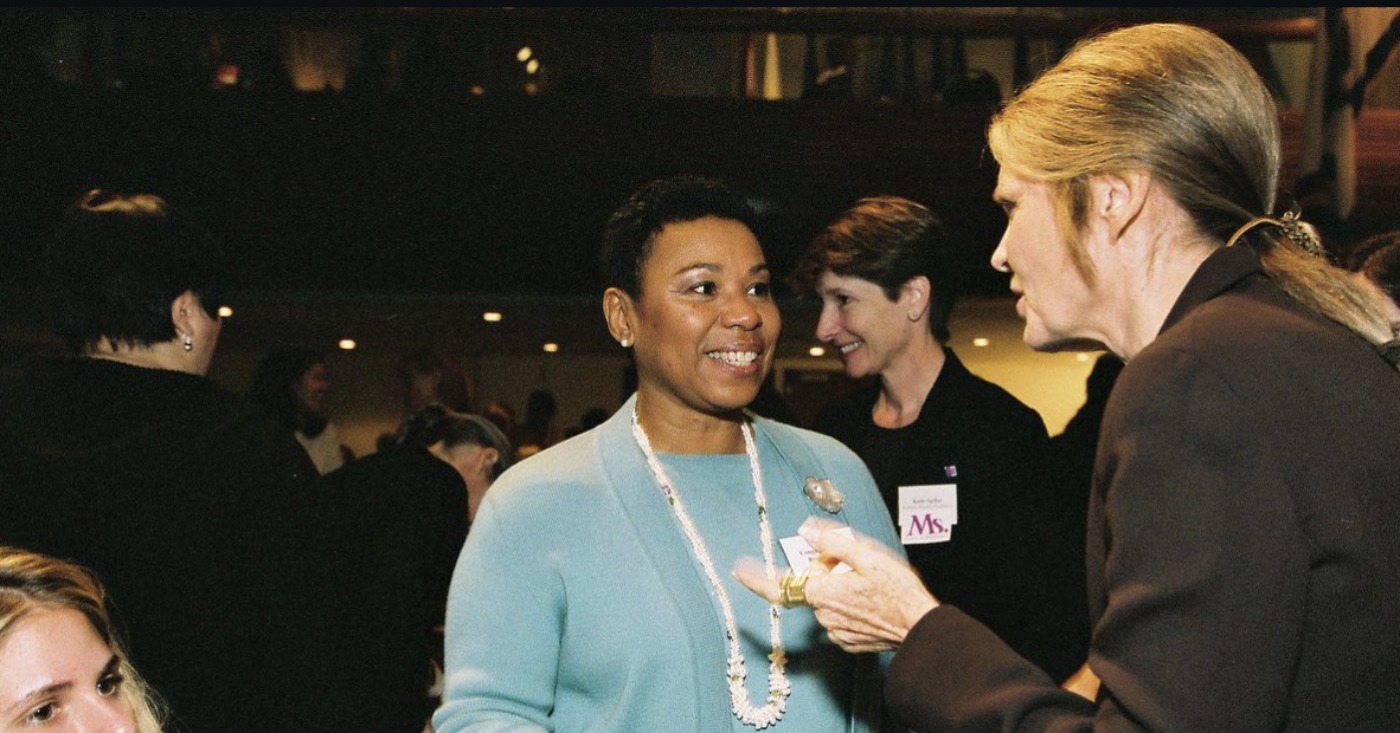
Oakland Mayor Barbara Lee is mourning the death of her longtime friend Gloria Steinem, remembering the feminist icon as a devoted ally who understood that the struggles for racial justice and gender equality were inseparable.
Steinem died Sept. 2 in New York City at the age of 92. A pioneering journalist, author and political activist, she spent more than six decades advocating for women’s equality and reproductive choices. She also co-founded Ms. magazine and the National Women’s Political Caucus.
“I called her recently and could hear the weakness in her voice,” Lee said. “She was also very fragile at my New York event, but she remained supportive.”
The friendship between Lee and Steinem grew from their connections to the late U.S. Rep. Shirley Chisholm, the first Black woman elected to Congress and the first Black candidate to seek a major political party’s presidential nomination.
Chisholm was Lee’s mentor and inspired her to enter politics. Lee worked on Chisholm’s historic 1972 presidential campaign and served as one of her delegates at the Democratic National Convention.
According to Lee, Chisholm helped Steinem deepen her understanding of racial inclusion and recognize that the women’s movement could not succeed without addressing the experiences of Black women and other women of color.
“Gloria really understood what racial equity was about as a white woman and knew the value of building coalitions,” Lee said.
Steinem became one of the country’s most recognizable advocates for women’s rights, reproductive alternatives and political representation. Lee said one of the most persistent inequities confronting Black women was inadequate access to reproductive healthcare, an issue Lee addressed throughout her years in the California Legislature and Congress.
Lee considered Steinem a genuine ally who recognized the intersections of race, gender, healthcare and economic opportunity. Steinem also understood the importance of elevating women into leadership positions and encouraging them to claim their rightful places at decision-making tables.
Their relationship extended beyond politics and public advocacy. Lee recalled joining Steinem and her husband for dinner in Manhattan Beach with Lee’s son, Tony.
“It was beautiful to see how she could be a wonderful wife, feminine and be a strong woman,” Lee said.
Tony Lee also had a professional connection to Steinem through the rerelease of “The Road to Galveston,” the 1996 television film he wrote about the life of his grandmother, Mildred Parish Massey. The film starred Cicely Tyson.
“My son’s tribute to Gloria on Facebook is very touching,” Lee said.
Lee expressed profound heartbreak over losing her friend and gratitude for Steinem’s support throughout her political career, including during reelection campaigns.
As Lee continues carrying forward the lessons of Chisholm and Steinem, she has also helped encourage a new generation of women leaders, including U.S. Reps. Lateefah Simon and Jasmine Crockett.
Art
Event Preview: ‘Fashion v. Fascism’ – A Runway Revolution Is Coming to the Bay Area
“Every piece on this runway translates what is happening under fascism into a feeling,” explains Erica Furlong, the FVF creative director. “One designer’s trench coat is covered in pockets stamped ‘TRUTH,’ ‘MEMORY,’ ‘HOPE,’ ‘VOTE,’ ‘FUTURE,’ because that’s literally what gets seized first, pocket by pocket, under fascist decline. Fashion can hold grief and hope in the same silhouette, and that tension is exactly what this moment needs.”

“Fashion vs. Fascism” (FVF) is a visually immersive evening of fashion, music and political theater exposing the rise of fascism in the U.S. and the need to resist. Democracy is under siege, and culture is one of our most potent defenses, organizers say.
Called a live “runway revolution,” FvF premieres Oct. 3 at The Rotunda, 300 Frank Ogawa Plaza in downtown Oakland.
A play that is part fashion show, part protest, part performance art, FvF stages five runway collections spotlighting the pillars of contemporary fascist politics and the urgent need to resist: the myth of a “glorious past,” the manufactured emergencies used to justify surveillance and crackdowns, and the oligarchs and grifters profiting from it all. Runway fashion shares the stage with political theater and live music, with a closing call to action.
“We need lawsuits, ballots and mass protests, but none of it lands if we’re not also fighting for people’s imagination,” says Linda Burnham, co-producer of the show. “People are exhausted and scared. FvF will expose the absurdities of fascist mythology and ideology in ways a news headline cannot and spark new ideas about how to resist.”
“Fascism doesn’t win by policy alone. It wins by telling a story. A myth about a ‘Golden Age.’ A permanent emergency that makes cruelty seem necessary. That’s not an accident, it’s a strategy, and it works on the same terrain as culture: image, spectacle, emotion,” says Aya De León, the show’s playwright.
“Every piece on this runway translates what is happening under fascism into a feeling,” explains Erica Furlong, the FVF creative director. “One designer’s trench coat is covered in pockets stamped ‘TRUTH,’ ‘MEMORY,’ ‘HOPE,’ ‘VOTE,’ ‘FUTURE,’ because that’s literally what gets seized first, pocket by pocket, under fascist decline. Fashion can hold grief and hope in the same silhouette, and that tension is exactly what this moment needs.”
At its best, fashion is about creativity, diversity, innovation, experimentation and the free exchange of ideas. Fascism, by contrast, demands conformity and control, while suppressing dissent.
FVF was created, organizers say, because democracy should always be in style.
Featured designers include Erica Varize, Rickie Lee, Tianna Charity, Julie Wong, and Maria Flores. The evening features a script by lead playwright Aya De León, musical performances by Mindeullae Project and DJ Emancipation, and other special guests.
FvF is designed to travel. Following the Oakland premiere, FvF will extend its reach through a documentary short, a curriculum on contemporary fascism in the U.S., and a full replication playbook — design templates, script, and curriculum — so organizers in other cities can stage their own version of the show.
Get more details at www.fashionvfascism.org.
Art
Event Preview: ‘Fashion v. Fascism’ – A Runway Revolution Is Coming to the Bay Area
“Every piece on this runway translates what is happening under fascism into a feeling,” explains Erica Furlong, the FVF creative director. “One designer’s trench coat is covered in pockets stamped ‘TRUTH,’ ‘MEMORY,’ ‘HOPE,’ ‘VOTE,’ ‘FUTURE,’ because that’s literally what gets seized first, pocket by pocket, under fascist decline. Fashion can hold grief and hope in the same silhouette, and that tension is exactly what this moment needs.”

“Fashion vs. Fascism” (FVF) is a visually immersive evening of fashion, music and political theater exposing the rise of fascism in the U.S. and the need to resist. Democracy is under siege, and culture is one of our most potent defenses, organizers say.
Called a live “runway revolution,” FvF premieres Oct. 3 at The Rotunda, 300 Frank Ogawa Plaza in downtown Oakland.
A play that is part fashion show, part protest, part performance art, FvF stages five runway collections spotlighting the pillars of contemporary fascist politics and the urgent need to resist: the myth of a “glorious past,” the manufactured emergencies used to justify surveillance and crackdowns, and the oligarchs and grifters profiting from it all. Runway fashion shares the stage with political theater and live music, with a closing call to action.
“We need lawsuits, ballots and mass protests, but none of it lands if we’re not also fighting for people’s imagination,” says Linda Burnham, co-producer of the show. “People are exhausted and scared. FvF will expose the absurdities of fascist mythology and ideology in ways a news headline cannot and spark new ideas about how to resist.”
“Fascism doesn’t win by policy alone. It wins by telling a story. A myth about a ‘Golden Age.’ A permanent emergency that makes cruelty seem necessary. That’s not an accident, it’s a strategy, and it works on the same terrain as culture: image, spectacle, emotion,” says Aya De León, the show’s playwright.
“Every piece on this runway translates what is happening under fascism into a feeling,” explains Erica Furlong, the FVF creative director. “One designer’s trench coat is covered in pockets stamped ‘TRUTH,’ ‘MEMORY,’ ‘HOPE,’ ‘VOTE,’ ‘FUTURE,’ because that’s literally what gets seized first, pocket by pocket, under fascist decline. Fashion can hold grief and hope in the same silhouette, and that tension is exactly what this moment needs.”
At its best, fashion is about creativity, diversity, innovation, experimentation and the free exchange of ideas. Fascism, by contrast, demands conformity and control, while suppressing dissent.
FVF was created, organizers say, because democracy should always be in style.
Featured designers include Erica Varize, Rickie Lee, Tianna Charity, Julie Wong, and Maria Flores. The evening features a script by lead playwright Aya De León, musical performances by Mindeullae Project and DJ Emancipation, and other special guests.
FvF is designed to travel. Following the Oakland premiere, FvF will extend its reach through a documentary short, a curriculum on contemporary fascism in the U.S., and a full replication playbook — design templates, script, and curriculum — so organizers in other cities can stage their own version of the show.
Get more details at www.fashionvfascism.org.
Black History
Tradition Comes to the Streets in 11th Annual Black-Eyed Pea Festival at the Freedom Farmers Market
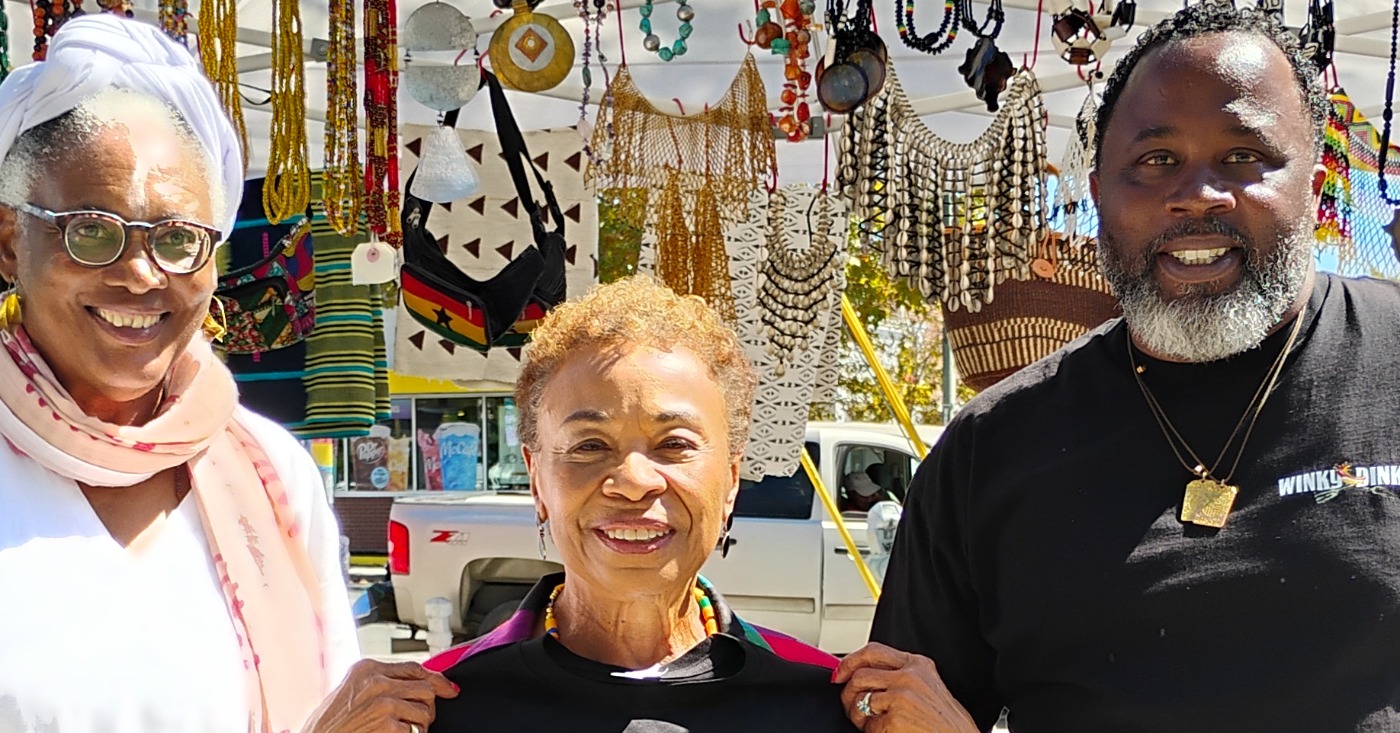
Mayor Barbara Lee stops by to support vendors, Winky Dinky Dogs owner Tyranny Allen
A streamlined Oakland Black-Eyed Pea Festival took place on Sat. Sept. 12 in the lower Temescal neighborhood on the blocked off street that connect Shattuck and Telegraph avenues.
An early start brought together vendor regulars from festival partner, the Freedom Farmers’ Market, and vendors who have supported the festival at its previous location at Marston Campbell Park.
Wanda Ravernell, the festival producer/director was on the verge of cancelling the festival because of funding limitations in May before reaching out to Elaine Smith, president of Farms to grow, Inc., which supervisors the market.
From its start in 2014, the festival has focused on the traditions of African American culture through music, food and art. That emphasis included fresh food vendors, particularly growers of African American legacy crops like black-eyed peas, yams, watermelon, collard greens and okra, which all originate in Africa.
To Fresno farmer Will Scott of Scott Family Farms, the Freedom Farmers’ Market allows him to bring those crops to the inner city – and support the nutrition of African Americans.
Shortly after the festival opened Saturday morning with prayers and salutes to the ancestors by Wakan Wiya Two-Spirit Drum and Awon Ohun Omnira, led M. Zamora and Otobaji Stewart respectively, 86-year-old Scott, the son of a sharecropper, announced that he will put other endeavors aside to dedicate the rest of his life to raise those foods.
Smith shared that Farms to Grow assists Black farmers in helping them overcome one of their main impediments to success – distribution – while creating alliances to help Black people maintain farmland and make it prosperous for younger generations to keep farming and farmland in the family.
As the morning progressed to afternoon, a steady stream of visitors drifted from booth to booth, chatting with vendors and each other.
Scott noted that a market day like this was what he was accustomed to in his youth, where the market was not just about buying things but also a place for valuable social exchange.
The social aspect became even pronounced shortly after midday when Oakland Mayor Barbara Lee stopped by to shop and visit with some of the vendors, including Ellen Bimpeh of Sankofa, and Ravernell who was selling T-shirts designed by Stewart.
Lee is also a fan of Winky Dinky Dogs, an eatery owned by Tyranny Allen whose second brick-and-mortar venture further anchors a hub of businesses at that corner.
As he has in previous years, Andre Thierry of Accordion Soul, closed the festival with a 90-minute set that brought young and the young-at-heart on their feet to dance in a line or as impromptu couples.
And, surprisingly, the man Allen refers to as the mayor of 45th Street, came out on cane and chair to sit by the curb in the sun and listen to music reminiscent of his Louisiana roots. His appearance seemed to echo Scott’s observance about the market: to bring people together.
The Freedom Farmers’ Market is located at 4521 Telegraph Avenue in Oakland and is open on the second and fourth Saturdays of each month until Nov. 14. For more information and to apply to be a vendor, go to https://www.farmstogrow.org/freedomfarmersmarket
Black Press
Neighborhood Empowerment Day in Deep East Oakland Brings Community Together After Recent Tragedy
Hosted by the 40×40 Council, the free, family-friendly resource fair featured health and wellness services, workshops, children’s activities, food, giveaways and local Black-owned businesses. Residents also connected with community organizations working to strengthen East Oakland.
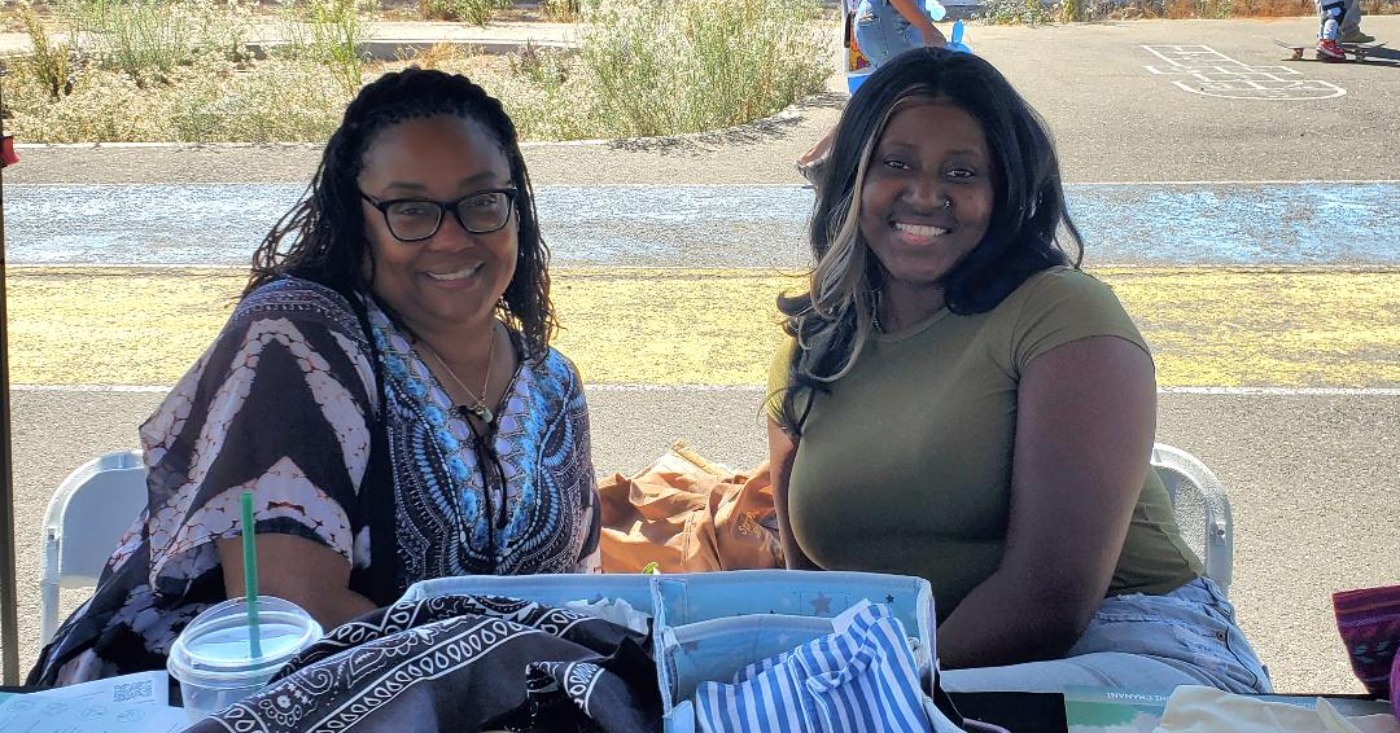
Families, residents and community organizations gathered at the Parker Community Resource Center on Saturday, Sept. 12, for the 40×40 Neighborhood Empowerment Day, transforming the site of a recent tragedy into a space for healing, resources, connection and joy.
Hosted by the 40×40 Council, the free, family-friendly resource fair featured health and wellness services, workshops, children’s activities, food, giveaways and local Black-owned businesses. Residents also connected with community organizations working to strengthen East Oakland.
The gathering came six weeks after a fatal shooting occurred at the Ney Avenue center on July 31. The violence happened shortly before 9 a.m. on the campus of the adult education center and claimed the life of 25-year-old Kimarii McLemore. A second person was injured.
McLemore was attending what was supposed to be her final day in an adult education carpentry class. The shooting deeply affected her family and traumatized students, staff members and residents who had viewed the center as a safe place where community members could pursue education, career training and a better future.
Neighborhood Empowerment Day offered residents an opportunity to return to the center in a spirit of unity and reclaim the space as an important neighborhood resource.
“Reclaiming the space after a tragedy means creating opportunities for people to gather, connect, experience joy and feel a sense of community once again,” said Tim Zenor-Davis, program manager at Roots Community Health. “After a trauma occurs, we see what happened, we acknowledge its impact, and we are continuing to show up.”
Throughout the afternoon, children and families participated in activities while residents received information about health, wellness and other community services. The event also gave local entrepreneurs and service providers an opportunity to connect with the community.
Complimentary meals included grilled burgers and tacos while a DJ played popular music.
Guests received blood pressure and eye-sight checks. A space to exercise on yoga mats was provided while headphones with guided meditation offered a moment to slow down and reflect.
The 40×40 Council includes the Black Cultural Zone, Brotherhood of Elders Network, East Oakland Youth Development Center and Roots Community Health. Together, the organizations have worked to address community violence and the deeper systemic conditions that have affected generations of East Oakland residents.
The council’s work has extended beyond responding to individual tragedies. As part of the broader Rise East initiative, the collaborative has focused on reversing decades of economic disinvestment, systemic poverty, health disparities and the displacement of Black legacy residents.
The 40×40 area stretches from Seminary Avenue to the San Leandro border and from MacArthur Boulevard to the Bay. More than 30,000 Black residents live within the area, which contains Oakland’s largest concentration of Black residents.
Organizers said the area has continued to demonstrate resilience despite experiencing community violence, declining investment and a significant life-expectancy gap compared with wealthier parts of the region.
The council seeks to help reshape East Oakland into a vibrant, multigenerational community where Black residents can remain, return, heal, prosper and build power.


OPINION: The New American Fear – From 9-11 to AI

Passing for White, Fighting for Black America: The Courage of Walter White

Oakland People’s Arms Embargo Coalition Demands End to Military Shipments Thru Oakland

Barbara Lee Mourns Gloria Steinem, Remembers a Friendship Rooted in Equality

Event Preview: ‘Fashion v. Fascism’ – A Runway Revolution Is Coming to the Bay Area

Event Preview: ‘Fashion v. Fascism’ – A Runway Revolution Is Coming to the Bay Area

Two Looming Threats Every Alameda County Elder Should Know About

The People’s Revival National Campaign Launch

Interior 2026 GMC Acadia Denali Ultimate AWD 360 Video

Mazda CX-90 Tech: Huge Displays, Bose Audio & Wireless CarPlay #shorts

You Had Me at Hello: the Love and Legacy of Grace Nail and James Weldon Johnson

Arnold Perkins: At 85, a Life of Service, Faith and Giving Back

Young Black Men Suffering in Silence A curse that can be Broken

Young Black Men Suffering in Silence A curse that can be Broken

🎷 Jazz is taking over D.C.!

BSPNTX Announces 2026-27 Scholarships Recipients

Women Learned Their Jail Strip Searches Were Recorded. Their Outrage Changed the Law

Black Americans Have Doubts About the U.S. Food System

Barbados – Julius Garvey, Son of Marcus Garvey, Joins PM Mottley in the Rededication of the Garvey Amphitheater

IN MEMORIAM: Dolly Parton Dead at 80 — How She Built a Legacy of Love and Earned Her Place in Black Culture
The People’s Revival National Campaign Launch
Interior 2026 GMC Acadia Denali Ultimate AWD 360 Video
Mazda CX-90 Tech: Huge Displays, Bose Audio & Wireless CarPlay #shorts

NAACP Sues to Block Federal Agents at the Polls

NAACP Sues to Block Federal Agents at the Polls 📱

2024 Audi Q3 S line Quattro: Base MSRP & Features #shorts

Subaru Outback Turbo: Real Power Unleashed! #shorts

DON’T Buy the 2027 Seltos X Line SX Until You Watch This

Headlines and Hotlines

Headlines and Hotlines 📱
-
 Black History1 week ago
Latest Massacre in Haiti Reveals Cruelty U.S. Deportations
-
 Black History1 week ago
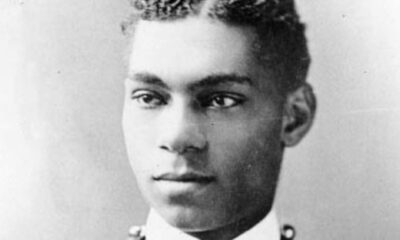
Henry O. Flipper: A Trailblazer at West Point and Beyond
-

 Black History1 week ago
OP-ED: If AI Is the New Language of Power, Then NAN Wants Black Communities Fluent
-
 Black Press1 week ago
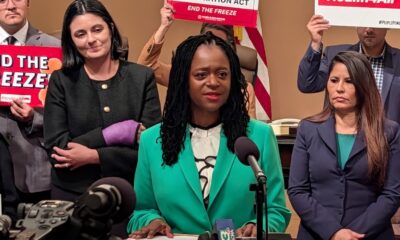
Asm. Smallwood-Cuevas’s Bill Repealing ‘Racist’ CalWORKs ‘Man-in-the-House’ Rule Clears Legislature
-

 Black Press1 week ago
California Legislature Sends Historic Native American Apology Bill to Gov. Newsom’s Desk
-

 Black Press6 days ago
OP-ED: How Does Your State Rank for Pre-K?
