
Education
I Worked on Indiana’s ESSA Plan. This Is What I Learned.

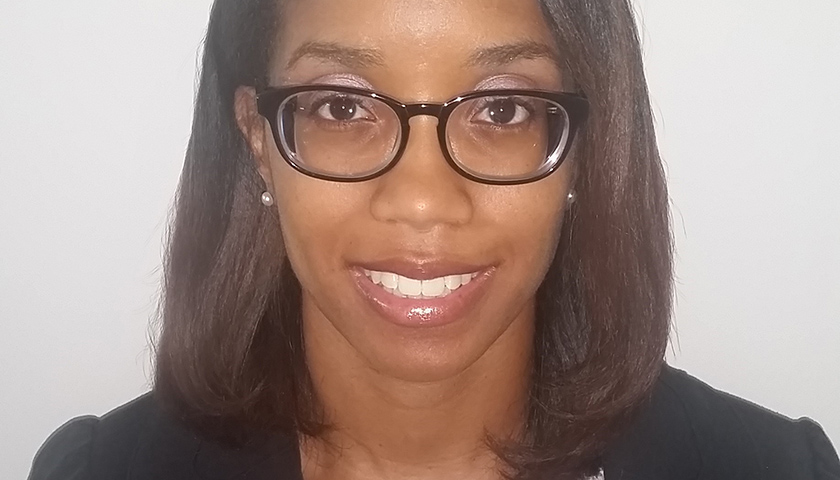
By Shawnta S. Barnes (NNPA/ESSA Guest Columnist)
Back in May, I traveled to Chicago and saw “Hamilton: An American Musical” about founding father Alexander Hamilton. During Act II, Hamilton’s adversary Aaron Burr was upset, because he was excluded from “the room where it happens.” He wanted to be involved in the important decisions, the policy decisions. Knowing my 18-month Teach Plus Policy Fellowship was coming to an end on June 23 and after reflecting upon my fellow education blogger David McGuire’s piece “The Silent Black Voice in Education,” I wanted to make sure I took advantage of any opportunity to be in the room where it happens, so I put my name on a list to be part of one of Indiana’s Every Student Succeeds Act (ESSA) working groups. I was excited to later learn I was selected as a member of one of the technical working groups.
ESSA is the reauthorization of the 1965 Elementary and Secondary Education Act (ESEA) and replaces No Child Left Behind (NCLB). Each state is tasked with submitting a plan to the U.S. Department of Education detailing how ESSA requirements will be implemented in its schools. Before Indiana’s plan was drafted, the Indiana Department of Education (IDOE) took measures to ensure voices from around the state were heard. Community meetings were held across the state in each of Indiana’s congressional districts. The IDOE created five technical working groups: accountability, assessment, educator effectiveness, school improvement, and student supports. I was part of the student supports group. In May and June, the groups made recommendations for the plan and in July the groups will have the opportunity to read through the section they worked on and provide comments.
On Friday, June 30, the IDOE released its first draft of the state’s ESSA plan. In addition to the working groups, the public also has the opportunity to provide feedback. After feedback is considered, the plan will be submitted to Governor Holcomb for review. The IDOE plans to submit the final version to the U.S. Department of Education on September 18, 2017.
Towards the end of the song, “The Room Where It Happens” Alexander Hamilton tells Burr:
When you got skin in the game, you stay in the game
But you don’t get a win unless you play in the game
Oh, you get love for it, you get hate for it
You get nothing if you
Wait for it, wait for it, wait
I definitely have skin in the game; I’m a parent and an educator. If you are part of our community, you have skin in the game, because the plan implemented under ESSA will shape our community’s children, our future leaders. A few have asked, “Why do you even want to get involved? It won’t matter.” One key point I learned during my policy fellowship is when policy is shaped and decisions are made, it takes collaboration and compromise and you won’t get everything you want. If you don’t participate or “play in the game,” you won’t be able to move the needle. You won’t be able to make any change.
Learn more about the Every Student Succeeds Act at nnpa.org/essa.
Don’t just wait around and see what happens. If you would like to get involved, go to https://www.doe.in.gov/essa to read Indiana’s ESSA plan draft.
Shawnta S. Barnes is a literacy coach for Indianapolis Public Schools, an adjunct instructor at Indiana University Purdue University Indianapolis School of Education, and a 2016-2017 Teach Plus Teaching Policy Fellow. Previously, Barnes taught English grades 6-9 and has been an elementary English language learner teacher.









Black Press
America’s Reading Crisis Demands More Than Concern. It Demands Action.
JACKSON ADVOCATE — A national literacy crisis is emerging as reading achievement continues to decline across the United States. Nearly 40% of fourth graders read below the basic level, and roughly one-third of eighth graders are below basic, marking the highest share ever recorded.


By Marc H. Morial
National Urban League President & CEO
New York City’s troubling decline in reading scores, despite one of the most ambitious literacy reform efforts in the nation, is a wakeup call for the entire nation.
Across the country, reading achievement continues to decline. Nearly 40 percent of fourth graders read below the basic level and roughly a third of eighth graders are reading below basic, the highest share ever recorded.
Taken together, these numbers reveal a national literacy crisis that threatens economic opportunity, educational equity, and our nation’s future competitiveness.
Reading is not merely another subject in school. Reading is the foundation upon which all learning rests. A child who struggles to read struggles to learn history, science, mathematics, and civics. A young person who cannot effectively read and analyze complex information faces barriers to college completion, workforce success, and informed participation in our democracy.
That is why the growing literacy crisis is fundamentally an opportunity crisis. Behind every percentage point is a child whose future opportunities hang in the balance. Persistent achievement gaps mean that Black and Latino students continue to bear a disproportionate share of the consequences when reading instruction falls short. If we are serious about economic mobility and educational justice, literacy must be at the center of the conversation.
For more than two decades, many schools embraced Balanced Literacy approaches that sought to cultivate a love of reading by putting books in students’ hands and encouraging independent reading. The approach was well-intentioned, but too often foundational skills instruction, particularly phonics and decoding, suffered.
The evidence is increasingly clear that explicit, systematic instruction helps more children become successful readers. States and school districts that are embracing these principles deserve credit for moving in the right direction. But millions of students are already in middle school, high school, and even college struggling to read complicated texts, analyze difficult arguments, and complete entire books.
What is our plan for them?
Too many students arrive in high school lacking the reading stamina necessary to engage deeply with literature, history, or complex informational texts. College professors increasingly describe students who struggle with lengthy assignments that previous generations navigated more comfortably.
To be clear, Balanced Literacy alone cannot explain these trends. Increased screen time, constant digital distractions, shortened attention spans, and the dominance of algorithm-driven content all influence students’ reading habits and learning experiences.
Yet recognizing these factors cannot become an excuse for inaction.
Instead, it should compel us to think more broadly about literacy.
The challenge before us is not simply helping children sound out words. It is helping them develop the capacity to wrestle with complex ideas, sustain attention, evaluate evidence, and build knowledge through reading. It is helping them become informed citizens and lifelong learners.
And that requires a comprehensive, systemic strategy.
We need high-quality literacy instruction beginning in early childhood settings and extending throughout elementary school. We need to strengthen early intervention so that struggling readers receive support before learning gaps become entrenched. We must carefully examine the quality and effectiveness of programs serving our youngest learners, including Head Start and other early childhood initiatives.
At the same time, we need a national commitment to literacy recovery for older students. Districts and states should be developing evidence-based strategies that help adolescents strengthen comprehension, vocabulary, knowledge-building, and engagement with complex texts. Students who fell behind during the pandemic and those who continue to struggle deserve intensive support, not lowered expectations.
We should also have serious conversations about the role of technology in children’s lives. Restricting unnecessary screen exposure, particularly in the early grades, should be part of a broader effort to rebuild reading habits and attention spans that support learning.
More concerning than the decline in reading scores is the absence of a clear, large-scale strategy to address the growing crisis. Every year that a struggling reader falls further behind increases the likelihood that they will face lifelong educational and economic disadvantages.
The recent reading results from New York City are a warning. The national NAEP results are an even louder one. Together, they tell us that incremental change is not enough.
We know more about how children learn to read than ever before. We know that literacy is the gateway to opportunity. What remains to be seen is whether we have the collective will to act with the urgency this moment demands.
Our children cannot afford for us to wait.
Based on reporting by Jackson Advocate.
Black History
HBCU Leaders, Corporate Partners Convene in D.C. to Strengthen Support for Black Colleges’ Athletic Programs
COLUMBUS TIMES — HBCU athletic conference commissioners, university presidents, and corporate leaders gathered in Washington on Tuesday, September 15, for the Salute to HBCU Sports Leadership Reception. This invitation-only event, hosted at Gensler’s K Street office, aimed to deepen investment in historically Black colleges and universities.
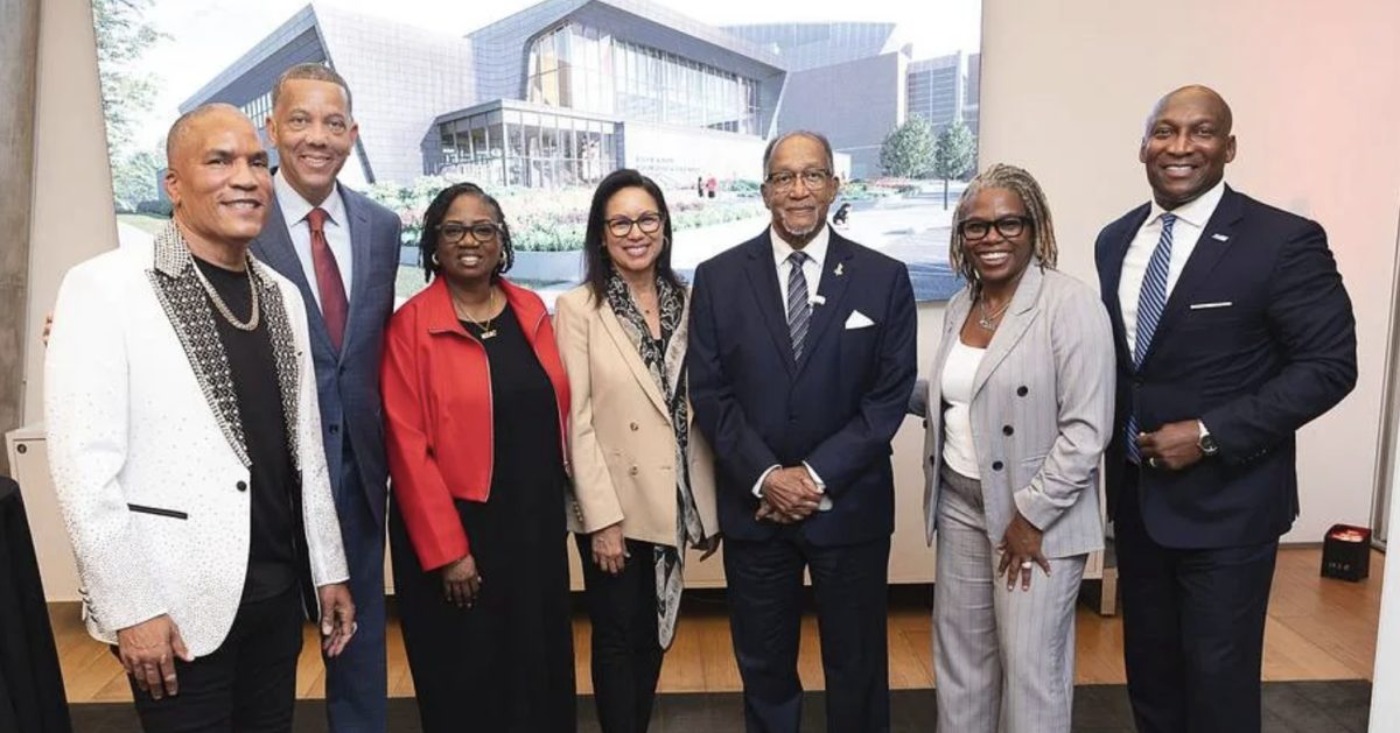
Commissioners from HBCU athletic conferences joined university presidents and corporate leaders in Washington on Tuesday, Sept. 15, for the Salute to HBCU Sports Leadership Reception — an invitation-only gathering aimed at deepening investment in historically Black colleges and universities.
Hosted at Gensler’s K Street office, the evening brought together conference commissioners, campus presidents, and executives from sports, media and design organizations under the theme “Building Partnerships. Celebrating Excellence. Advancing HBCUs.” Gensler highlighted its partnership with Paxton Baker on the event in a post on Instagram, showcasing the room full of HBCU presidents and conference leaders.
Five Conferences, One Room
Commissioners from four NCAA conferences and one NAIA conference were on hand, representing institutions that compete across Division I, Division II and the NAIA:
Anthony Holloman — Southern Intercollegiate Athletic Conference Charles McClelland — Southwestern Athletic Conference Jacqie McWilliams Parker — Central Intercollegiate Athletic Association Sonja Stills — Mid-Eastern Athletic Conference Kiki Baker Barnes — HBCU Athletic Conference
Their presence linked leadership from across the HBCU athletics landscape with campus administrators and organizations working in event management, design and media.
Presidents and Black Press Leadership in the Room
Among the university presidents in attendance were Prairie View A&M’s Tomikia P. LeGrande and Bowie State’s Aminta H. Breaux.
LeGrande’s appearance came just days after the Thurgood Marshall College Fund named her the recipient of its Educational Leadership Award, as announced by Prairie View A&M. She was honored at TMCF’s 39th Anniversary Gala on Sept. 12 in Washington. LeGrande has served as Prairie View A&M’s ninth president since June 2023.
Breaux, who has led Bowie State since July 2017, previously chaired the CIAA’s board of directors, according to her university biography.
Benjamin F. Chavis Jr., president and CEO of the National Newspaper Publishers Association, also attended — fitting, given the NNPA’s role as one of the reception’s presenting partners. Chavis and HBCU GO’s Lawrencia Moten conducted two 30-minute interview sessions with the conference commissioners, covering topics ranging from the NIL era to conference growth and the experience of leading HBCU athletics, according to HBCU GO President Curtis Symonds, who spoke with HBCU Legends about the sessions.
Corporate and Institutional Partners
Five organizations presented the reception together:
Gensler — the architecture and design firm that hosted the event Events DC — the District’s convention and sports authority USA Track & Field — the sport’s national governing body National Newspaper Publishers Association — representing Black newspaper publishers HBCU GO — the network dedicated to HBCU sports and culture
That mix of partners pointed to a range of possible collaborations ahead, from athletic facilities and event operations to sports programming and media coverage.
Building Beyond the Scoreboard
What stood out most was the mix of people in the room — conference commissioners setting strategy for their leagues, university presidents shaping institutional priorities, and corporate partners bringing resources and expertise from multiple industries.
With college athletics undergoing rapid change, particularly for HBCUs navigating the NIL era and shifting conference dynamics, the reception offered a venue for candid conversation and relationship-building. Its underlying purpose went beyond athletics: using sports as an entry point to broader opportunities in education, workforce development and economic growth for HBCUs.
Based on reporting by Columbus Times.
Black History
At CBCF Conference, a Panel Asks What Black Public Figures Owe the People Who Follow Them
COLUMBUS TIMES — The Congressional Black Caucus Foundation’s Annual Legislative Conference featured a panel titled “Platforms & Purpose: A Conversation With Black Men Leveraging Their Reach.” Actor and activist Kendrick Sampson, Rep. Jasmine Crockett, media personality Jason Lee, singer Eric Benét, and rapper Yung Joc discussed how public figures can translate influence into real-world change.

WASHINGTON — Among the more than 100 policy forums and brain trusts at this year’s Congressional Black Caucus Foundation Annual Legislative Conference was a conversation about influence itself: who has it, and what they do with it.
"Platforms & Purpose: A Conversation With Black Men Leveraging Their Reach" brought together actor and activist Kendrick Sampson, Rep. Jasmine Crockett, media personality Jason Lee, singer Eric Benét and rapper and radio host Yung Joc. The session looked at how entertainers, creators and elected officials can turn public attention into real-world change.
The panel took place at the 55th Annual Legislative Conference, a five-day event in Washington that began Wednesday. This year’s theme is "Rooted, Ready & Rising," and the conference coincides with the CBC Foundation’s 50th anniversary. CBCF President and CEO Nicole Austin-Hillery has said the gathering is meant to "combine celebration with purpose," while taking up issues including voting rights, economic opportunity, education, health disparities and criminal justice.
That mix of celebrity and policy is a long-running feature of the conference, which brings lawmakers, advocates, entrepreneurs, students and entertainers into the same rooms. The panel’s premise reflects a broader question as creators reach audiences that rival traditional media.
A career built on both stage and street
Sampson is a natural fit for that conversation. The Houston native is known for television and film work, including HBO’s Insecure, and for his activism off screen. He co-founded BLD PWR, a 501(c)(3) nonprofit that combines entertainment, education and activism.
The organization says its mission is to "reimagine and realize the liberated future we know our people deserve." It works to mobilize entertainment-industry figures and organize communities around racial, gender, immigration, economic and environmental justice, mental health and wellness, and opposition to state violence. BLD PWR emphasizes storytelling and community healing, and it centers the voices of Black, Indigenous and other marginalized communities.
What to watch
The conference runs through Sunday at the Walter E. Washington Convention Center. Details on sessions and registration are available through the CBC Foundation.
Based on reporting by Columbus Times.
Black Press
Clickbait: the Toll of a Bad Headline
SOUTHERN UNIVERSITY – SOUTHERNDIGEST — Southern University is widely known for its Human Jukebox, a celebrated part of HBCU culture. However, the university also boasts a highly-ranked nursing school, recognized by Nurse.org as the best in the U.S. for two consecutive years, with a 100% first-time pass rate on a national certification exam in 2025.
Ask someone outside of Louisiana what they know about Southern University, and there is a good chance the conversation will eventually lead to HBCU culture and the Human Jukebox. And rightfully so. The Human Jukebox has earned its reputation through generations of hard work, discipline and excellence. It represents more than halftime entertainment; it is part of the heart of Southern University and HBCU culture. But after the Jukebox, what comes next? That is where Southern has a public relations problem.
Southern University is home to a nursing school that was named Best Nursing School in the United States by Nurse.org for the second consecutive year in 2026. The program also reported a 100% first-time pass rate on the 2025 American Academy of Nurse Practitioners certification examination. Accomplishments like those should be just as inseparable from Southern’s name as its band and culture.
Instead, Southern’s positive story is too often forced to compete with another narrative: housing shortages, unanswered questions, aging infrastructure, power outages and the familiar feeling among students that something else has gone wrong. The recent power outages made that especially difficult to ignore.
Southern lost power on Sept. 1, forcing classes to be canceled. Days later, another outage affected campus operations, eventually leading the university to close campus for multiple days and shift classes remotely. Students told local news stations about losing food, struggling without air conditioning and Wi-Fi, and trying to keep up with schoolwork while the campus dealt with electrical problems. Watching frustrated students explain their experiences to local reporters made me ask a simple question: Is this bad PR? At first, I thought the answer was obvious. Communication during the outage felt too slow. Students wanted to know when power would return, whether classes would continue and when campus life would return to normal. When information is limited, rumors fill the gap. One person says the power is back. Someone else says it went back out. Students begin relying on each other before they rely on the institution. But learning more about what happens behind the scenes complicated my original opinion.
The people responsible for communicating cannot simply release whatever information is circulating. They may be waiting on utility companies, facilities officials, emergency management or university leadership to confirm what is actually happening. Publishing an estimate that turns out to be wrong can create even more confusion. That does not mean communication should stop.
There is a difference between saying, “We don’t know,” and saying nothing. Even when there is no new information, students can still be told that there is no new information. An update saying officials are still waiting for confirmation, explaining what is currently known and telling students when to expect another update creates something extremely important during a crisis: certainty about the communication process, even when there is uncertainty about the situation itself.
But the more I thought about “Bad PR?” the more I realized Southern’s problem is bigger than how quickly an email goes out. Public relations cannot turn the electricity back on. It cannot build a residence hall overnight. It cannot make every office answer its phone. It cannot win a football game. At some point, an institution’s reputation has to be supported by the institution itself.
Southern entered Fall 2026 with campus housing completely occupied and its housing waitlist at capacity. The university is responding by moving forward with new housing that is expected to add approximately 850 beds. That investment matters. But it also represents a larger pattern Southern cannot afford to continue: waiting until a problem becomes part of the student experience before the solution becomes visible. Southern cannot continuously rely on the resilience of its students as part of its operating model.
There is almost a collective “struggle bus” mentality that can develop on campus. Something is broken. Something is delayed. Another office is not answering. Another unexpected problem appears. But at least we are still here, getting our education and figuring it out. Southern certainly develops character. But students should not have to develop character by constantly learning to navigate problems that an evolving university should be working to eliminate.
That is especially important because Southern does not exist in isolation. Across Baton Rouge sits LSU, one of the most recognizable universities in the state. Comparisons between the two institutions are almost inevitable, whether those comparisons are fair or not. Southern should not try to become LSU. It should become the strongest possible version of Southern.
There is something different about attending an HBCU. There is value in entering classrooms where students who look like you can be recognized for their intelligence without first having to prove that they belong there. There is value in being surrounded by people who may come from completely different backgrounds while sharing an experience rooted in Black history, culture and achievement. Southern has that. It has legacy. It has culture. It has nationally recognized programs. It has students worth celebrating. It has one of the most recognizable bands in college culture. The problem is not that Southern lacks a brand. Southern’s problem is keeping that legacy intact while building an institution capable of carrying it into the future. Construction around campus shows that change is happening. New housing is coming. Infrastructure is being addressed. But physical construction cannot be the only visible evidence of progress. Students should be able to experience that evolution in customer service, communication, technology, facilities and the everyday systems they depend on.
The Human Jukebox does not need less recognition. The rest of Southern needs to reach the same standard of excellence that makes the Jukebox so easy to celebrate. If Southern wants to control its narrative nationally, the answer cannot simply be better marketing whenever something goes wrong. Southern already has the story.
The nursing students achieving nationally recognized results are part of the story. The students earning degrees are part of the story. The culture is part of the story. The Jukebox is part of the story. The history and generations of alumni are part of the story.
But so are the outages, housing frustrations and institutional problems students experience. Public relations can decide how a story is communicated, but it cannot permanently separate reputation from reality. Maybe Southern does not have a “bad PR” problem after all. Maybe Southern has an institution with an incredibly strong brand that is sometimes being asked to carry more weight than it should. If Southern truly wants to control its narrative, that work cannot begin and end with a press release. It has to begin within.
Based on reporting by Southern University – SouthernDIGEST.
Black Press
OP-ED: How Head Start Also Helps Parents
BLACKPRESSUSA NEWSWIRE — “I never thought I would be here before Head Start. It was rough. No childcare, job loss. I’ve been helpless,” she shared on stage at the National Head Start Conference in Baltimore. “When I applied, I did not think my daughter would get in. When I got the call, I cried tears of joy.”
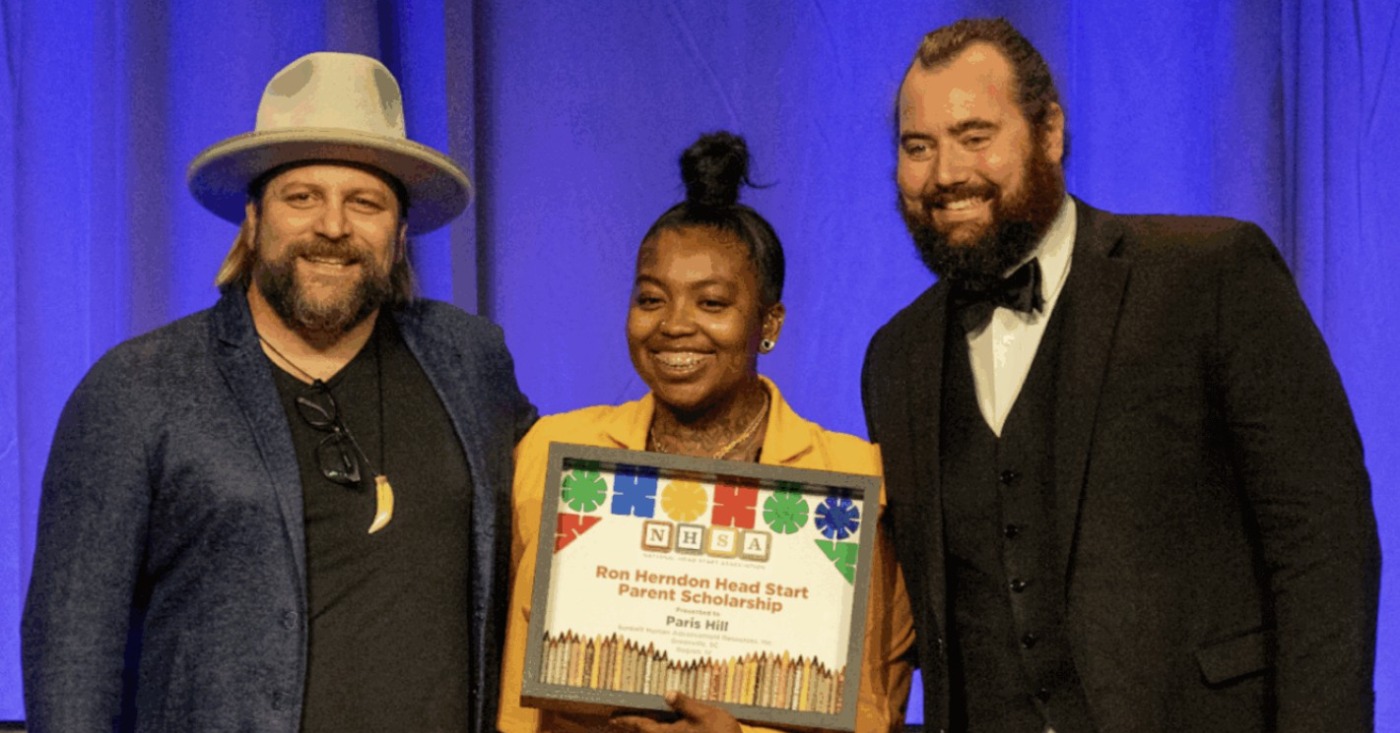
Ron Herndon Head Start Parent Scholarship awardee Paris Hill, of Sunbelt Human Advancement Resources in Greenville, South Carolina, says that Head Start has been instrumental in reaching her dreams.
“Head Start made me sit and realize my goals and what steps I needed to take to achieve them. They show compassion, love, and dedication to helping parents. They push you to do, to be, and to do better—not only as parents but for yourself.”
Hill embodies the spirit of NHSA’s Ron Herndon Scholarship, which celebrates a Head Start parent who goes above and beyond in their community.
During the pandemic, Hill participated in virtual classroom instruction with her children and engaged in parent virtual activities such as Parent Committee meetings and financial literacy classes. She recently contributed over 96 hours to her program.
“I never thought I would be here before Head Start. It was rough. No childcare, job loss. I’ve been helpless,” she shared on stage at the National Head Start Conference in Baltimore. “When I applied, I did not think my daughter would get in. When I got the call, I cried tears of joy.”
Hill enrolled in college and pursued a bachelor’s degree in applied sciences with a concentration in business management. She has met and exceeded her personal goal of becoming a nail technician and creating her own business.
The $2,500 parent scholarship supported her vision. “Head Start made me sit and realize my goals and what steps I needed to take to achieve them. They show compassion, love, and dedication to helping parents. They push you to do, to be, and to do better — not only as parents but for yourself.”
She has an uncommon career goal — to become a mortician — and has already found part-time work. She has found it rewarding to assist families who were going through challenging times because of the death of a loved one.
“When I first applied for the parent scholarship program, I was excited and this was my time to show what I’m capable of. It fills my heart with joy knowing I had a team of teachers and directors pushing me to do better and acknowledging me as parents and not just as a mom.”
Black Press
Oakland Mayor Reads to Children at Bookout Block Party at Marcus Books Store
Booths lined the street with arts and crafts, and children participated in hands-on art projects. A large display of books was on display and each child chose his/her free book to take home. Food and snacks were available, and free water was encouraged to keep all hydrated.
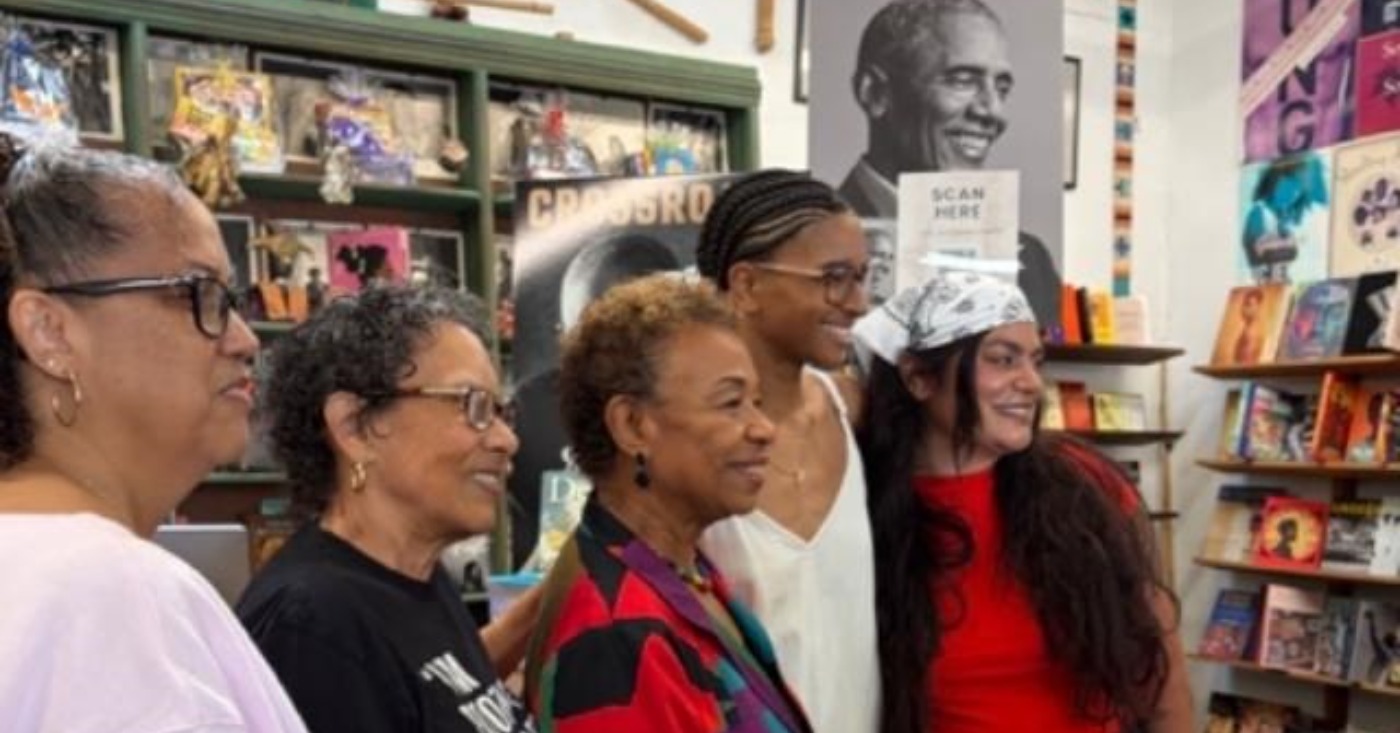
Floating bubbles greeted families on arrival at the Bookout Block Party held on Sat. Sept. 12 at 39th and MLK Blvd. in Oakland.
Sponsored by Marcus Books and Storyland Collective, a wonderland of activity for children stretched to Longfellow School while live music filled the air, courtesy of KWC Complex Jazz Group.
Booths lined the street with arts and crafts, and children participated in hands-on art projects. A large display of books was on display and each child chose his/her free book to take home. Food and snacks were available, and free water was encouraged to keep all hydrated.
A large area of turf was filled with huge bean bags for jumping, rolling, and sitting to listen as families crowded close to listen to Oakland Mayor Barbara Mayor Barbara Lee read a book out loud.
Of the numerous booths present were, “Claim Your Scholarship,” a program for Oakland Public School students and “VOLUNTEER NOW,” a program encouraging volunteers to help boost reading proficiency. Individuals sold their art and products. Free gifts were at many tables and a raffle was held.
The event with Marcus books culminated a summer-long program organized by Storyland Collective, a literacy arts organization bringing children’s ‘storytime,’ local authors, and art activities to Bay Area neighborhoods. Marcus Books is the oldest, independent Black-owned book store in the U.S., featuring books by and about Black people here and abroad.


2027 Kia Seltos X Line AWD: Worth the Price? #shorts

Headlines and Hotlines

Headlines and Hotlines 📱

Easy Car Entry, Smooth Ride, Effortless Turns! #shorts

Statement from the President of the National Association of Black Journalists on Press Ban

America’s Reading Crisis Demands More Than Concern. It Demands Action.

HBCU Leaders, Corporate Partners Convene in D.C. to Strengthen Support for Black Colleges’ Athletic Programs

Peter Magubane: a Camera Against Apartheid

HBCU Leaders, Corporate Partners Convene in D.C. to Strengthen Support for Black Colleges’ Athletic Programs

At CBCF Conference, a Panel Asks What Black Public Figures Owe the People Who Follow Them

You Had Me at Hello: the Love and Legacy of Grace Nail and James Weldon Johnson

Young Black Men Suffering in Silence A curse that can be Broken

Arnold Perkins: At 85, a Life of Service, Faith and Giving Back

Young Black Men Suffering in Silence A curse that can be Broken

BSPNTX Announces 2026-27 Scholarships Recipients

🎷 Jazz is taking over D.C.!

Women Learned Their Jail Strip Searches Were Recorded. Their Outrage Changed the Law

Black Americans Have Doubts About the U.S. Food System

Barbados – Julius Garvey, Son of Marcus Garvey, Joins PM Mottley in the Rededication of the Garvey Amphitheater

Latest Massacre in Haiti Reveals Cruelty U.S. Deportations
2027 Kia Seltos X Line AWD: Worth the Price? #shorts
Headlines and Hotlines
Headlines and Hotlines 📱
Easy Car Entry, Smooth Ride, Effortless Turns! #shorts

Cannabis prohibition was rooted in racism: Jess Jackson with the MN Office of Cannabis Management

Kia Seltos: 3 Questions Before You BUY! #shorts

The Conversation With Al McFarlane (09/22/2026

LIVE! — ASK ALMA! — TUS. 9.22.26 7PM EST

The People’s Revival National Campaign Launch

Interior 2026 GMC Acadia Denali Ultimate AWD 360 Video
-
 Black History1 week ago
Latest Massacre in Haiti Reveals Cruelty U.S. Deportations
-

 Black History1 week ago
Henry O. Flipper: A Trailblazer at West Point and Beyond
-

 Black History1 week ago
OP-ED: If AI Is the New Language of Power, Then NAN Wants Black Communities Fluent
-
 Black Press1 week ago
Asm. Smallwood-Cuevas’s Bill Repealing ‘Racist’ CalWORKs ‘Man-in-the-House’ Rule Clears Legislature
-

 Black History1 week ago
OPINION: Nolan Wells’ Death One of Several Signifying Racial Terror Lives on in U.S. South
-

 Black Press1 week ago
OP-ED: How Does Your State Rank for Pre-K?
